Talent competitions often showcase singers, dancers, magicians, and comedians, but every now and then a completely different act captures the audience’s attention. That was the case when Steve Price and Mark Robbins brought their ambitious engineering project to the Season 21 auditions of America’s Got Talent.

Representing their company, Sprice Machines, the pair introduced a giant Rube Goldberg machine that occupied much of the stage. A Rube Goldberg machine is designed to perform a simple task through a long chain of complicated reactions, with each step triggering the next. The appeal lies not only in the final result but also in watching every carefully planned movement unfold.
Price, who is based in Michigan, and Robbins, from Minnesota, explained that the project was one of the most ambitious builds they had ever attempted. According to the duo, they spent an entire week working between 12 and 14 hours each day constructing and testing the machine before bringing it to the competition.
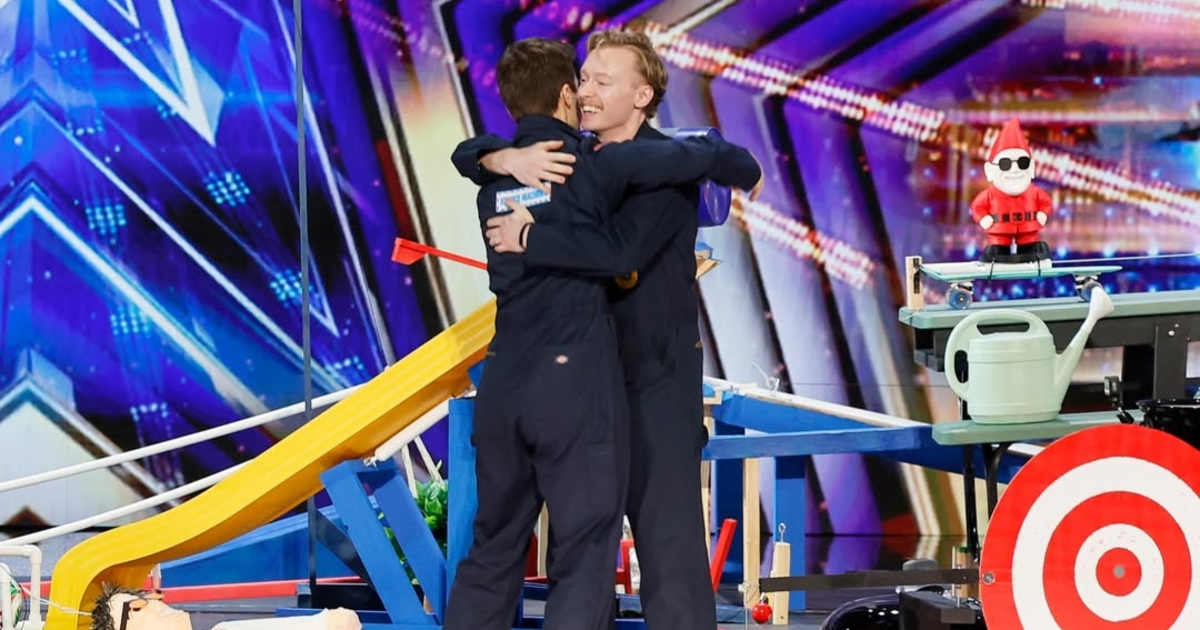
Their honesty about the challenge immediately caught the judges’ attention. When judge Simon Cowell asked about the chances of the machine working correctly, the answer surprised everyone. Rather than claiming confidence, the team admitted there was roughly a 50 percent chance of success. That uncertainty added tension to the performance, as a single failure anywhere along the chain reaction could have stopped the entire demonstration.
As the machine came to life, a sequence of moving parts unfolded across the stage. Boxes toppled like dominoes, strings were cut, balls rolled through pathways, and various mechanisms triggered one another in a carefully orchestrated series of events. The creators even incorporated playful references to the judging panel, including props inspired by fellow judges Mel B, Sofía Vergara, and Howie Mandel.
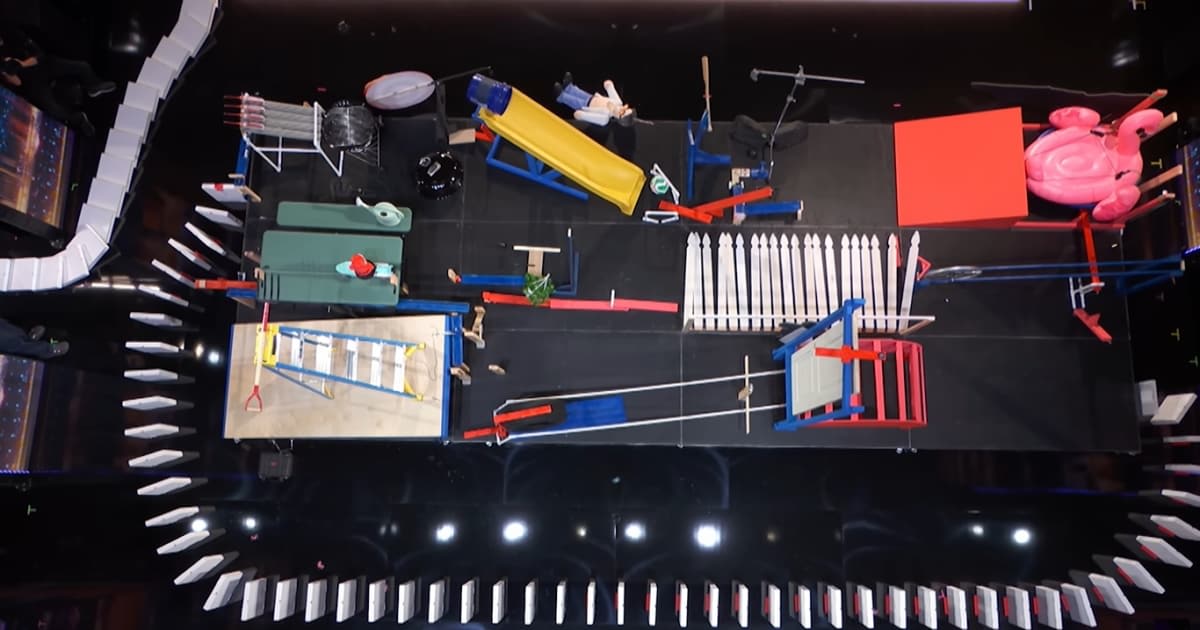
When the final step was successfully completed, the audience responded with enthusiastic applause. Cowell praised the act, calling it clever and entertaining. Vergara also acknowledged the enormous amount of work and preparation required to create such a complicated machine.
Not every judge was completely convinced. Mel B admitted that she found parts of the presentation difficult to follow and felt that additional explanation during the demonstration might have helped viewers understand exactly what was happening. Her comments sparked a humorous exchange with Cowell, who defended the act and suggested that the machine was easy enough to follow without commentary.
Ultimately, Mel B cast the only “no” vote of the panel. However, the other three judges voted in favor of the act, giving Price and Robbins enough support to advance to the next round of the competition.
Beyond simply impressing the judges, the duo revealed a larger goal. Steve Price explained that winning the competition could help fund the purchase of a massive warehouse where they could build even larger and more elaborate machines. Their vision includes creating engineering spectacles on a scale rarely seen before, potentially attracting audiences far beyond traditional science and technology enthusiasts.
Their successful audition demonstrated that creativity and engineering can be just as entertaining as more traditional forms of performance, proving that innovation still has a place on one of television’s biggest talent stages.