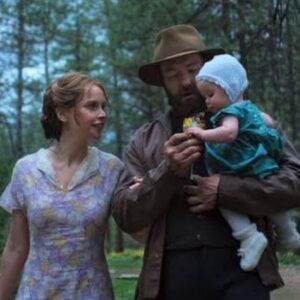
Little House on the Prairie Review: Netflix’s Reboot Is Built To Make You Miss A Simpler America
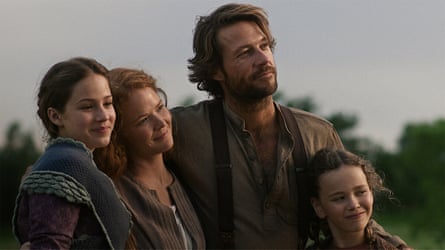
Netflix’s new Little House on the Prairie arrives as exactly the kind of revival modern audiences might expect: warmer, more emotionally aware, more inclusive, and carefully designed to make viewers feel nostalgic for a world that probably never existed quite as neatly as television suggests.
The original series became a defining family drama of the late 1970s and early 1980s, based on Laura Ingalls Wilder’s beloved books about growing up on the American frontier. Those stories followed the Ingalls family as they moved across the American West in search of land, stability, and a future. Decades later, the reboot returns to that same mythic landscape with updated sensibilities, but without abandoning the cozy appeal that made the title so enduring.
This new version still has the familiar ingredients: wide skies, wooden cabins, family hardship, faith, community, and the promise that perseverance can carry people through almost anything. But the characters have been given more interior life. Sadness, frustration, grief, and doubt are allowed to sit inside the story instead of being polished away.
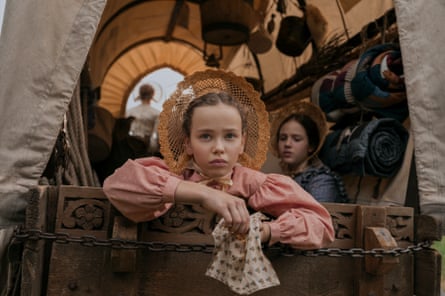
Laura Ingalls, played by Alice Halsey, is not presented as a perfect frontier child. She is curious, brave, impulsive, selfish, frightened, and thoughtful at different moments — in other words, believably young. Her relationship with her sister Mary is also given more texture. Their arguments are not just simple sibling bickering, but the clash of two very different personalities learning how to live beside each other.
The reboot also makes clear that Laura is not meant to be boxed into a narrow idea of girlhood. She wears a cowboy hat as easily as a bonnet, handles herself with confidence, and carries the sense that she belongs to a future where girls will be allowed to imagine more for themselves.
Ma Ingalls is also reworked for a modern audience. Played by Crosby Fitzgerald, she is not merely the calm mother figure holding the home together in silence. She has a past, regrets, intelligence, and moments of uncertainty. She helps build the family’s cabin, questions whether following her husband west was the right choice, and pushes back when the world around her becomes cruel or small-minded.
Pa Ingalls, played by Luke Bracey, is still the moral center of the family, but this version gives him a darker emotional motivation. Rather than being driven only by ambition or adventure, he is carrying grief connected to his brother’s death. His mistakes come from overconfidence and inexperience, but the series repeatedly frames him as a fundamentally decent man who is willing to admit when he is wrong.
The show also introduces John Edwards, a neighboring homesteader whose loss and loneliness slowly draw him toward the Ingalls family. His story is built for emotional payoff, and by the time his connection with them deepens, the series is clearly aiming for the kind of heartfelt response that made older family television so powerful.
The reboot attempts to broaden the world beyond the Ingalls household as well. Black, mixed-race, and Native characters are given meaningful supporting roles, including the Mitchell family, who help open the story to perspectives often ignored in older frontier dramas. Through them, the series gestures toward the other side of settlement history, including the painful realities faced by Native communities as white settlers moved west.
Still, the show remains very much a family drama built for comfort. Its conflicts are serious but usually manageable. Problems tend to unfold and resolve within a few episodes. The frontier may bring illness, poverty, prejudice, grief, and danger, but the overall tone remains hopeful and reassuring.
That is both the strength and the limitation of the new Little House on the Prairie. It wants to acknowledge a more complicated world, but it also wants to preserve the emotional safety of the original idea. The result is a polished, carefully constructed series where hardship exists, but faith, family, and community are almost always waiting to soften the blow.
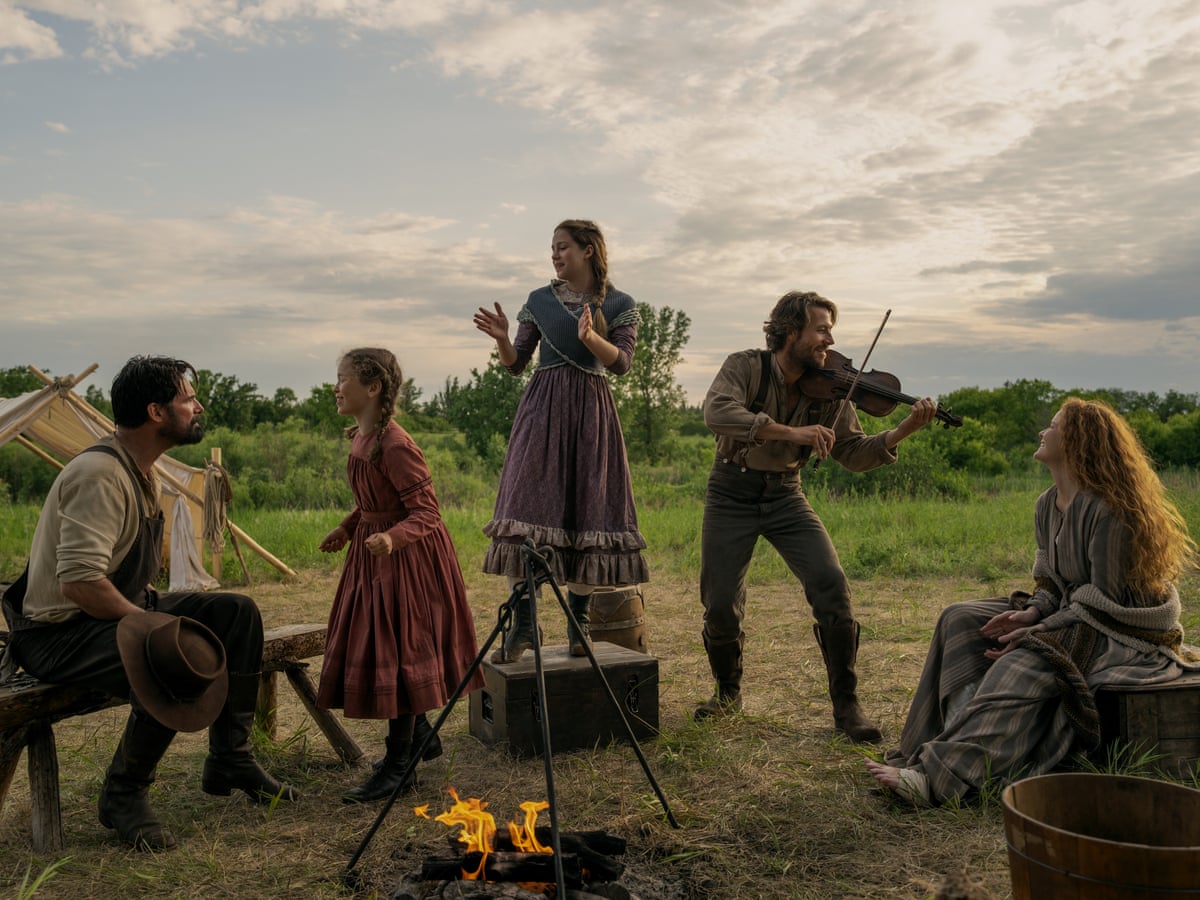
There are cabins lit warmly from within, quilts on beds, songs around the fire, children learning lessons, and adults rediscovering what matters. The show understands exactly what kind of feeling it wants to create: a longing for simplicity, even if that simplicity is partly imagined.
For some viewers, that will be deeply comforting. For others, it may feel too neatly engineered, too determined to turn frontier life into a warm moral lesson. But there is no denying that the reboot knows its audience and knows the emotional machinery it is operating.
Netflix’s Little House on the Prairie is not trying to reinvent the story completely. It is trying to make an old American myth feel emotionally accessible to a new generation — softer in some places, more thoughtful in others, but still wrapped in the familiar promise that love, faith, and family can carry people through the wilderness.
Whether that sounds like a dream or a warning depends entirely on what kind of comfort television you are looking for.