Netflix Viewers Left ‘Emotional Wrecks’ By Gritty Irish Crime Drama With Devastating Final Scene And Haunting Sinéad O’Connor Song

Netflix viewers have been left devastated by a dark Irish crime drama that blends murder mystery, psychological thriller and a painful chapter of the country’s history into six gripping episodes.
The Woman in the Wall, originally produced for the BBC, has found another audience on Netflix — and viewers are praising everything from its unsettling mystery to the performances of Ruth Wilson and Daryl McCormack.
But it is the drama’s emotional conclusion that has particularly stayed with audiences.
After a story filled with trauma, missing children and buried secrets, the final moments unfold to an unreleased recording by the late Sinéad O’Connor, creating an ending that some viewers said left them in tears.
“Gosh, that was so intense,” one viewer wrote. “I am an emotional wreck.”
A Mystery Rooted In A Much Darker Story

Set in Ireland, the six-part drama follows Lorna Brady, played by Ruth Wilson, a woman whose past continues to haunt her years after she was confined in the fictional Kilkinure convent.
Her path eventually crosses with Detective Colman Akande, played by Daryl McCormack.
What initially unfolds as a dark crime mystery gradually exposes something much larger.
Lorna and Colman discover horrifying information concerning children connected to Kilkinure.
According to the drama, there were 298 children at the convent.
Of those, 208 had been stolen and sold, while only three had official burial records.
That leaves 87 children unaccounted for.
The revelations transform the investigation from a conventional crime story into an examination of institutional abuse, secrecy and the devastating consequences left behind for women and families.
Ruth Wilson’s Lorna Carries The Story

At the centre of everything is Lorna.
Her behaviour can be unpredictable and frightening, but the series gradually reveals the trauma underneath it.
As the investigation progresses, the line between what Lorna remembers, what she fears and what has actually happened becomes increasingly difficult to navigate.
That psychological uncertainty gives the series much of its Gothic atmosphere.
Wilson’s performance has attracted particularly strong reactions from viewers.
One IMDb reviewer compared the acting and chemistry to acclaimed BBC drama Happy Valley, writing: “Ruth Wilson and Daryl McCormack are absolutely top.”
Another praised Wilson’s performance and Irish accent while describing the production as an “intelligent drama/thriller with a powerful theme.”
Lorna Makes A Devastating Decision

By the concluding episode, the wider operation surrounding the children has been exposed.
But Lorna still has her own secret to confront.
Rather than allowing the investigation to end without acknowledging what she has done, she makes a painful decision.
Colman encourages her to claim diminished responsibility.
Lorna refuses to hide behind it.
Instead, she turns herself in to the authorities.
It is a choice that brings her deeply personal story together with the larger themes running throughout the series — responsibility, guilt, truth and what happens when secrets are allowed to survive for too long.
Yet the drama still has one final emotional blow waiting.
Colman Returns With Unexpected News
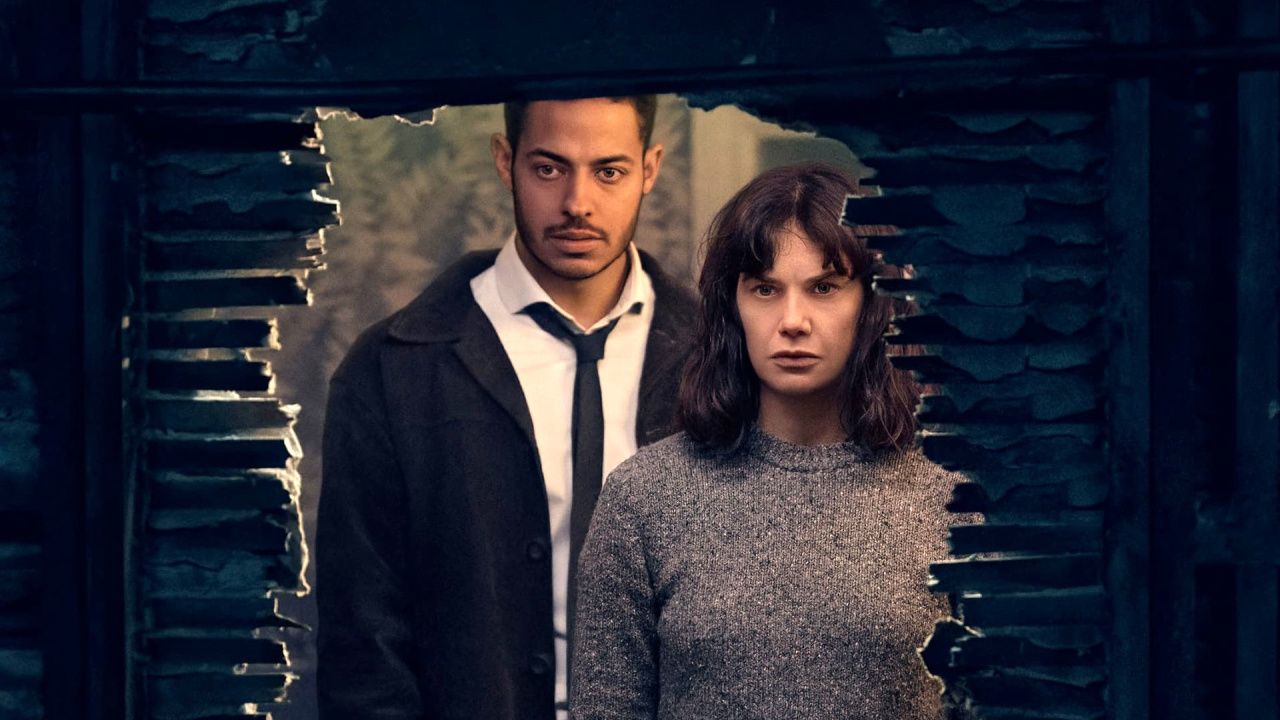
In the closing episode, Colman visits Lorna with surprising news.
The sequence provides an emotional release after everything the pair have uncovered together.
Then the soundtrack takes over.
As the final scenes move across the Irish countryside, an unreleased Sinéad O’Connor recording begins to play.
For viewers already emotionally invested in Lorna’s journey, the combination proved overwhelming.
One viewer, Avril, wrote: “Gosh, that was so intense. I am an emotional wreck.”
She described the drama as one of the best she had watched in a long time and singled out Wilson’s performance for praise.
The Music Became Part Of The Story
The Sinéad O’Connor track is not the only part of the soundtrack to attract attention.
The score by David Holmes and Brian Irvine was also highlighted by viewers for the way it deepens the show’s unsettling atmosphere.
One IMDb reviewer praised the music alongside the direction, cinematography and Joe Murtagh’s writing, saying it “added a lot” to the series.
That combination helps the drama move between several different genres.
At times, it operates like a detective thriller.
Elsewhere, it becomes a psychological character study.
And underneath both sits something closer to Gothic horror — except the most disturbing elements are tied to experiences inspired by real history.
Viewers Praise Its ‘Powerful Theme’
Audience reaction has repeatedly focused on the seriousness of the subject matter.
One reviewer described the series as “part social history and part psychological and Gothic thriller,” praising how those different elements were brought together.
Another viewer, Mindy, called it a “very emotional watch” and praised the writing, cinematography and performances.
She also highlighted its exploration of “a shameful period in Irish History still impacting Women and communities.”
Another viewer, Cara Manning, wrote: “Wow, what an amazing series, it’s scary that it was based on real events.”
The series is fictional, but its story draws on the history surrounding Ireland’s Magdalene institutions and mother-and-baby homes, giving the drama’s themes a particularly disturbing resonance.
More Than A Conventional Crime Drama
Anyone expecting a straightforward murder investigation may quickly discover that The Woman in the Wall is doing something considerably darker.
The mystery provides the framework.
But Lorna’s trauma and the hidden history surrounding Kilkinure provide its emotional centre.
That allows the series to move beyond the question of simply identifying who committed a crime.
Instead, it explores what happens to people decades after institutions fail them — and how the consequences can continue even after the original events have been pushed out of sight.
For some viewers, that combination has made the six episodes particularly difficult to shake.
A Final Scene Viewers Haven’t Forgotten
The series builds its mystery through disturbing discoveries and increasingly painful revelations, but it does not finish with a conventional thriller flourish.
Its final moments are quieter.
Colman’s visit, Lorna’s situation and the haunting music bring the story back to the people who have carried its consequences.
That unreleased Sinéad O’Connor recording then accompanies the closing images across the countryside.
After six episodes spent digging through secrets that powerful people would rather have left buried, the understated ending appears to have hit viewers hardest.
One audience member called the show an “intelligent” and “moving” piece of television.
Another simply said they were an “emotional wreck.”
And for viewers discovering the drama through Netflix, its combination of a gripping crime mystery, Ruth Wilson’s central performance and a finale underscored by Sinéad O’Connor is giving an older BBC series an emotional second life.