Blood, Faith, and the Frontier: The Real History Behind Netflix’s American Primeval
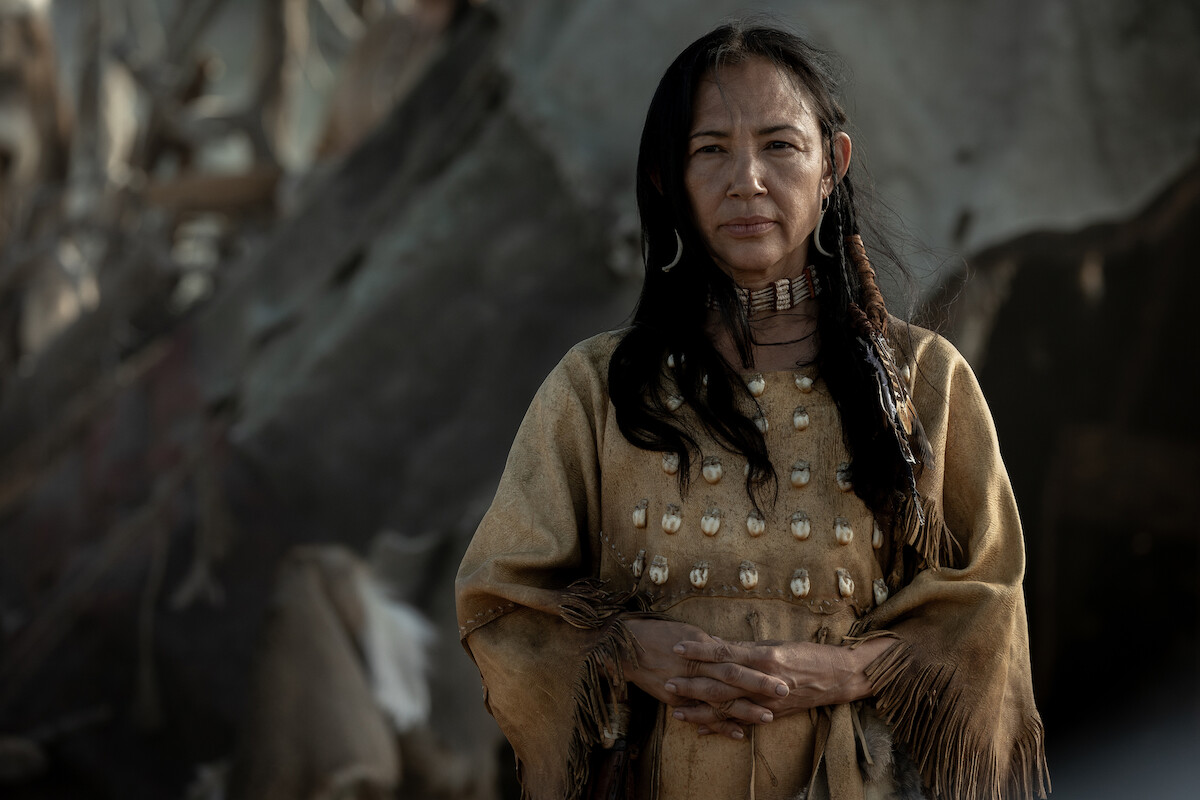
Netflix’s gritty limited series American Primeval strips away the romanticized myths of the Old West, replacing nostalgic tropes with an uncompromising look at 1857 Utah Territory. Directed by Peter Berg (Lone Survivor) and penned by The Revenant screenwriter Mark L. Smith, the six-part drama immerses viewers in a violent collision between indigenous nations, Mormon settlers, U.S. federal troops, and frontier outlaws.
The foundation for the series traces back to Smith’s research while writing the 2015 Leonardo DiCaprio film The Revenant. Fascinated by real-life mountain man Jim Bridger, Smith penned a pilot in 2016, eventually anchoring American Primeval around Bridger’s outpost 50 years after the events that shaped his youth.
Real Figures vs. Historical Inspirations
Rather than relying purely on fictional tropes, the production anchored its core ensemble in authentic historical figures:
-
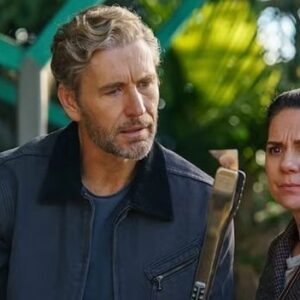
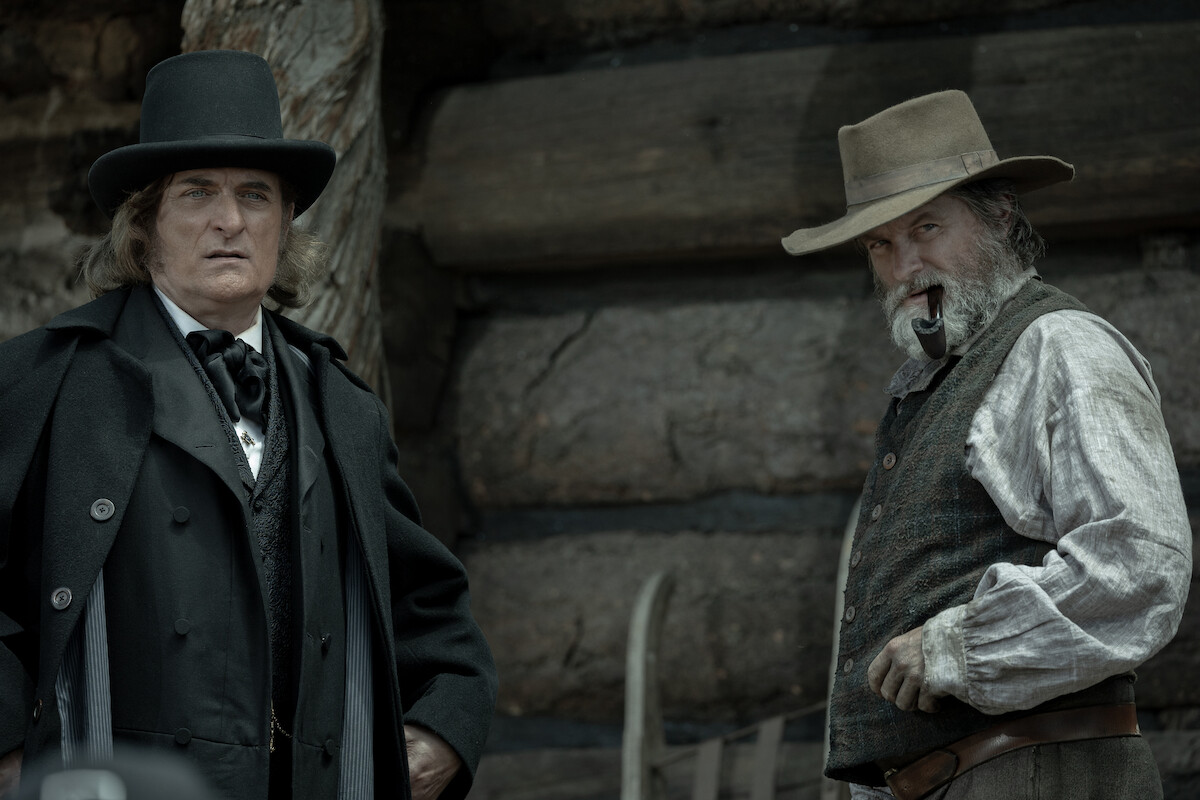
Jim Bridger (Shea Whigham): The legendary trapper and explorer established Fort Bridger in southwest Wyoming, turning a rugged trading post into a bustling hub for westbound emigrants caught directly between federal forces and Mormon militias.
-
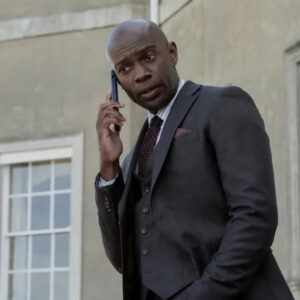
Brigham Young (Kim Coates): The second president of The Church of Jesus Christ of Latter-day Saints and commander of the Nauvoo Legion. To ensure historical precision, Smith pulled Young’s on-screen sermons and speeches verbatim from surviving nineteenth-century transcripts.
-
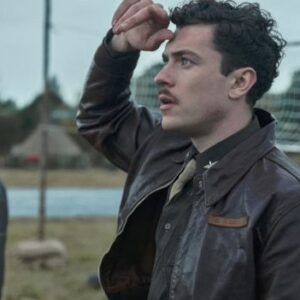
Wild Bill Hickman (Alex Breaux): A notorious frontiersman, lawman, and Nauvoo Legion officer who carried out aggressive operations during the Utah War.
-
Winter Bird (Irene Bedard): While the Shoshone leader is a composite figure, her background draws on real accounts of a female tribal chief who took multiple wives.
-
James Wolsey (Joe Tippett): Inspired by the historical militia members tried and executed for orchestrating sectarian atrocities on the frontier.
The Powder Keg of 1857: Why the Factions Collided
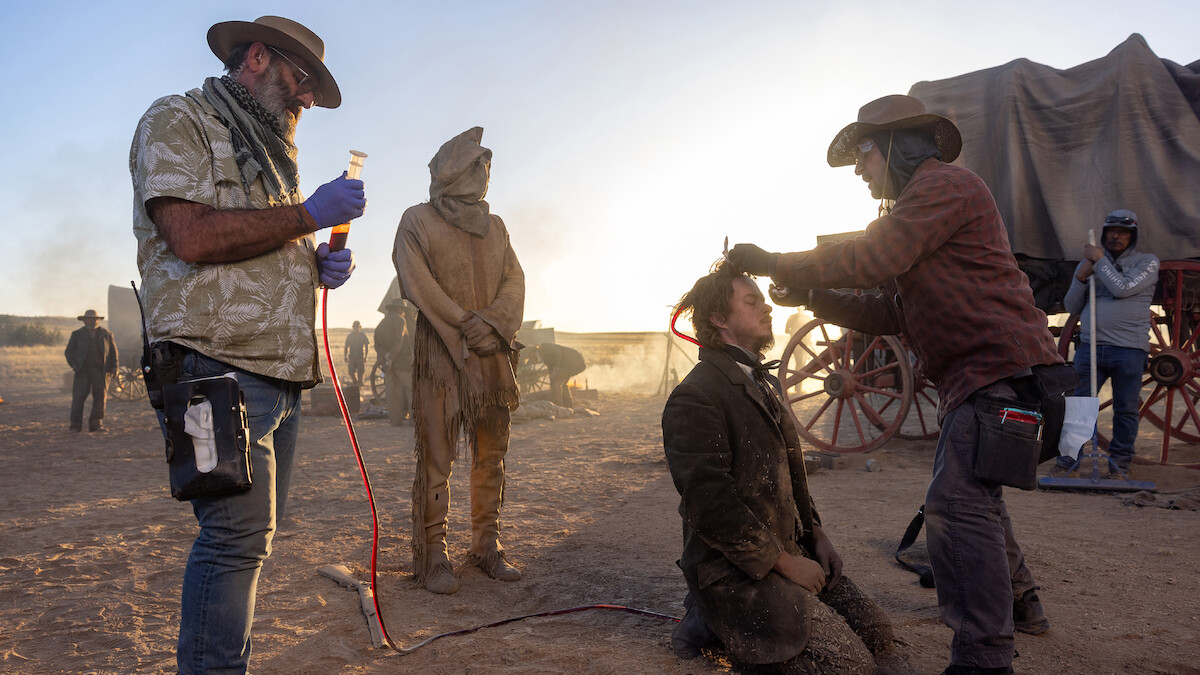
Berg constructed the series around an atmosphere of pervasive survival dread, stripping out clean divisions of “heroes” and “villains”:
-
The Mormons: Driven by intense religious convictions and memories of violent expulsion in Missouri and Illinois, Young’s followers believed federal troops intended to crush their community, prompting the mobilization of the Nauvoo Legion.
-
The U.S. Army: Dispatched under President James Buchanan to assert federal authority over Utah Territory, troops faced harsh winter conditions and guerilla skirmishes.
-
Indigenous Tribes: The Shoshone, Southern Paiute, and Ute nations found their ancestral hunting territories systematically encroached upon and disrupted by both federal columns and settler wagon trains.
-
Trappers & Outpost Tradesmen: Independent mountain men saw their traditional trade routes erased by expanding industrial fur syndicates and arriving armies.
The Mountain Meadows Massacre: Recreating an American Tragedy
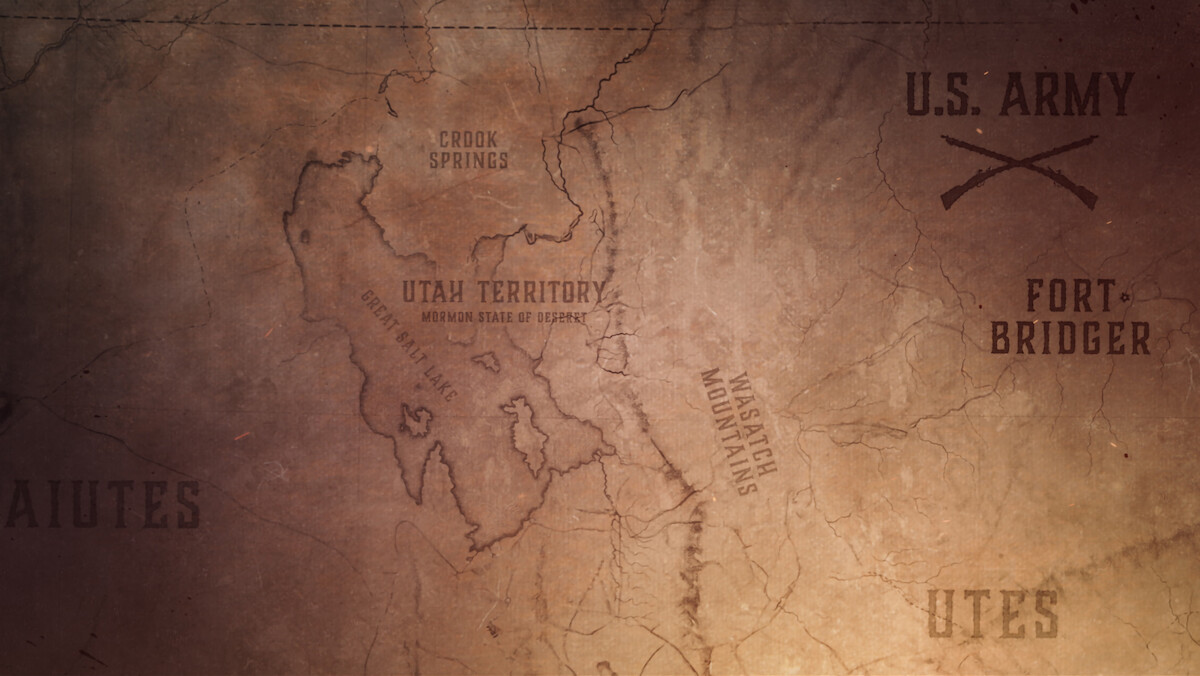
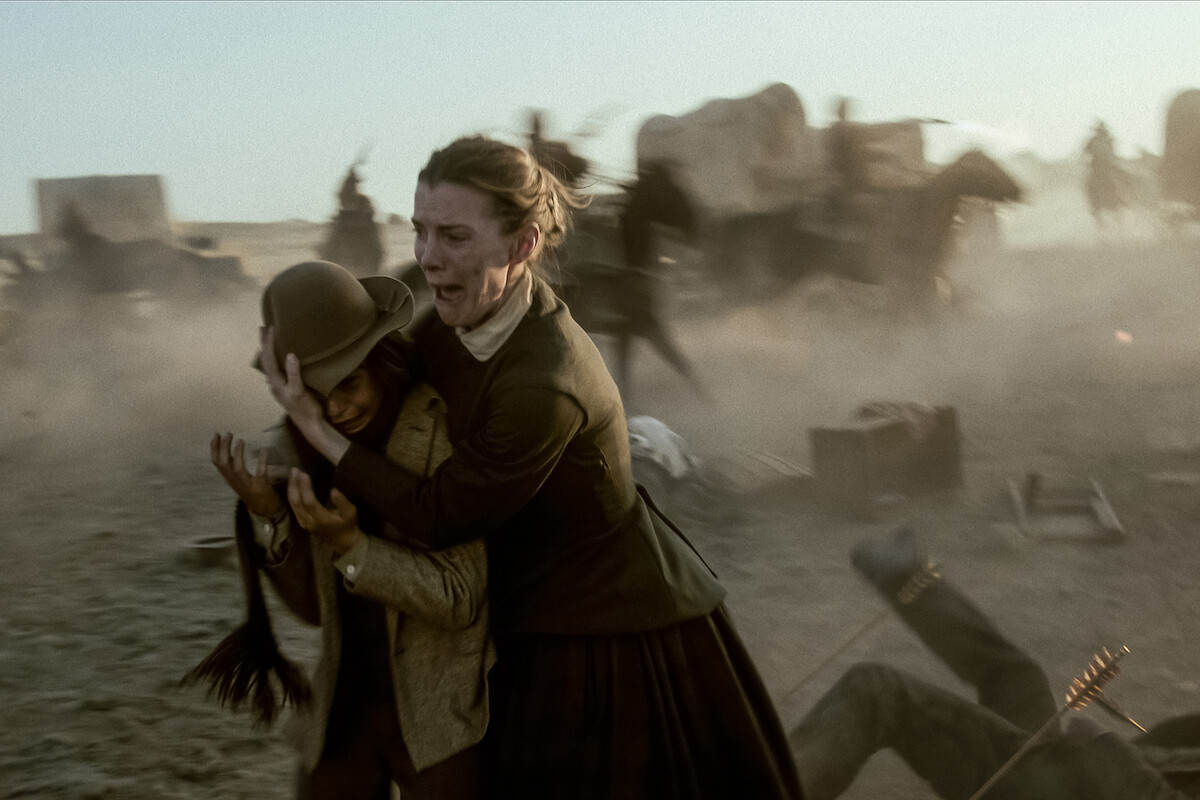
The inciting crisis of Episode 1 recreates the infamous Mountain Meadows Massacre of September 1857, where a wagon train of emigrants bound for California was ambushed:
-
The Brutal Realism: The production spent four months planning the sequence, utilizing approximately 280 actors to depict the chaotic assault through the continuous perspective of Sara (Betty Gilpin) and her son Devin (Preston Mota).
-
The Long Take: Berg designed a single, stitched 6-to-7-minute shot tracking the characters in real-time as arrows and gunfire engulf the camp.
-
The Context: Smith noted that while the massacre was carried out by the Nauvoo Legion alongside local allies, the script frames the tragedy within the extreme paranoia gripping the region as settlers braced for federal invasion.
Constructing and Burning Fort Bridger
To serve as the physical crossroads of the series, the production constructed a massive, true-to-period village set in New Mexico:
-
Hand-Built Outpost: Honoring 1850s methods, crews avoided modern power equipment, felling and notching hundreds of 80-foot timbers using traditional axes and hand tools to build the fort’s palisades, complete with bathhouses, medical quarters, and blacksmith shops.
-
The Arson of Episode 6: In the finale, Bridger sells the outpost to Young and slips into the wilderness as the complex burns. This sequence reflects the real historical scorched-earth tactic: Mormon forces purchased and set fire to Fort Bridger to deny federal troops shelter and supplies as winter approached. The production actually burned roughly half of the physical set to capture the scene.
Rigorous Field Research and Indigenous Collaboration
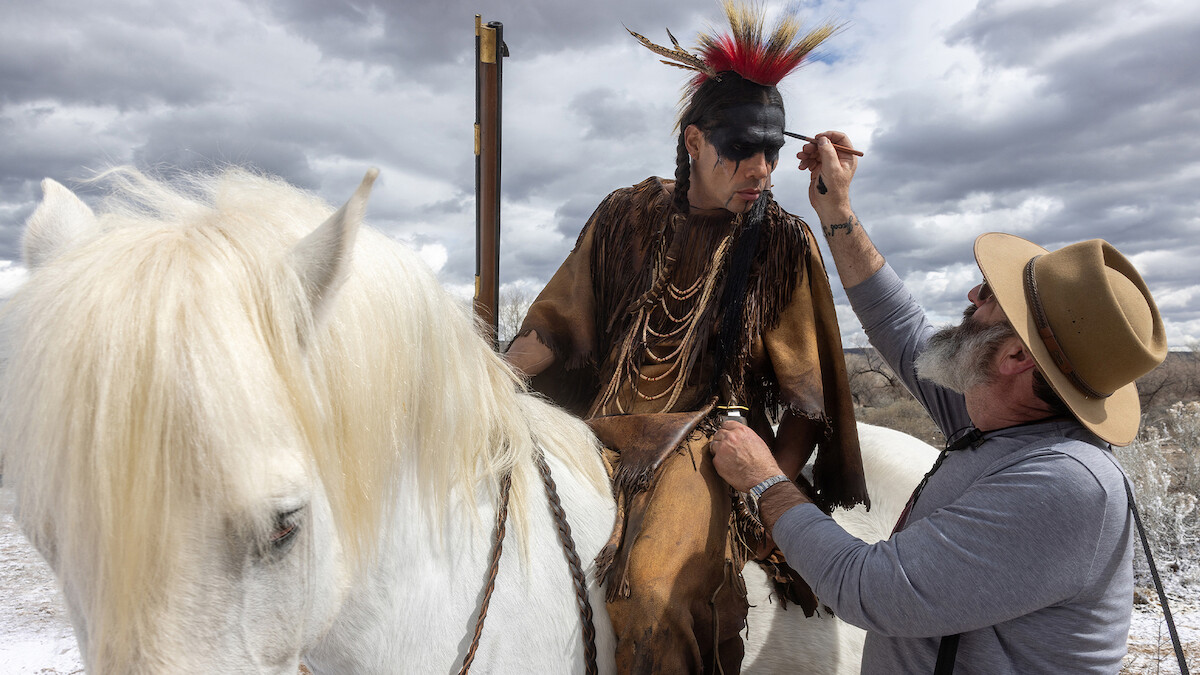
To maintain cultural and historical integrity, Berg and executive producer Eric Newman engaged specialists across every discipline:
-
Site Visits & Curators: Berg toured the massacre grounds with historian Richard E. Turley Jr. (Vengeance Is Mine) and spent five days studying Fort Bridger alongside museum curator Dudley Gardner.
-
Tribal Cultural Leadership: Indigenous advisor Julie O’Keefe coordinated cultural teams from the Shoshone and Southern Paiute nations. Traditional artisans, language speakers, and historians guided costume designer Virginia Johnson and production designer Renée Read, sourcing authentic period-accurate buffalo hides, elk skins, broadcloth, and beadwork.
Newman emphasized that the series intentionally rejects nostalgic storytelling in favor of an unvarnished historical lens, noting that confronting the harsh realities of westward expansion is vital to understanding the roots of modern America.
All six episodes of American Primeval are currently streaming worldwide on Netflix.