Andrea Bocelli Sang “Con te partirò” for the First Time in 1995 – Few Could Have Predicted It Would Become His Signature Song
Before “Time to Say Goodbye” became one of the most recognisable classical-pop songs in the world, it began as a deeply personal Italian ballad called “Con te partirò.”
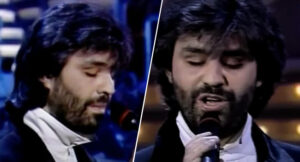
In 1995, a young Andrea Bocelli performed the song on television for the Sanremo Music Festival. His soaring tenor, expressive delivery and unmistakable vibrato offered an early glimpse of the international star he would become.
Yet Bocelli was initially far from convinced that the song was right for the competition. He believed it was too profound and timeless to succeed in a festival where contestants were judged against one another.
As it turned out, he was right about one thing: the song’s greatest success would come after Sanremo.
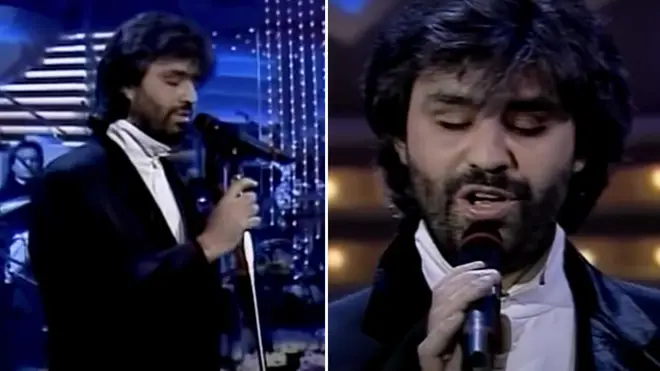
Bocelli Was Unsure the Song Would Work at Sanremo
When “Con te partirò” was first presented to him, Bocelli questioned whether it belonged in a singing competition.
He later recalled:
“When it arrived at my house, the song was a candidate for the festival of Sanremo which I would soon participate in.
“I said, ‘This song is not good because the festival is a competition. And this is not a song for a competition. It’s a deep song. A timeless song. But it’s not for a competition’.”
Bocelli eventually agreed to perform it, but the result was not an outright victory. He finished fourth in the main competition.
“In fact, when I gave in, we brought the song to Sanremo and we only made it to fourth place,” he said.
“But after that, it went through the journey everyone knows.”
That journey would take the song far beyond the Italian festival stage.
From an Italian Ballad to an International Hit
Bocelli recorded “Con te partirò” for his self-titled 1995 album. The single went on to top the charts in France and Belgium, breaking records in both countries.
Its success attracted the attention of British soprano Sarah Brightman, who heard the recording and saw the potential for a duet.
She persuaded Bocelli to record a new version with her, incorporating English lyrics alongside the Italian. The result became “Time to Say Goodbye.”
The pair performed it at the farewell event for German boxer Henry Maske on November 23, 1996.
The combination of Bocelli’s soaring tenor, Brightman’s operatic voice and the song’s sweeping orchestral arrangement helped turn it into a defining classical-pop hit.

The Luciano Pavarotti Connection That Helped Launch Bocelli’s Career
Bocelli’s rise had begun several years before his Sanremo breakthrough, through an unexpected connection with Italian singer-songwriter Zucchero.
In 1992, Zucchero held auditions for tenors to record a demonstration of “Miserere,” a song originally intended for Luciano Pavarotti.
When Pavarotti heard Bocelli’s voice on the demo, he encouraged Zucchero to use the young tenor instead. Eventually, all three artists recorded the song together.
The opportunity helped bring Bocelli to wider attention. He subsequently secured a recording contract and began building a reputation through the Sanremo competition.
He first won the preliminary round in the newcomers section, achieving the highest score recorded in that category. The following year, he returned and topped the section again with another record score, earning an invitation to compete in the main festival.
By 1995, he was ready to perform the song that would change the course of his career.
A Performance That Revealed the Voice the World Would Come to Know
Watching Bocelli perform “Con te partirò” in 1995 offers a glimpse of the qualities that would define his international career: effortless high notes, a ringing vibrato and an emotional delivery that made the song feel deeply personal.
His duet partner Celine Dion once offered a memorable description of his voice:
“If God would have a singing voice, he must sound a lot like Andrea Bocelli.”
For Bocelli, discovering the song that would become his signature brought its own sense of excitement and confidence.
“It obviously brought confidence, optimism, general euphoria. For me and also everyone who worked with me,” he recalled.
What began as a song he doubted would succeed in a competition eventually became an international phenomenon. And that 1995 Sanremo performance remains an important moment in the story of how Andrea Bocelli’s voice reached audiences around the world.