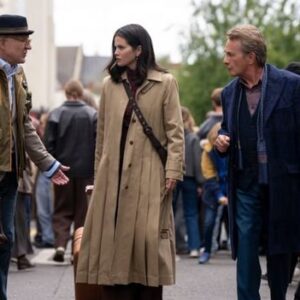
An t-Eilean: The Stunning Gaelic Crime Drama That Proved Subtitles Were Never Going to Hold It Back
A wealthy family torn apart by a shooting, a detective returning to the island she fled a decade earlier, and secrets stretching back to one fateful Hogmanay — An t-Eilean had all the ingredients of a classic British crime drama. What made it groundbreaking was that most of the story unfolded in Scottish Gaelic.
Set against the spectacular landscapes of Harris in the Outer Hebrides, the four-part thriller became BBC ALBA’s first high-end Gaelic drama, with a budget of more than £1 million per episode. Produced by BAFTA-winning Black Camel Pictures, the company behind Annika, the series was created by Nicholas Osborne, co-written by Patsi Mackenzie and directed by Tom Sullivan.
When it arrived in January 2025, the question was less whether audiences could embrace a subtitled Gaelic thriller and more why British television had taken so long to make one on this scale.

A Shooting Tears Apart One of Scotland’s Wealthiest Families
At the center of An t-Eilean is Sir Douglas Maclean, played by Iain Macrae, a self-made businessman who has risen from humble beginnings to become one of Scotland’s richest men.
Douglas lives with his wife, Lady Mary, in an imposing family mansion overlooking the shoreline of Harris. His wealth has given the Macleans enormous influence, but it has hardly made them universally popular.
The family’s relationship with the surrounding community is strained. Some local residents are their tenants, while Douglas’s domineering personality has created enemies both outside and inside his own home.
Then violence erupts.
The drama opens with Douglas desperately calling his daughter Eilidh in Paris to tell her that he and Lady Mary have been shot. It immediately raises questions, not least because another daughter, Sìne, is a doctor living considerably closer.
Lady Mary is killed, Douglas survives, and the investigation quickly reveals that there is no shortage of people with reasons to resent him.
Detective Kat Crichton Has Her Own History With the Island
The case brings Detective Kat Crichton, played by Sorcha Groundsell of Clique and The Innocents, back to the place she once called home.
Now based in Inverness, Kat is assigned as the Maclean family’s liaison officer and insists to her superior, DCI Ahmed Halim, played by Industry actor Sagar Radia, that her involvement will not create a conflict of interest.
That assurance quickly becomes difficult to believe.
Kat did not simply leave the island. Ten years earlier, events there forced her onto the mainland and eventually led her to change her name.
Her past is intimately connected to the people now at the center of the investigation.
As she searches for answers about Lady Mary’s death, the case begins reopening wounds Kat has spent a decade trying to escape.
One Hogmanay Party Connects Past and Present
The investigation eventually reaches beyond the immediate shooting and back to a New Year’s Eve celebration hosted by the Macleans 10 years earlier.
Flashbacks to that Hogmanay gradually expose connections between Kat’s history and the family’s secrets.
It is an effective mystery device, although it also highlights one of the drama’s weaknesses. Kat’s extraordinarily close personal connection to the case makes it difficult to accept that she would realistically be allowed such direct involvement in the investigation.
Some revelations also depend heavily on coincidence and conveniently incomplete memories.
Yet those stretches of credibility are balanced by the intrigue surrounding the Maclean family itself.
Every Maclean Seems to Be Hiding Something

Douglas and Mary’s other children broaden the mystery beyond the central murder investigation.
Calum is an estranged father who rides motorbikes, plays guitar and appears increasingly entangled in questionable activities. His storyline takes the drama away from the Macleans’ imposing home and deeper into the island community, giving the series a welcome perspective beyond the wealthy family.
Ruaraidh, meanwhile, is a solitary figure associated with hunting and shooting who constantly appears on the verge of exposing another uncomfortable family secret.
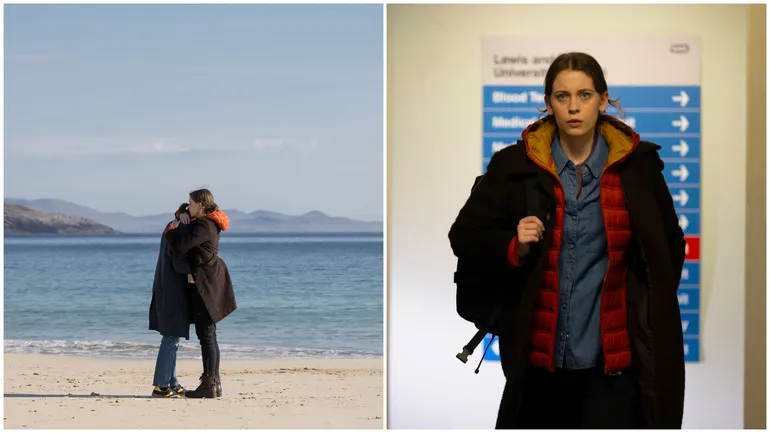
Together, the siblings create the sense of a dynasty beginning to fracture under the pressure of everything it has kept hidden.
There are echoes of familiar dysfunctional-family dramas here: money, resentment, power and a patriarch whose success has not necessarily earned him affection.
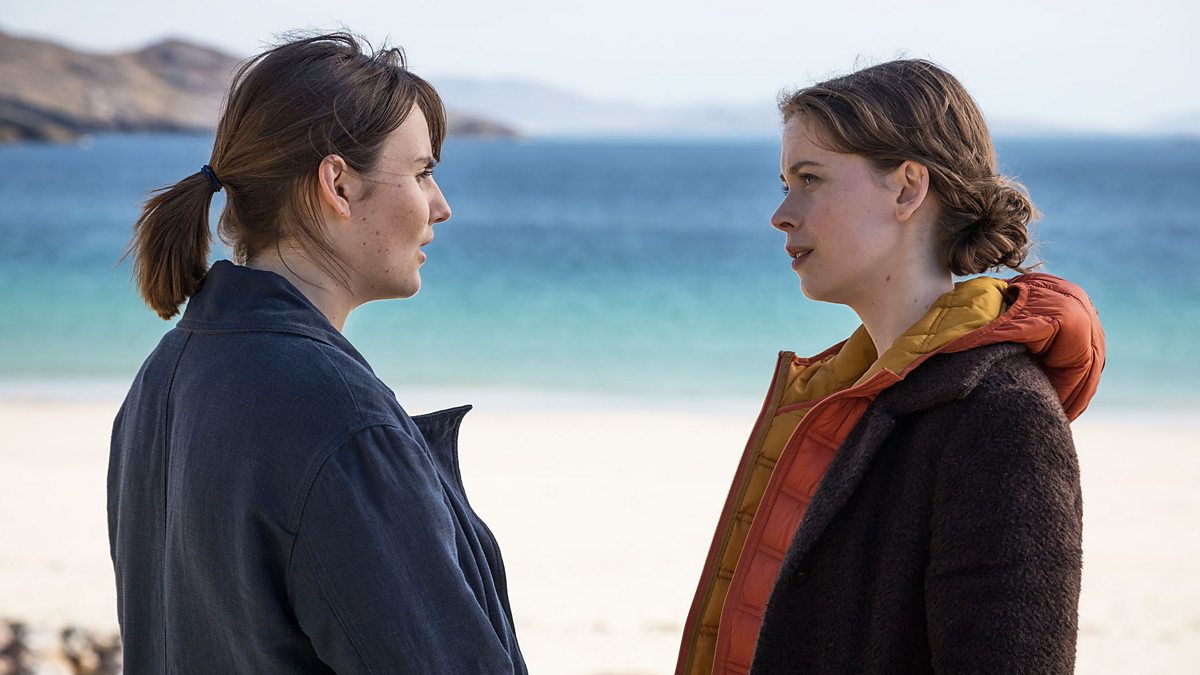
Harris Is Almost Another Character
If the mystery occasionally strains credibility, the setting rarely does.
Filmed extensively in the Western Isles, An t-Eilean makes extraordinary use of Harris. Windswept coastlines, enormous skies, isolated roads and the Macleans’ imposing shoreline residence provide a naturally atmospheric backdrop for the investigation.
The location is more than scenery. Isolation becomes part of the drama, reinforcing the feeling that everyone knows everyone else — and that escaping the past is far harder in a small community.
That visual scale was matched by unusually ambitious production values for Gaelic television.
BBC ALBA originally commissioned the project as the largest and highest-profile Gaelic drama in the channel’s history, with four hour-long episodes and a budget exceeding £1 million per installment.
The Gaelic Language Is Its Most Distinctive Strength
Most of An t-Eilean is spoken in Gaelic, alongside some English dialogue.
Rather than creating a barrier for viewers unfamiliar with the language, that decision gives the series an identity that immediately separates it from countless other British murder mysteries.
Subtitled international television has long since entered the mainstream, from Nordic noir to Korean thrillers and European crime dramas. In that environment, asking audiences to watch a Scottish crime drama largely in Gaelic hardly feels radical anymore.
If anything, An t-Eilean demonstrated how overdue such a production was.
There are roughly 60,000 Gaelic speakers in Scotland, but the potential audience for the series was always much larger. The language, landscape and local culture provide specificity, while the central mystery remains accessible to anyone familiar with a good family crime thriller.
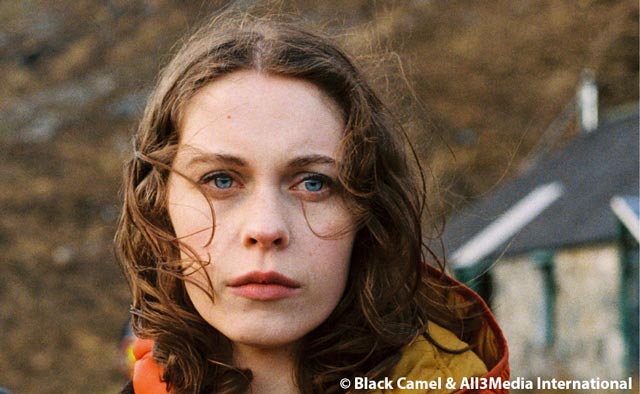
Sorcha Groundsell Anchors an Imperfect but Compelling Mystery
Groundsell gives the drama a strong emotional center as Kat.
Her character is simultaneously investigating the Macleans and confronting her own history, meaning every new discovery potentially carries personal consequences.
That emotional approach can occasionally work against the thriller. With only four episodes available, An t-Eilean has limited time to develop its large collection of characters while simultaneously explaining Kat’s past, investigating Lady Mary’s death and returning repeatedly to the events of a decade earlier.
Some characters consequently receive less backstory than they might have in a six- or eight-part drama, while moments that could have intensified the suspense instead lean into personal emotion.
It does not reinvent the murder-mystery genre, either.
But perhaps it never needed to.
The combination of a strong central performance, an evocative setting, a deeply dysfunctional family and Gaelic dialogue gives a familiar crime formula an identity entirely its own.
An t-Eilean Became Far Bigger Than Its First Four Episodes
What initially looked like an ambitious experiment for BBC ALBA ultimately became a major success.
According to MG ALBA, the first series attracted 1.6 million BBC iPlayer views during 2024/25, representing 20% of all Gaelic-content views on the platform that year. MG ALBA subsequently described it as the most successful Gaelic television programme ever produced.
Its success extended beyond Britain. In 2025, An t-Eilean won both the Drama and Entertainment prize and the Grand Prix at the Prix CIRCOM awards, recognizing excellence in European regional television.
By 2026, MG ALBA reported that the first season had reached an audience of around two million following broadcasts on BBC ALBA and BBC Four, alongside international distribution.
And the story is no longer ending after those original four episodes.
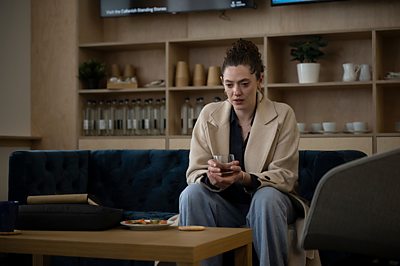
The success of the first season has earned An t-Eilean another chapter.
Filming for a second four-part series was underway across Lewis and Harris in 2026, with production involving around 50 crew members and 30 actors across multiple locations. MG ALBA estimated that the shoot would contribute approximately £1 million to the local island economy.
That renewal may ultimately be the strongest answer to the question raised when An t-Eilean first appeared.
Gaelic television did not need to prove that it could support an ambitious, internationally accessible crime drama. It simply needed the investment and opportunity to make one.
An t-Eilean may occasionally rely on unlikely coincidences, and four episodes leave parts of its story feeling compressed. But between Groundsell’s performance, the haunting Western Isles landscape and a family mystery filled with old grudges, it remains a compelling crime drama with something genuinely distinctive to offer.
And after the audience figures, international recognition and second-series commission that followed, it is increasingly difficult to understand why British television waited so long.