A lavish new period drama has quietly arrived on Netflix during one of the streamer’s busiest weeks — and early viewers say it deserves far more attention than its low-key arrival might suggest.
The six-part Polish production The Doll has landed alongside much louder releases, including a Stranger Things spin-off and the latest installment of Monster.
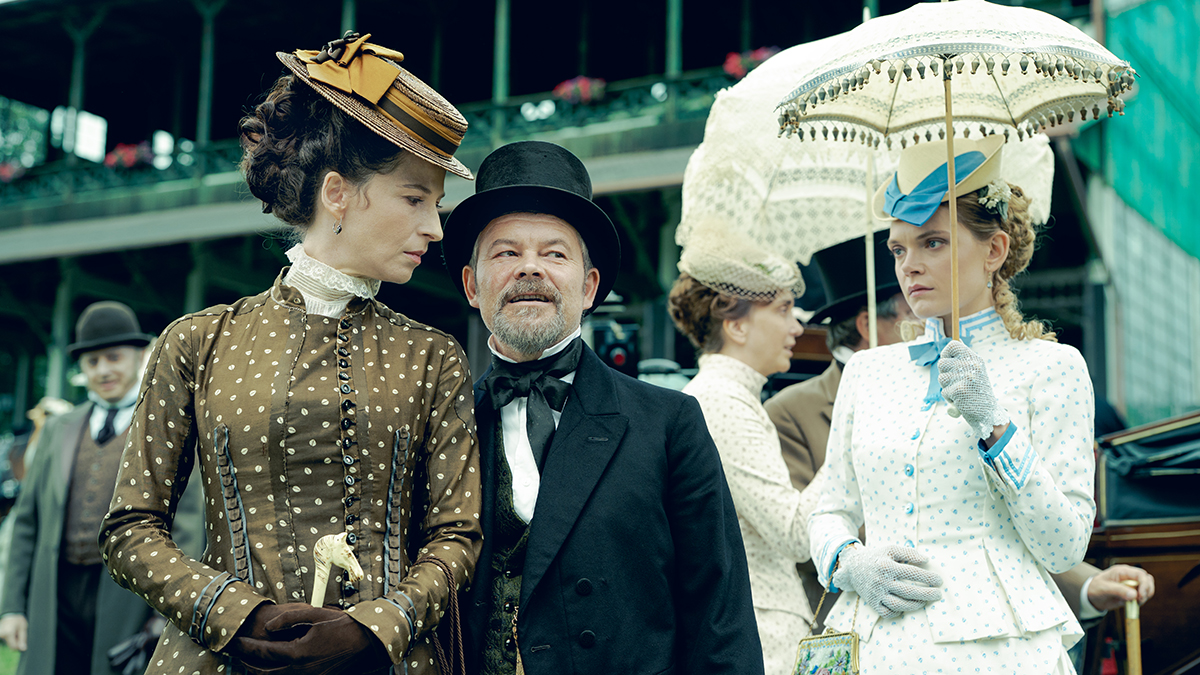
With its elaborate 19th-century costumes, aristocratic society, complicated romance and striking recreation of historic Warsaw, comparisons with Bridgerton were perhaps inevitable.
But those who have already watched the limited series insist that comparison tells only a small part of the story.
Behind the gowns and romantic tension is a much sharper drama about money, class, ambition, obsession and the desperate desire to escape the social position into which you were born.
One early critic went as far as calling it “a breathtaking adaptation of the classic novel.”
Netflix Turns A Polish Literary Classic Into A Six-Part Drama

The Doll takes its inspiration from Lalka, one of Poland’s most celebrated novels.
The original work has been translated into 28 languages and is particularly admired for the detailed picture it paints of Warsaw society during the 19th century.
Netflix describes its new version as a contemporary reimagining of the literary classic rather than a strictly faithful reproduction.
At the center of the story are Stanislaw and Izabela — two characters drawn toward one another despite occupying dramatically different positions in society.
Stanislaw is driven by enormous ambition.
He wants to climb the social ladder and gain entry into a world that remains tantalizingly beyond his reach.
Then there is Izabela.
And his fascination with her threatens to become all-consuming.
Stanislaw Wants More Than Love

On the surface, the story appears to offer the familiar ingredients of a sweeping period romance.
But Stanislaw’s pursuit of Izabela is tangled up with something much larger.
She represents access to the aristocratic society he desperately wants to enter.
His attraction to her therefore exists alongside his obsession with status, fortune and social advancement.
Izabela faces an entirely different struggle.
Born into the aristocratic world Stanislaw longs to join, she is attempting to break free from its rigid expectations and determine what her own life should become.
Their relationship develops across that divide.
He is fighting to get in.
She is struggling against the restrictions of being inside.
That contradiction gives the drama much of its tension.
Viewers Are Already Making The Bridgerton Comparison
It doesn’t take long to understand why The Doll has been compared with Bridgerton.
There are wealthy families.
There are elaborate costumes.
There is romance.
There are strict social hierarchies and expectations governing who can associate with whom.
But early reviews argue that viewers expecting another glossy romantic fantasy may be surprised.
One reviewer stressed that despite sharing some of those familiar ingredients, The Doll takes a more serious interest in class, business, money and social mobility.
Romance is part of the story rather than its only purpose.
Stanislaw’s ambition and fixation collide with Izabela’s desire for independence, while the changing society around them places increasing pressure on the old divisions between wealth, status and personal freedom.
‘A Breathtaking Adaptation’
The series has not yet accumulated enough reviews for a Rotten Tomatoes score, but early reactions have been largely positive.
One critic praised the production as “a breathtaking adaptation of the classic novel,” highlighting its reconstruction of 19th-century Warsaw and its social commentary.
Another warned that the opening may initially feel slow as the six-part drama establishes its world and characters.
But that patience apparently pays off.
The reviewer suggested that the familiar social maneuvering seen in numerous period dramas eventually “descends into chaos.”
They also argued that the series has more to offer than the standard romantic period drama.
That could be an important distinction for viewers who have become accustomed to the increasingly crowded field of lavish historical romances.
Sandra Drzymalska’s Izabela Is Drawing Particular Praise
Among the cast, Sandra Drzymalska’s performance as Izabela has attracted special attention.
One reviewer called her “mesmerising.”
At first, Izabela can appear unpredictable or mercurial.
But the drama gradually reveals something more complicated beneath that impression.
Her behavior is tied to her determination to control her own future rather than simply accepting the life society has prescribed for her.
That struggle places her in an interesting position within the story.
Stanislaw views the aristocratic world as something to attain.
Izabela understands the restrictions that come with belonging to it.
His dream and her reality are not the same thing.
And their relationship develops in the uncomfortable territory between those two perspectives.
The Costumes Aren’t The Only Thing Impressing Early Viewers
The production itself has also attracted praise.
One early viewer highlighted the “beautiful costumes” and “very good acting,” while arguing that the characters feel like genuine people rather than simple period-drama archetypes.
Their personalities, flaws and conflicting emotions reportedly make them easier to connect with despite the historical setting.
That visual attention is particularly important for a story so closely associated with Warsaw.
The original novel is renowned not merely for its characters but for the detailed social world surrounding them.
The new series attempts to recreate that atmosphere while adapting the material for a contemporary streaming audience.
But Fans Of The Novel Should Expect Changes
Viewers familiar with Lalka should not necessarily expect the television series to reproduce the book page by page.
One early reaction described the adaptation as feeling closer to “fan fiction inspired by a classic novel” than a completely direct translation of the source material.
At the same time, the reviewer noted that numerous references and recognizable details remain scattered throughout the series for audiences who know the original.
That appears consistent with Netflix’s positioning of the show as a reimagining.
The central themes remain recognizable.
Class.
Wealth.
Ambition.
Unrequited love.
Obsession.
Social mobility.
But the adaptation has room to reshape those elements for its six-episode format.
A Period Drama About Who Gets To Move Up — And Who Wants Out
Perhaps the most interesting aspect of The Doll is the contradiction at the center of its two principal characters.
Stanislaw believes moving upward through society will bring him closer to the life he wants.
Izabela already occupies that privileged world but is fighting to establish an identity beyond the rules surrounding her.
Money gives Stanislaw possibilities.
Social status gives Izabela restrictions.
Their attraction sits directly between those competing desires.
That makes the drama less about simply asking whether two people will end up together and more about what each believes the other represents.
For Stanislaw, Izabela can become inseparable from the status he craves.
For Izabela, choosing her own future means resisting a society accustomed to choosing for her.
Six Episodes Make It An Easy Weekend Binge
The complete limited series consists of six episodes, all of which arrived together on Netflix.
Its release could easily have been overlooked.
With several major titles competing for attention at the same time, The Doll has arrived without the enormous promotional noise surrounding some of the platform’s biggest franchises.
But that may also make it precisely the sort of unexpected discovery Netflix viewers enjoy finding.
The initial setup may require patience.
The visual similarities to other romantic period dramas may create misleading expectations.
And readers devoted to the original novel may notice significant changes.
Yet the early verdict suggests there is considerably more hiding beneath the beautiful costumes.
This isn’t simply another story about wealthy people falling in love in expensive rooms.
It’s about someone desperate to enter an elite world, someone else desperate to control her place within it — and what happens when money, desire, ambition and obsession become impossible to separate.