Russell Brand and David Walliams’ Disturbing 2006 TV Joke Resurfaces After Prison Sentence and Serious Misconduct Allegations
A 20-year-old television exchange between Russell Brand and David Walliams has resurfaced, revealing the two comedians joking about pretending to be gay to attract women. Once presented as playful banter, the remarks have taken on a troubling new significance following Brand’s 10-year-and-six-month prison sentence and the publication of serious sexual misconduct allegations against Walliams.
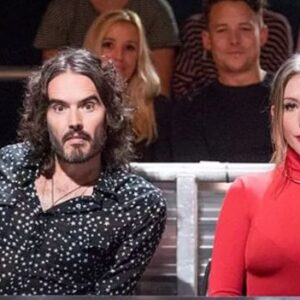
The footage, recorded during the first episode of The Russell Brand Show on November 24, 2006, has attracted renewed attention as both entertainers face intense scrutiny over their past conduct.
The 2006 Exchange That Has Resurfaced
The uncomfortable moment occurred when Walliams and his Little Britain comedy partner Matt Lucas appeared as guests on Brand’s television programme.
During the episode, the comedians engaged in playful exchanges, with Brand and Walliams sharing a kiss before Walliams presented the host with an antique top hat.
Lucas then made a remark about their public personas, describing the pair as unusually flamboyant straight men.
“You are like the two gayest straight blokes there are,” Lucas joked.
Walliams responded by suggesting that their behaviour served as a useful disguise.
“Isn’t it a wonderful smokescreen?” he remarked.
Brand appeared to agree, replying:
“Isn’t it glorious? It works wonderfully well.”
At the time, the exchange was treated as another example of the deliberately provocative humour associated with both comedians.
However, the footage is now being reconsidered in light of separate developments involving the two men.
Why Brand’s Old Remarks Have Attracted Renewed Attention
The resurfaced conversation has drawn particular interest because of evidence discussed during Brand’s recent criminal trial.
During proceedings at Southwark Crown Court, the comedian was questioned about a passage from his 2007 autobiography, My Booky Wook.
The passage accompanied a childhood photograph showing Brand posing in a hat and wig.
Its caption suggested that he had decided to act gay to attract girls, describing the behaviour as a tactic that eventually produced results.
The old television conversation with Walliams has subsequently circulated online, with commentators drawing comparisons between the remarks made in 2006 and the evidence examined during Brand’s trial.
However, the television exchange itself was not a criminal charge, and the remarks alone do not establish that either man committed an offence.

Russell Brand Sentenced to 10 Years and Six Months
On November 9, 2026, Brand, 51, was sentenced at Southwark Crown Court after being convicted of one count of rape and three counts of sexual assault.
The offences involved four women and occurred between 2004 and 2009, during the period when Brand was becoming a prominent figure in British entertainment.
The court imposed a nine-year sentence for rape, together with additional sentences for the three sexual assaults.
The sexual assault sentences run concurrently with one another, while the resulting 18-month term runs consecutively to the rape sentence, producing a total of 10 years and six months.
Brand was acquitted of two other rape charges and one charge of attempted indecent assault.
He is expected to serve two-thirds of his sentence in custody before being released on licence and will remain subject to sex offender notification requirements for life.
During sentencing, Judge Joel Bennathan criticised Brand’s use of his fame and his disregard for the consent of the women he assaulted.
The conviction has prompted renewed examination of Brand’s earlier public appearances and the conduct once treated as part of his provocative comedy persona.
David Walliams Faces Separate Sexual Misconduct Allegations
The resurfaced footage also comes amid serious allegations involving David Walliams, 55.
A joint investigation by ITV News and The Guardian, reportedly conducted over three years, published accounts from women alleging inappropriate and exploitative behaviour.
The allegations include claims relating to encounters with teenage girls and young women.
One woman, identified under the pseudonym Jade, alleged that Walliams sexually assaulted her when she was 15.
Another woman, referred to as Alex, claimed that she first met Walliams at a fan event at 15 and later entered into a sexual relationship with him when she was 17.
The investigation also examined allegations concerning Walliams’ conduct in professional settings, including Britain’s Got Talent and his former publisher, HarperCollins.
These claims remain allegations and have not been established as criminal findings.
Walliams denies wrongdoing, including allegations that he groomed young women or sexually harassed people in the workplace.
There is no suggestion that Walliams was aware of Brand’s criminal offences or participated in them.
Walliams Denies Allegations Following Legal Battle
During the Russell Brand trial, the court heard that he “acted gay” to disarm women and make them less likely to perceive him as a threat.
Here’s Russell Brand and David Walliams joking about acting gay as a “smokescreen”. https://t.co/abseaU1jpD
— Mukhtar (@I_amMukhtar) November 10, 2026
The allegations became public after Walliams unsuccessfully sought an injunction preventing their publication.
The legal proceedings involved Independent Television News and Guardian News and Media, the organisations responsible for the investigation.
Following the publication of the claims, Walliams issued a statement strongly rejecting allegations of criminal behaviour.
He acknowledged that he had sometimes been inconsiderate towards people with whom he had casual relationships and expressed regret for not always taking their feelings into account.
However, he rejected suggestions that he had abused his celebrity status.
“I am not a sexual predator,” he stated.
He also maintained that he had not broken the law and denied grooming young women.
Walliams said he was devastated that some women he had known years earlier had subsequently described feeling hurt or angry.
His response made clear that he disputes the central allegations made against him.
A Television Moment Viewed Differently Two Decades Later
The renewed attention surrounding the 2006 footage illustrates how entertainment culture from an earlier era is being reassessed.
Brand and Walliams built much of their public image around provocative humour, unconventional behaviour and jokes intended to challenge social expectations.
At the time, the conversation about pretending to be gay was presented as an amusing exchange between comedians.
Twenty years later, the same remarks are being discussed in a very different context.
Brand has been convicted and imprisoned for serious sexual offences, while Walliams faces allegations that he firmly denies.
The legal circumstances of the two men are therefore fundamentally different, and the resurfaced joke should not be treated as evidence of shared criminal conduct.
Nevertheless, the clip has become part of a broader discussion about celebrity power, inappropriate behaviour and the ways certain attitudes were normalised within the entertainment industry.
Renewed Questions About Celebrity Culture
The resurfacing of the exchange follows increasing public scrutiny of how prominent entertainers behaved towards women during the height of their careers.
Brand’s conviction has raised serious questions about the influence of celebrity status and the circumstances that allowed his offending to continue over several years.
The separate allegations against Walliams have also prompted discussion about accountability and the treatment of young women within entertainment and publishing.
Although the 2006 clip cannot establish what either man did outside the programme, its language has become particularly uncomfortable in light of subsequent events.
What once passed as provocative comedy is now being examined through a very different lens. Nearly two decades after Russell Brand and David Walliams joked about using their public personas as a smokescreen, the resurfaced footage has become another reminder of how dramatically the reputations of once-celebrated entertainers can change.