Netflix’s Brutal Six-Part Western Gives Yellowstone A Run For Its Money — And Tells A Far More Powerful Story About Women
Yellowstone helped bring the modern Western back into the spotlight, but Netflix’s American Primeval takes the genre into much darker territory. Set against the violent conflicts of 1857, this six-episode miniseries explores the struggle for control of Native American lands, bringing together Mormon militias, Indigenous communities, white settlers and the U.S. Army in a frontier where survival often comes down to who is willing to use the most force.
While Taylor Sheridan’s hit drama focuses on the Dutton family’s fight to protect its Montana ranch from outside threats, American Primeval looks back at a brutal chapter of American history. Its story is driven by religious conflict, territorial ambitions and the devastating consequences of colonial expansion.
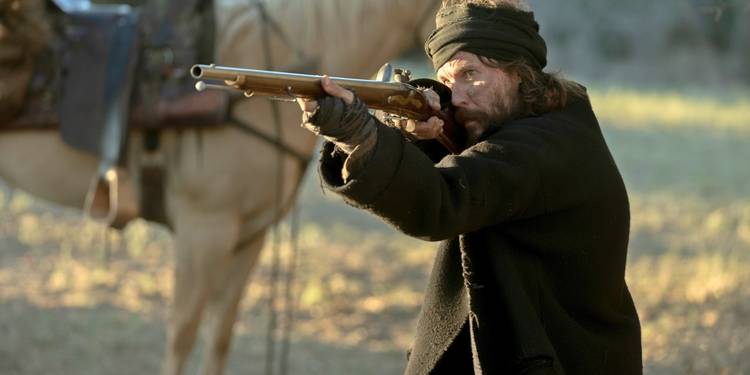
The series also shifts attention towards women whose experiences are often pushed into the background of traditional Westerns. Through three very different characters, it explores how women navigate a society that offers them little protection or control over their own lives.
And while Yellowstone has never avoided shocking violence, American Primeval presents a far more lawless world, where public executions, abductions and bloody clashes are part of everyday survival. Remarkably, it delivers this sprawling, uncompromising story in just six episodes.
What Is American Primeval About?
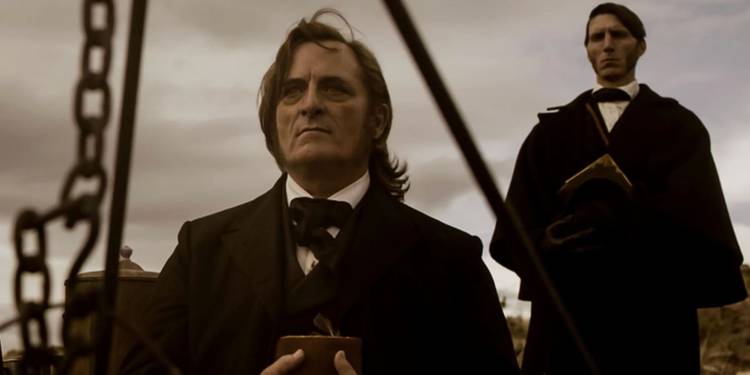
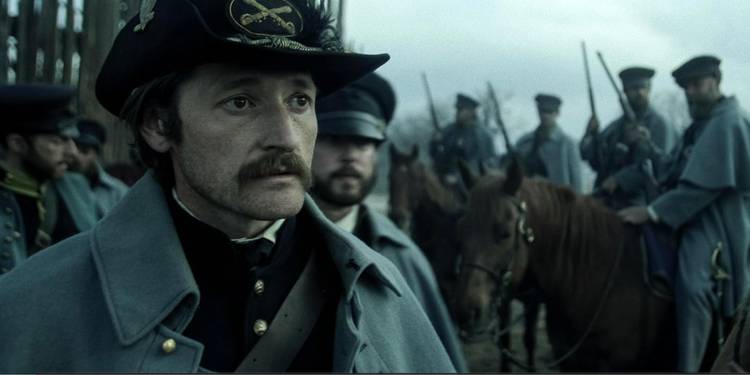
Set during the 1857 Utah War, American Primeval dramatises the expansion of the Mormon Church under Brigham Young, played by Kim Coates. Driven by religious conviction and the desire to secure greater control over the territory, Young sets his sights on Fort Bridger, bringing him into conflict with several powerful figures.
Among them are Captain Edmund Dellinger (Lucas Neff), an officer in the U.S. Army; Jim Bridger (Shea Whigham), the fort’s owner; and Red Feather (Derek Hinkey), leader of a renegade group of Crow warriors known as the Wolf Clan.
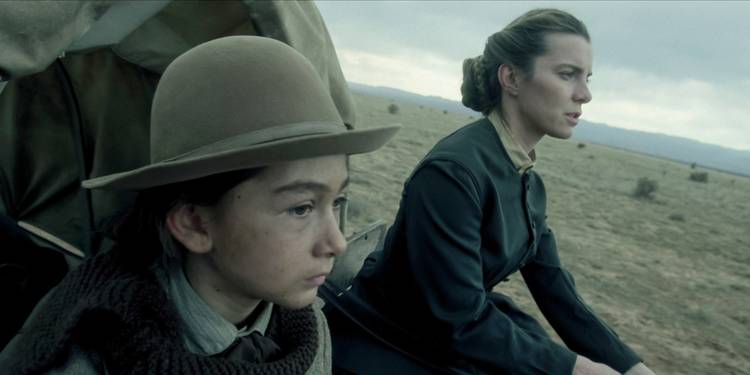
The political and military tensions form the backdrop to a more personal story centred on Sara Rowell (Betty Gilpin) and her son, Devin (Preston Mota). Having travelled from Missouri, the pair are trying to reach Devin’s father in Crooks Springs, Utah. Their journey, however, is filled with dangers that threaten to end their chances of reaching safety.
The unforgiving landscape, roaming wildlife and bounty hunters scattered across the region make every mile difficult. Their situation becomes even more precarious as the conflict surrounding Fort Bridger intensifies.
Their fortunes take a turn when Isaac Reed (Taylor Kitsch), a reluctant mountain man, agrees to accompany them. But having a guide does not mean they are out of danger. As rival groups fight over land and power, Sara and Devin find themselves caught in a conflict far bigger than their original journey.
American Primeval is a fictionalised dramatisation rather than a straightforward retelling of historical events. Nevertheless, it draws on real people, places and conflicts from the period, including the Utah War and the Mountain Meadows Massacre.
Why American Primeval Makes Yellowstone Look Tame
There is no shortage of disturbing moments in Yellowstone. Over five seasons, viewers have witnessed a bull charging into a bar, Beth Dutton (Kelly Reilly) being attacked in her own office and Monica’s (Kelsey Asbille) controversial storyline, which places her in danger as she attempts to lure a predator.
Yet American Primeval pushes violence to another level, largely because of the world in which its story unfolds.
The Duttons may face powerful enemies, government interference and complicated legal battles, but their modern setting still has institutions and authorities that can influence the outcome of a conflict. In the Utah Territory depicted in American Primeval, formal law has far less reach. Competing groups pursue control of the land with little fear of legal consequences, leaving ordinary people exposed to the ambitions of those willing to fight for power.
Violence is woven into nearly every part of life on this frontier. Public hangings, the abduction of women and the slaughter of groups of settlers all feature in the series’ depiction of the period. Its most disturbing sequences include bloody confrontations between rival factions, alongside a fictionalised portrayal of the Mountain Meadows Massacre of September 1857.
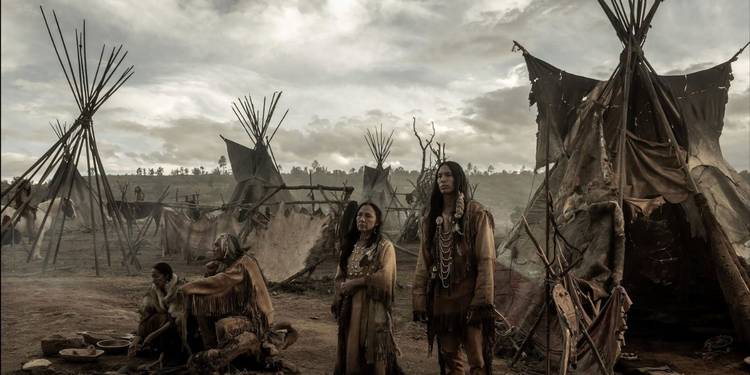
The danger can emerge without warning. A dispute that begins with words can quickly turn into a stabbing, while an encounter on the trail may end with arrows or gunfire. Whether driven by territorial ambitions, personal revenge or the desperate need to defend themselves, characters repeatedly resort to violence in order to survive.
This relentless brutality gives the miniseries a very different atmosphere from Yellowstone. Rather than presenting a modern struggle over land and legacy, it depicts a frontier where the basic rules of society have yet to offer meaningful protection to those caught in the middle.
American Primeval Gives Its Female Characters More Room To Evolve
One of the most significant differences between the two series lies in how they portray women.
Across its six episodes, American Primeval follows three women from distinct social, cultural and religious backgrounds. Each faces a different form of oppression and must find a way to survive in a world that gives women limited freedom and few choices.
Sara Rowell is a mother fleeing her past while trying to protect her disabled son, Devin. Her journey is shaped by the responsibility of keeping him safe, even as the dangers around them become increasingly difficult to escape.
Abish Pratt (Saura Lightfoot-Leon), meanwhile, is a Mormon wife who begins questioning the religious expectations and life imposed upon her after falling into the hands of the Shoshone. Her experience forces her to reconsider the beliefs and circumstances that have shaped her existence.
The third character, Two Moons (Shawnee Pourier), is a mute Shoshone woman who escapes her village after killing the man who raped her. Her struggle for survival adds another perspective to the series’ portrayal of women confronting violence and limited choices.
The contrast with Yellowstone is particularly noticeable when considering the time each show has to develop its characters. Sheridan’s drama follows its female characters through five seasons, often placing them in more established roles. American Primeval, by comparison, gives Sara, Abish and Two Moons room to change and reveal different sides of themselves within a tightly structured six-episode story.
They may initially appear vulnerable or powerless, but their experiences force them to adapt, make difficult decisions and protect themselves and the people around them. Their stories are not simply secondary to the battles between men; they are central to understanding the human cost of the violence unfolding across the frontier.
Ultimately, American Primeval offers a darker and more layered portrait of America’s colonial past than Yellowstone attempts to explore. Its combination of historical conflict, religious tension, unrelenting violence and women’s struggles for survival makes it a distinctive addition to the Western genre.