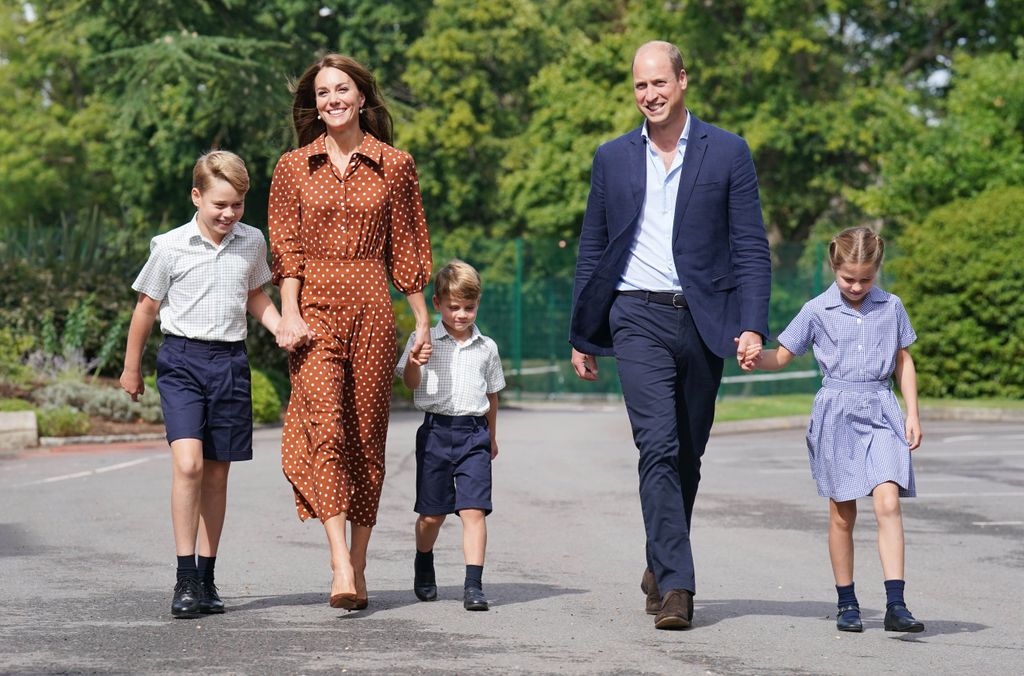
Prince George, Princess Charlotte and Prince Louis may carry some of the most recognisable titles in Britain, but inside the classroom, their royal status is largely set aside.
At school, the three children are generally known as George Wales, Charlotte Wales and Louis Wales — a surname taken from their parents’ title as the Prince and Princess of Wales.
The practice may sound unusual, but it is part of a long-standing royal tradition. Their father, Prince William, and uncle, Prince Harry, also used Wales as their surname while attending school, when their father, now King Charles III, held the title Prince of Wales.
George Begins Life at Eton
The convention has attracted renewed attention following Prince George’s move to Eton College.
George, 13, started at the Berkshire boarding school on 8 September 2026, accompanied by William and Catherine, Princess of Wales.
He previously attended Lambrook School alongside Charlotte and Louis. Eton is also the former school of both William and Harry.
George’s younger siblings remain at Lambrook Prep School in Berkshire. Princess Charlotte, 11, is in Year 7, while Prince Louis, eight, is in Year 4. The school is close to the family’s Windsor home, Forest Lodge.
Although all three children were born as Prince or Princess and hold the style of His or Her Royal Highness, those formal titles are not generally used by classmates and teachers in everyday school life.
Instead, Wales provides them with a more conventional surname while still reflecting their family’s current royal status.

From Cambridge to Wales
This is not the first time the children’s school surname has changed.
When William and Catherine were the Duke and Duchess of Cambridge, their children used Cambridge whenever a surname was required. George and Charlotte were known as George Cambridge and Charlotte Cambridge, while Louis also adopted the surname when he began school.
That changed following the death of Queen Elizabeth II in September 2022.
Charles became King, William became the Prince of Wales and Catherine became the Princess of Wales. Their children consequently moved from Cambridge to Wales, becoming formally known as Prince George of Wales, Princess Charlotte of Wales and Prince Louis of Wales.
The change followed the same convention William and Harry had used during their own school years.
William’s Eton Connection
George’s arrival at Eton also continues a tradition within the family.
William began at the school in 1995, remaining there for five years before moving on to the University of St Andrews. During his time at Eton, he became a house captain and prefect.
Harry followed his older brother to the school three years later.
On George’s first day in September, William and Catherine accompanied him as he began his new chapter. He subsequently moved into one of Eton’s 25 boarding houses.
The all-boys boarding school is located only a short distance from the Wales family’s Windsor home. George’s arrival has attracted particular attention because he is second in line to the throne.
Why Eton Was Chosen For George
Melanie Sanderson, managing editor of the Good Schools Guide, previously highlighted several reasons why Eton could suit George.
She pointed to the school’s wide range of academic, sporting and theatrical opportunities, as well as its international pupil population. Eton also has a strong chapel tradition, something Sanderson considered relevant given George’s future role.
The school’s all-boys structure may have been another consideration for William and Catherine. While pupils have opportunities to socialise with girls from nearby schools, including Wycombe Abbey, their regular classes remain single-sex.
Sanderson previously described Eton as an obvious choice for George and said she would have placed it at the top of her list as an educational consultant.
She also noted that George had been well prepared for the transition following his years at Lambrook, including exposure to boarding routines. The school’s location close to the family’s Windsor home was another practical advantage.
Wales Is Not The Royal Family’s Official Surname
While George, Charlotte and Louis use Wales at school, the name is not the official surname of the Royal Family.
In fact, members of the British royal family often have little practical need for a surname. Their titles, names and royal styles generally provide sufficient identification.
The official family name is Windsor.
The name dates back to 1917, when King George V changed the royal family name from Saxe-Coburg-Gotha to Windsor. At a Privy Council meeting on 17 July 1917, he declared that qualifying male-line descendants of Queen Victoria would use Windsor.
The decision came during the First World War, when strong anti-German sentiment contributed to the change.
Queen Elizabeth II retained Windsor when she became monarch in 1952.
Eight years later, however, she and her husband, the Duke of Edinburgh, established a way of distinguishing their direct descendants from the wider House of Windsor without changing the name of the royal house.
That was where Mountbatten-Windsor came in.
The Story Behind Mountbatten-Windsor
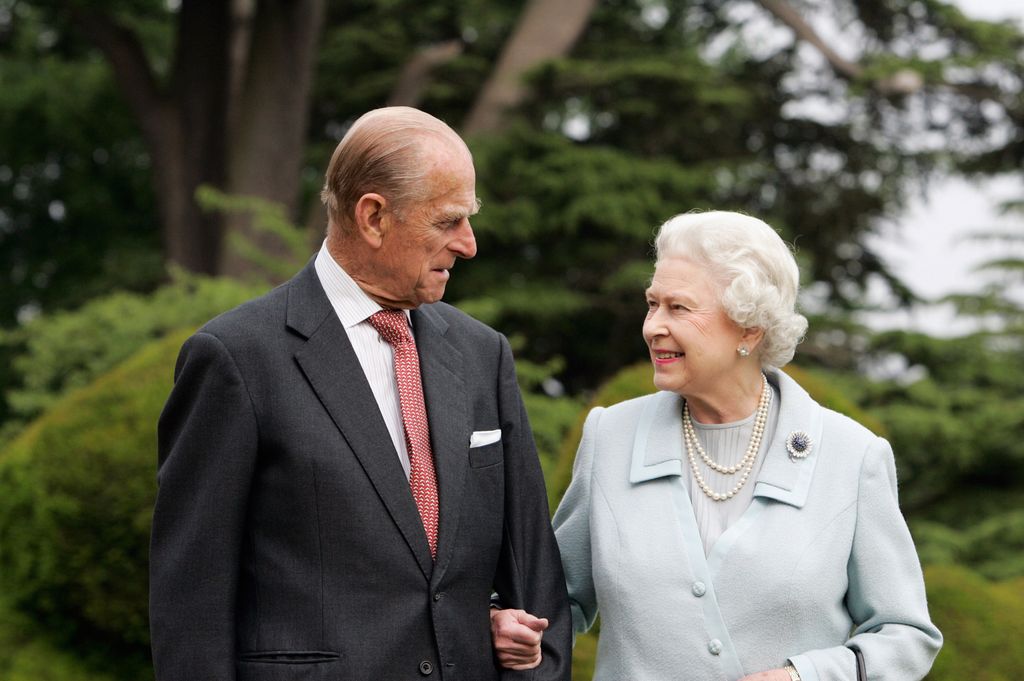
In 1960, a Privy Council declaration established that the Queen’s descendants who did not hold the style of Royal Highness or the title of Prince or Princess, as well as female descendants who married, would use Mountbatten-Windsor as their surname when one was required.
The name incorporated Prince Philip’s family name. Born Prince Philip of Greece, he adopted Mountbatten after becoming a naturalised British citizen in 1947.
For royals who hold a prince or princess title, however, the surname is rarely necessary in everyday life.
That explains why George, Charlotte and Louis do not normally use Mountbatten-Windsor at school. Instead, they use Wales, reflecting their parents’ current titles.
How Other Royals Use Their Surnames
The distinction can be seen elsewhere in the family.
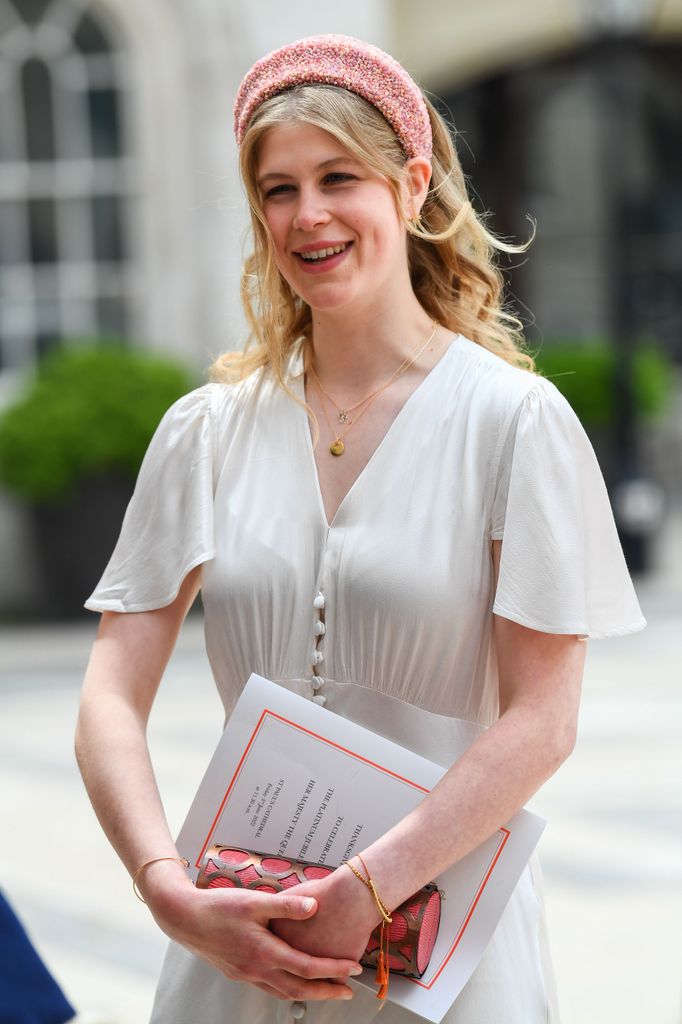
Lady Louise Windsor, daughter of the Duke and Duchess of Edinburgh, uses Mountbatten-Windsor when a surname is required. She has, for example, been listed under that name in connection with her carriage driving competitions.
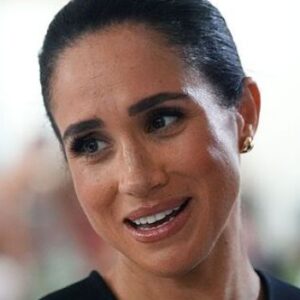
Prince Harry and Meghan Markle’s children, Archie and Lilibet, also used Mountbatten-Windsor before becoming entitled to the styles Prince and Princess following King Charles’s accession in 2022.
In March 2023, Harry and Meghan confirmed that their children would use the prince and princess titles in formal settings, while those titles would not necessarily be used in everyday conversation.
A Simple Royal Convention
The different names can appear confusing, but the principle is straightforward.
Officially, the three children are Prince George of Wales, Princess Charlotte of Wales and Prince Louis of Wales. In the classroom, where a conventional surname is more practical and royal titles are generally not used, they are known as George Wales, Charlotte Wales and Louis Wales.
Before their parents became the Prince and Princess of Wales, they were George Cambridge, Charlotte Cambridge and Louis Cambridge, reflecting William and Catherine’s former titles.
And before them, William and Harry used Wales because their father was the Prince of Wales.
So while the surname has changed over the years, the tradition itself has remained remarkably consistent: when a royal child needs a more conventional surname, the title held by their parent can provide one.