Lore: A Haunting Coming-of-Age Drama Set Against the Ruins of Nazi Germany
Set in the final days of World War II, Lore tells a deeply unsettling story of adolescence, family loyalty and the collapse of a world built on dangerous beliefs. Against the devastation of a crumbling Germany, a young girl is forced to confront the truth about the ideology that shaped her childhood — and discover who she is without it.
Directed by Australian filmmaker Cate Shortland, the impressionistic drama offers a nuanced portrait of disillusionment and moral awakening, following one teenager’s perilous journey through a country shattered by war.

A Journey Through a Broken Germany
The film is based on The Dark Room, a 2001 novel by British author Rachel Seiffert that was nominated for the Booker Prize. Its central character, Hannalore — known as Lore and played by Saskia Rosendahl — is the eldest daughter of devoted Nazi parents.
Her father serves as an officer in the SS, while her mother remains a committed believer in Hitler’s cause. When Hitler dies by suicide in the closing days of the war, Lore’s mother responds with grief, telling her daughter, “It’s the end.”
The family’s life soon falls apart. After Lore’s father is captured and her mother surrenders to the authorities, Lore is left responsible for her four younger siblings, including a baby, in the Bavarian woods.
With no parents to protect them, the children embark on a dangerous journey to their grandmother’s home. Their trek resembles a dark fairy tale or an old-fashioned odyssey, but the threats they encounter are rooted in the brutal reality of postwar Europe.
Soldiers from different nations, opportunistic fellow Germans and other desperate refugees all become potential dangers as the children make their way across the devastated country.
A Young Girl Begins to Question Everything
At its heart, Lore is a story of disillusionment and discovery. As Lore struggles to keep her siblings safe, the destruction surrounding her becomes impossible to ignore. She encounters people whose kindness challenges her assumptions, including a young man played by Kai Malina, to whom she becomes attracted despite the possibility that he is Jewish.
She also witnesses evidence of the concentration camps, forcing her to confront the consequences of the Nazi regime in ways her sheltered upbringing never prepared her for.
For years, Lore has accepted her parents’ convictions about Germany’s supposed greatness and the righteousness of the Nazi cause. Now, experience begins to erode that unquestioning certainty.
Her journey becomes both physical and ideological: she must navigate a hostile landscape while reconsidering the beliefs that have defined her identity since childhood. In doing so, the film explores a painful reckoning faced by many Germans after the Second World War, as the reality of Nazi crimes became impossible to separate from the national identity they had once been taught to embrace.

Cate Shortland’s Sensitive Portrait of Adolescence
Shortland brings a distinctive sensitivity to Lore’s emotional transformation. Her earlier film, Somersault (2004), also explored a young woman’s coming of age and sexual awakening, introducing audiences to actors Abbie Cornish and Sam Worthington.
With Lore, the director again demonstrates an ability to portray the uncertainty of a young woman struggling to understand her identity, her sexuality and the world around her.
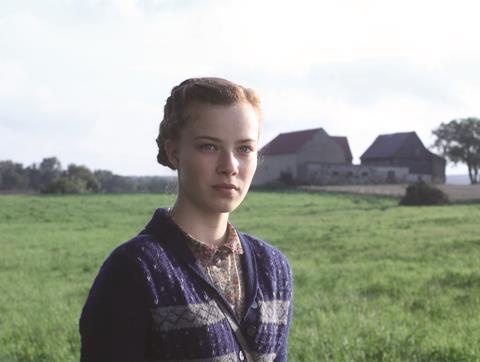
Saskia Rosendahl’s performance is central to that approach. As a young, relatively untested leading actress, she carries a character whose understanding of morality and belonging is gradually dismantled by what she sees and experiences.
Rather than offering an uncomplicated story of survival, Lore examines the difficult process of growing up when the values inherited from one’s family are inseparable from a devastating historical catastrophe.
The result is a restrained yet unsettling coming-of-age drama in which the journey toward maturity begins with the collapse of everything the protagonist once believed.