Some period romances are remembered for their costumes, grand houses or sweeping declarations of love. Firelight lingers for a different reason. Its power comes from what remains unspoken—the glances, silences and fleeting moments in which two people allow themselves to imagine a life beyond the boundaries imposed upon them.
The film captures that feeling through the simple image of firelight: once the lamps are extinguished and only the fire remains, ordinary rules seem to disappear. For a brief moment, people can say what they truly feel, become who they secretly wish to be, and live outside the demands of reality. When the lamps return, that world disappears with them.
That idea is at the heart of Firelight, a film that is difficult to describe because its appeal is not confined to its story.
It is the combination of Sophie Marceau and Stephen Dillane, the carefully composed cinematography, the period costumes and, above all, the extraordinary emotional restraint that gives the film its distinctive atmosphere.
A Romance Told Through Glances

The relationship between Elisabeth and Godwin begins not with romance, but with necessity.
Neither expects the feelings that gradually emerge between them. What begins as an arrangement becomes something far more difficult to control, as longing slowly pushes against duty, circumstance and self-restraint.
Their connection is built almost entirely through suggestion.
A glance can reveal what neither character is willing to say. A pause can carry more meaning than a declaration. Their attraction develops through a constant tension between what they want and what they believe they must do.
Elisabeth once stands by the sea, overwhelmed by the sky, the water and the vast emptiness around her. She says that the feeling makes her want to scream. When Godwin encourages her to do it, she laughs, admitting that she cannot.
Later, during a deeply intimate moment between them, that desire to cry out returns. Once again, she cannot give voice to it.
The emotion remains buried inside her.
Stephen Dillane and Sophie Marceau
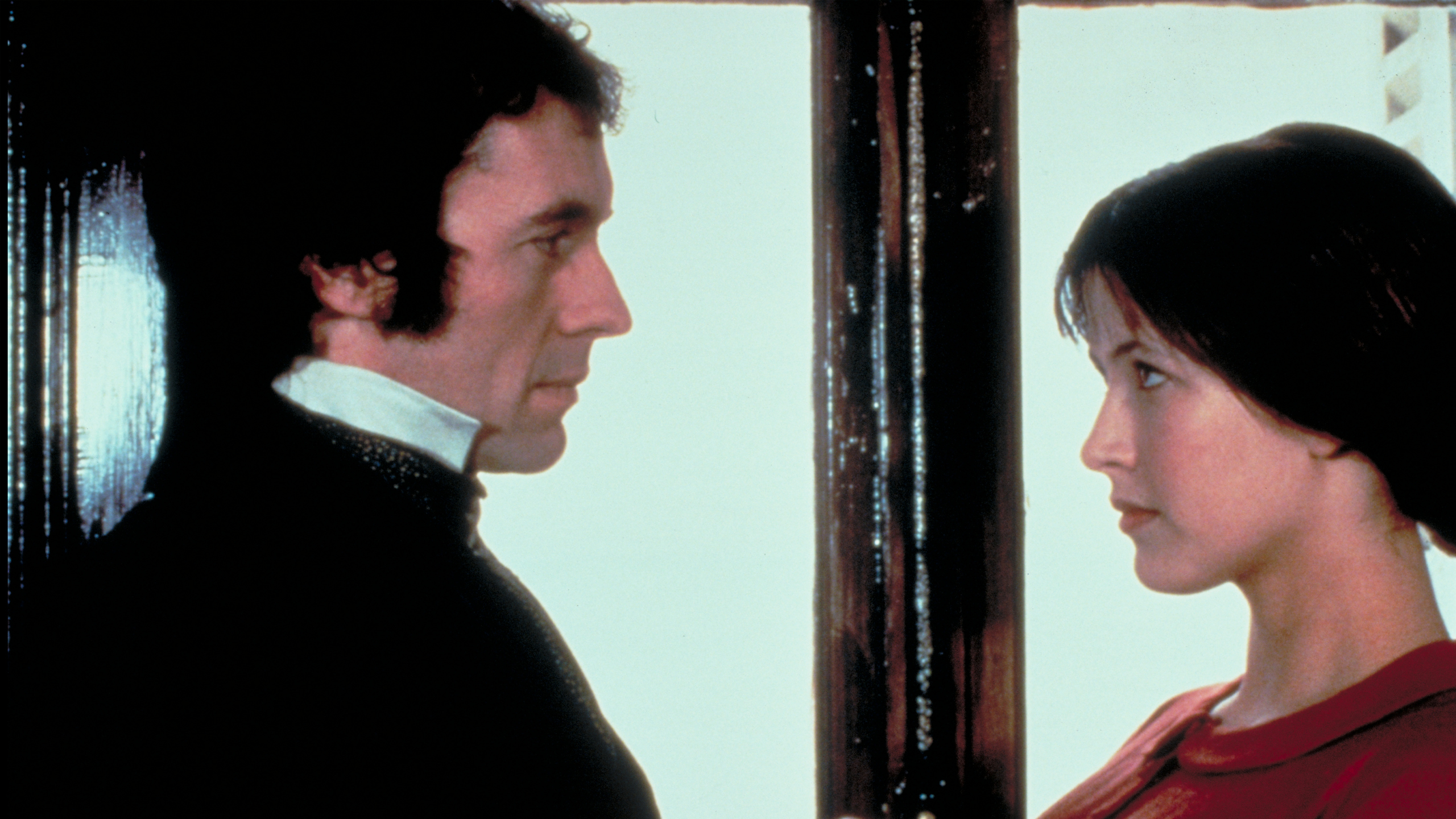
Stephen Dillane gives Godwin an especially nuanced performance.
At first, he can appear distant and controlled, but his eyes reveal something much more vulnerable: loneliness, desire and uncertainty. He rarely seems genuinely cruel. Instead, he appears overwhelmed by feelings he does not know how to reconcile with his sense of responsibility.
His restraint makes every small gesture significant.
A breath, a glance or a moment of hesitation can communicate what Godwin refuses to express openly.
Sophie Marceau is equally compelling as Elisabeth. She carries herself with extraordinary composure, even though circumstances have placed severe limitations on her life. There is a quiet authority in the character, as though she were a queen forced into exile but unwilling to surrender her dignity.
Elisabeth also possesses an unusual clarity. She sees through situations and people with remarkable directness, and when she understands what she wants, she is capable of pursuing it with determination.
Together, Marceau and Dillane create the kind of screen chemistry that depends less on physical display than on emotional tension.
The Glass Between Them
One of the film’s most memorable moments comes when Elisabeth secretly watches Godwin after he has been swimming.
The scene is powerful not simply because she is attracted to him, but because of everything she understands about the man she is watching. She sees his vulnerability, his principles and the emotional conflict beneath his controlled exterior.
The glass separating them becomes a quiet visual representation of the barriers surrounding their relationship.
They can see one another clearly.
Yet reaching one another remains another matter entirely.
When Firelight Stops Time
Firelight becomes much more than a source of warmth in the film.
It represents a temporary escape from ordinary time.
In the glow of the flames, reality seems suspended. The usual restrictions disappear, allowing desires that normally remain hidden to emerge. For a brief period, the characters can inhabit a world where their deepest wishes seem possible.
Godwin hints at this symbolism when he first meets Elisabeth and remarks that fire gives more light than one expects.
Later, when Elisabeth is working as a governess at the manor, he repeats the same thought.
The words take on a deeper meaning.
For Godwin, moving toward Elisabeth means stepping away, however briefly, from the weight of his responsibilities. His attraction offers him the possibility of pursuing personal happiness rather than simply fulfilling his obligations.
What he fails to anticipate is how powerful those feelings will become.
Eventually, returning to duty becomes increasingly difficult.
The cold, imposing halls of the English manor repeatedly drive Godwin back toward the warmth of the fire. The image quietly reflects his emotional struggle: between responsibility and desire, obligation and happiness.
Elisabeth and the Child
Elisabeth’s relationship with the lonely and difficult child Louisa adds another important dimension to the story.
Louisa initially struggles with picture-cards, and her attempts gradually develop from simple imitation into genuine understanding.
That progression mirrors Elisabeth and Godwin’s relationship.
Their feelings begin with longing and denial. Slowly, that uncertainty becomes recognition, and eventually their emotions can no longer be denied.
The secret world represented by the firelight begins to challenge the restraints that have governed their lives.
Dreams start becoming reality.
Happiness With a Shadow
Yet Firelight never allows its romance to become entirely uncomplicated.
Even when love is achieved, something has been lost.
Godwin must leave behind the life he once knew in order to follow his heart. Elisabeth understands that the strength and determination of her desire have helped bring about these changes.
There is also an uncomfortable awareness that her longing may contain an element of selfishness.
The film does not erase that shadow.
Instead, it allows the happiness of Elisabeth and Godwin to exist alongside an awareness of its cost. Their union is therefore neither entirely triumphant nor entirely tragic.
It is both.
Their love is defiant but restrained, powerful but quiet.
A Romance That Never Becomes Melodrama
The story could easily have become excessive or sentimental. Instead, the film maintains remarkable control.
The performances remain measured. The emotions are intense without becoming exaggerated. The atmosphere is rich without overwhelming the characters.
That restraint is what makes the romantic tension so effective.
Rather than constantly telling the audience what the characters feel, Firelight allows those emotions to emerge through silence, expressions, physical distance and fleeting moments of connection.
The result is a period romance that feels intimate rather than grandiose.
Its beauty lies not in dramatic declarations, but in the spaces between them.
Ultimately, Firelight is a story about the brief moments when people dare to step outside the lives expected of them—and about what happens when those moments become impossible to forget.
Enchanting, intimate and quietly heartbreaking, Firelight turns forbidden longing into something almost dreamlike: a world illuminated for a moment by the warmth of a fire, before reality comes back into view.