A Stylish World War II Romance Where Love, Espionage and Suspicion Collide
For years, modern World War II movies have tended to emphasize the physical brutality and psychological trauma of combat. Since Saving Private Ryan changed the visual language of wartime cinema, filmmakers have increasingly focused on bloodshed, fear and the devastating realities faced by soldiers.
But what if a World War II movie simply wanted to be an old-fashioned Hollywood thriller?
That is the approach taken by Robert Zemeckis in Allied, a lavish wartime romance that blends espionage, action, suspense, politics and glamour. Rather than attempting to recreate the genre solely through grim realism, the film deliberately reaches back toward the kind of elegant studio-era entertainment built around charismatic stars and impossible situations.
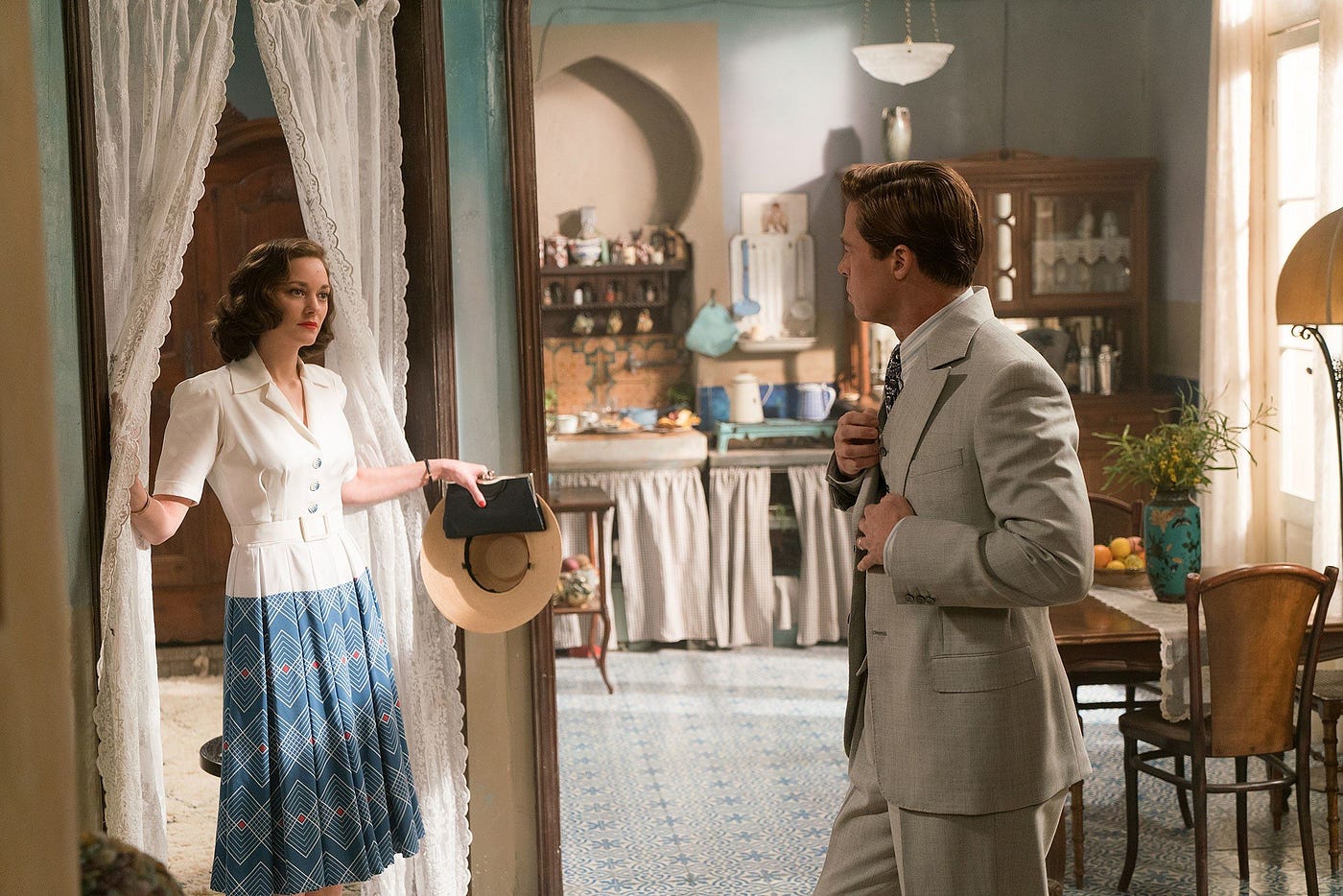
The result is not quite a modern Casablanca, but it is an unmistakable tribute to that tradition — complete with romance, betrayal, wartime intrigue and beautifully staged spectacle.
Released in 2016, the film runs for 124 minutes and stars Brad Pitt and Marion Cotillard as two Allied operatives whose relationship begins as part of a dangerous deception and eventually becomes a test of trust. The film received mixed critical reactions, with particular praise for its visual design, costumes and performances, while some critics felt its romantic and dramatic elements did not fully reach the heights of its inspirations.

The story begins in 1942.
Canadian intelligence officer Max Vatan, played by Brad Pitt, parachutes into North Africa and makes his way to Casablanca. His assignment is to assassinate a German ambassador, but he will not be carrying out the mission alone.
His partner is Marianne Beausejour, portrayed by Marion Cotillard, a French Resistance operative who has established herself among influential Nazi figures in the region.
To complete their mission, Max and Marianne must pretend to be husband and wife.
The deception requires more than simply convincing their targets. They have to behave like a genuine married couple, maintaining the appearance of affection and intimacy while knowing that a single mistake could expose them.
Yet their performance begins to develop into something neither expected.
The attraction between Max and Marianne becomes real, eventually leading to an unusually staged romantic encounter in the Moroccan desert. They then carry out their assassination mission and escape successfully.
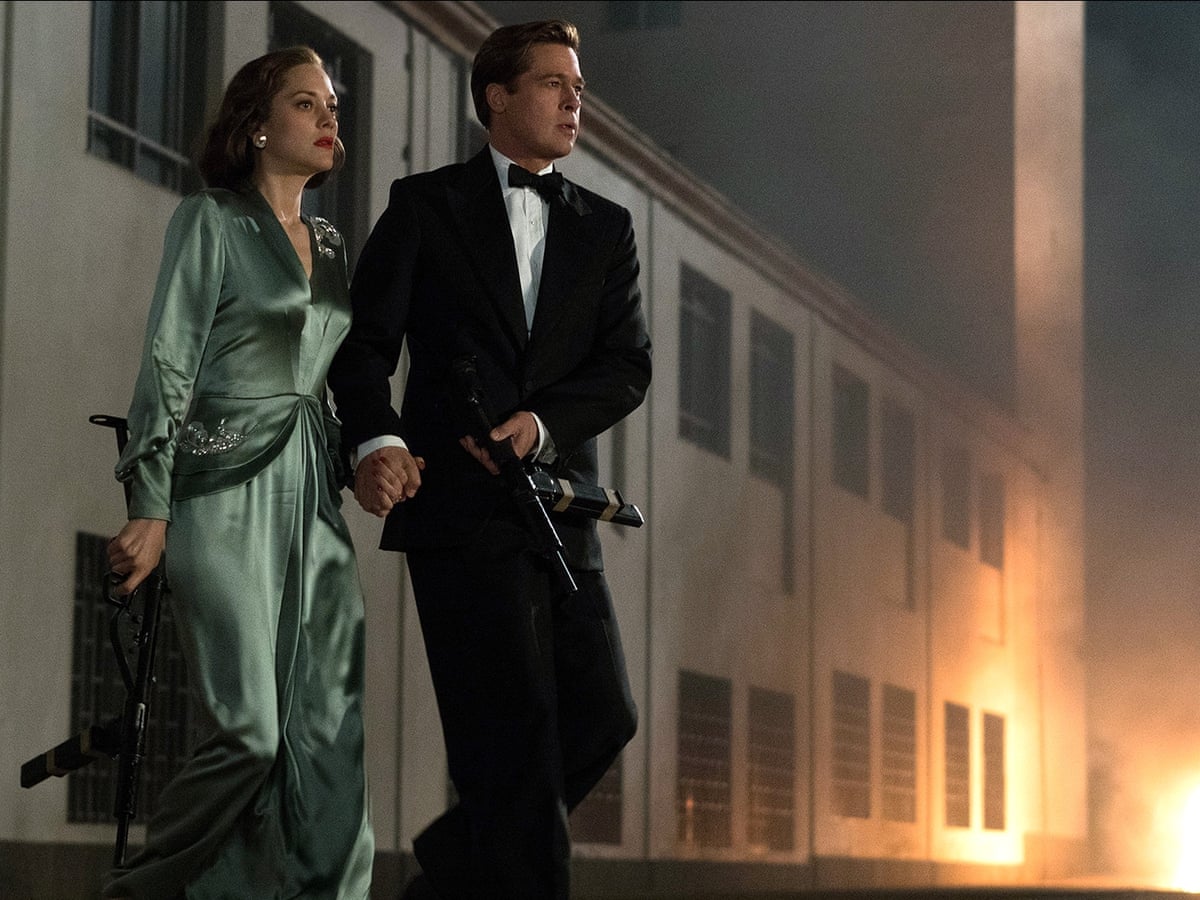
During their journey away from danger, Max asks Marianne to return to London with him, where they can build a life together.
For a brief moment, it appears that their most dangerous days are behind them.
They are not.
One Year Later, Everything Changes
A year passes.
Max and Marianne are now married and living in London with their infant daughter. Despite the ongoing war, they have created something resembling an ordinary family life.
Then Max is summoned to headquarters.
There, an S.O.E. official tells him that intelligence has surfaced suggesting Marianne Beausejour may not be who she claims to be.
According to the evidence, the real Marianne Beausejour may have been killed years earlier.
That leaves Max facing a horrifying possibility: the woman he married could actually be a German spy.
The evidence is not conclusive, but it is serious enough that his superiors decide to test her.
Max is ordered to leave false information somewhere Marianne will be able to discover it. If that information later appears in an intercepted German communication, authorities will have their answer.
She will be guilty.
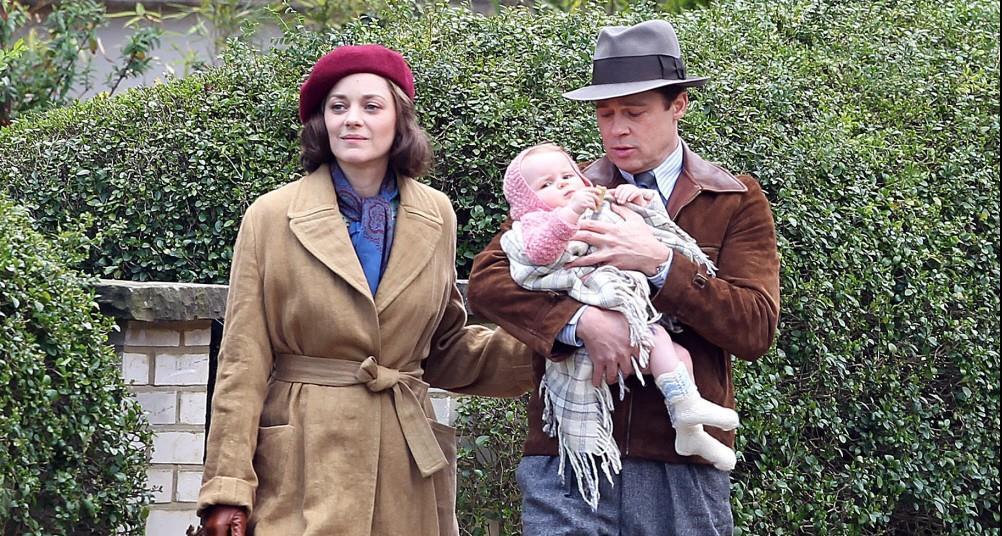
And if Marianne is confirmed as a spy, Max is expected to kill his own wife.
Refusing the order or warning her could cost him his own life.
The cruelest part is that Max is not allowed to conduct his own investigation while the test is underway.
For three days, he must continue living beside Marianne, pretending that everything is normal while wondering whether the woman he loves has been deceiving him all along.
Hollywood’s Golden Age Meets Modern Technology
Allied makes no secret of the movies that inspired it.
Its strongest influence is Casablanca, not only because both stories use the Moroccan city as a major setting, but also because both feature the song “La Marseillaise” and build toward climactic sequences involving an airport.
The film also draws from classic wartime dramas and the suspense tradition associated with Alfred Hitchcock.
But the movie is more than a collection of familiar references.
Screenwriter Steven Knight, whose previous work includes Dirty Pretty Things and Eastern Promises, constructs a mystery around Marianne’s identity that keeps the audience questioning what is real and what is part of the deception.
The screenplay generally plays fairly with those questions without burying the story beneath endless complications. There are moments when the film introduces perhaps more misleading clues than necessary, but the central mystery remains compelling because Max and the audience are essentially trapped in the same uncertainty.
We do not know whether Marianne is innocent.
And neither does Max.
Zemeckis Knows How to Create Suspense
Robert Zemeckis is a filmmaker closely associated with technological innovation, but Allied demonstrates that he does not need elaborate effects to create tension.
The film contains several major technical set pieces.
Marianne gives birth during an air raid. A lavish house party is suddenly interrupted by another aerial attack. These sequences provide the large-scale spectacle expected from a World War II production.
Yet some of the film’s most effective suspense comes from much quieter situations.
A couple sitting together in a room can become more frightening than an entire battlefield when one person suspects the other may be a traitor.
That shift from spectacle to intimacy is central to the movie’s appeal.
The danger is not always outside the house.
Sometimes it is sitting across the table.
Brad Pitt and Marion Cotillard Carry the Mystery

Zemeckis has long demonstrated an ability to draw strong performances from his actors, and Allied gives its two leads plenty of opportunities to carry the emotional weight.
Brad Pitt plays Max as a polished and confident intelligence officer in the opening chapters. His introduction is deliberately glamorous, with his parachute descent into North Africa establishing the kind of larger-than-life hero associated with classic Hollywood.
But that confidence gradually disappears.
Once Max begins questioning Marianne’s identity, Pitt shifts toward uncertainty and emotional distress. The character must live with the possibility that the woman he loves has been deceiving him, while knowing that acting too quickly could destroy both of their lives.
Marion Cotillard is even more elusive as Marianne.
She gives the character an emotional depth that makes it easy to understand why Max falls for her while simultaneously keeping her intentions difficult to read.
That ambiguity is crucial.
The audience is meant to become fascinated by Marianne while remaining unsure whether she can be trusted.
Cotillard manages to preserve that uncertainty throughout much of the film, making her one of its most compelling elements.
Critics were divided over the chemistry between the two stars. Some found their performances elegant and effective, while others felt the relationship lacked the emotional spark required to make the romance completely convincing.
The Craft Behind the Illusion
One of the pleasures of Allied is how carefully its individual elements fit together.
Alan Silvestri provides the sweeping musical score, while cinematographer Don Burgess creates the film’s polished wartime atmosphere. Costume designer Joanna Johnston contributes another essential layer, giving the characters the immaculate appearance expected from an old-fashioned Hollywood production.
The film’s visual sophistication is deliberate.
It wants to look glamorous.
It wants its characters to appear as though they have stepped out of a classic wartime romance, even while the story places them in increasingly dangerous circumstances.
That combination of artificial elegance and genuine danger gives the movie its distinctive identity.
Some critics found the film overly polished or emotionally distant, while others appreciated precisely that quality, viewing its stylization as part of its deliberate homage to classic cinema.
A Modern Tribute to an Old Hollywood Formula
At its heart, Allied is built around a very simple question:
How well can you know the person you love when your entire relationship began with a lie?
That question allows the movie to move between genres without completely abandoning its central premise.
It is a war film, but not primarily about battlefield combat.
It is a spy thriller, but its greatest danger comes from uncertainty within a marriage.
It is a romance, but the love story is constantly threatened by suspicion.
And it is an old-fashioned Hollywood adventure updated with modern filmmaking technology.
That mixture will not work for everyone. Some contemporary critics felt the film struggled to match the classics it openly evokes, particularly Casablanca and Hitchcock’s thrillers. Others found its polished style, performances and suspenseful setup genuinely enjoyable.
But that tension is also what makes Allied interesting.
It does not attempt to reinvent the World War II romance.
Instead, it embraces a cinematic tradition that Hollywood rarely approaches in quite this way anymore.
The film arrived in U.S. theaters on November 23, 2016, and ultimately earned about $119.5 million worldwide against an $85 million production budget.
More than anything, Allied is a carefully constructed love-and-spy story designed to recreate the pleasures of another era of Hollywood filmmaking: glamorous stars, exotic locations, dangerous missions, secret identities and romance unfolding under the shadow of war.
It may not equal the classics it admires.
But it understands exactly what made those movies so irresistible — and for viewers who still enjoy that particular combination of elegance, danger and old-fashioned storytelling, that can be enough.