Twenty-five years after Band of Brothers first arrived on HBO, the landmark World War II miniseries remains difficult to shake.
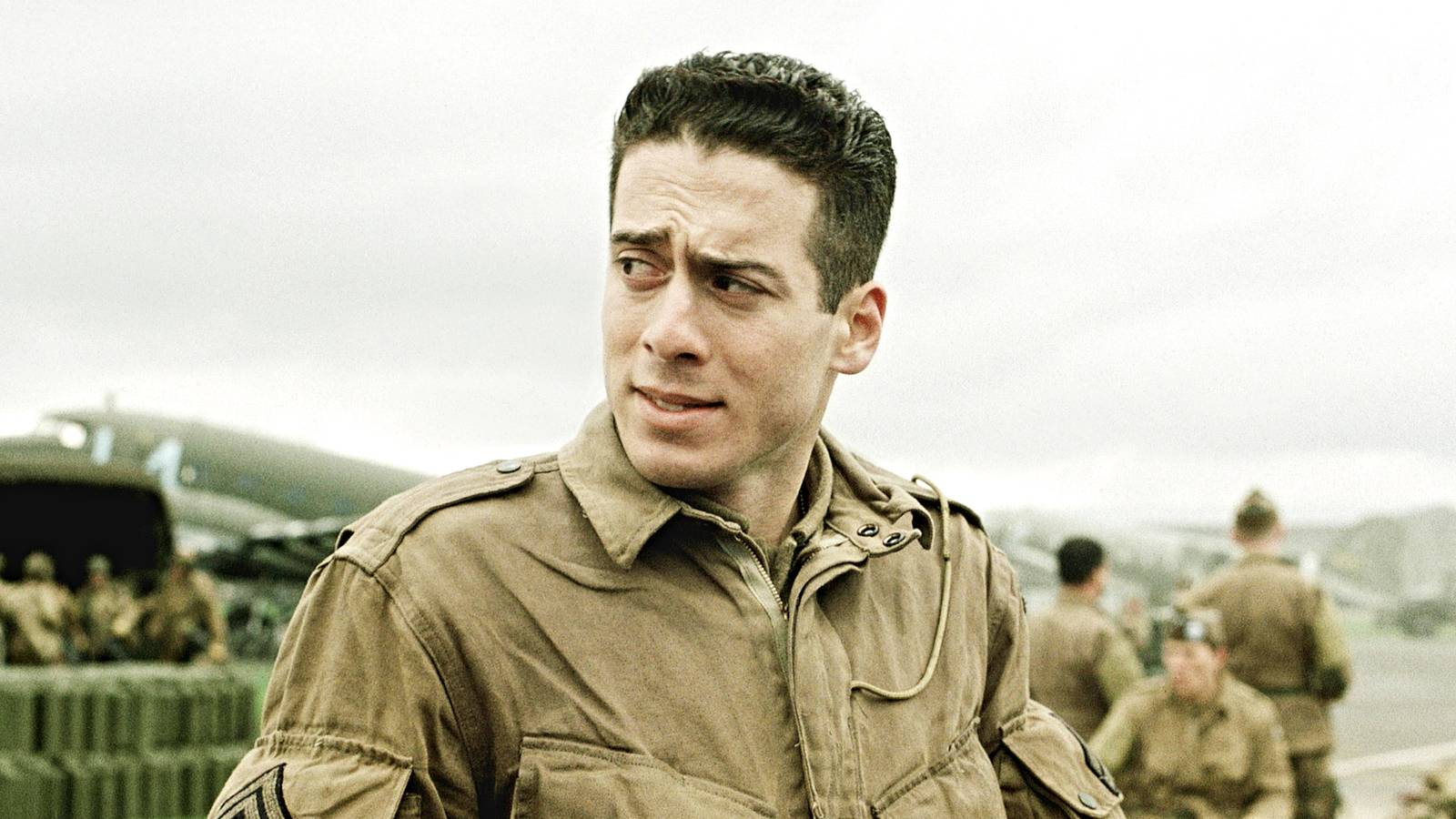
Its combat sequences are ferocious. Its cinematography throws viewers into the mud, snow and gunfire alongside Easy Company. Its enormous cast helped introduce audiences to actors who would become major stars.
But one of the series’ most enduring achievements happens away from the explosions.
Again and again, Band of Brothers shows what combat is doing to the soldiers psychologically — sometimes through breakdowns and physical symptoms, but just as often through a stare, a silence or a man who suddenly cannot function the way he did before.
As HBO Max marks the show’s 25th anniversary with the new documentary Band of Brothers: Legacy, that aspect of the original series feels particularly striking.
Band of Brothers never separated the mental battle from the physical one
Many war stories concentrate on what soldiers do in combat.
Band of Brothers was equally interested in what combat does to them.
The series did not reserve psychological trauma for a single episode before moving on. Its effects appear throughout Easy Company’s journey, sometimes prominently and sometimes almost invisibly.
Men become exhausted.
Their reactions change.
Some withdraw.
Others struggle to process what they have witnessed.
And because these soldiers have spent so much time together, their comrades can sometimes recognize those changes without anyone needing to explain them aloud.
That subtlety helped make the portrayal unusually effective.
One quiet moment with Doc Roe says almost everything

“Bastogne,” one of the series’ most acclaimed episodes, provides a particularly understated example.
Medic Eugene “Doc” Roe, played by Shane Taylor, spends much of the episode moving between wounded soldiers while Easy Company endures horrific conditions during the Battle of the Bulge.
At one point, Lieutenant Dick Winters, played by Damian Lewis, recognizes that Roe himself is struggling.
Winters does not deliver a speech.
He simply tells him: “Get yourself into town, get a hot meal.”
It is a small interaction, but that is precisely why it works.
The moment acknowledges that the medic caring for everyone else may also need someone to notice what the war is doing to him.
Band of Brothers repeatedly handles psychological strain this way: not as something separate from soldiering, but as another consequence of it.
“Carentan” makes the internal battle impossible to ignore

Episode 3, “Carentan,” brings that struggle much closer to the surface through Private Albert Blithe, played by Marc Warren.
Blithe becomes separated from his unit during D-Day.
When he eventually reunites with his fellow soldiers, he admits something deeply revealing about what happened while he was alone.
“When I woke up, I didn’t really try to find my unit…to fight,” he says. “I just…I just kinda stayed put.”
He is physically back with Easy Company, but psychologically he is clearly struggling to return to the battle.
The episode then pushes Blithe further.
Blithe suddenly loses his sight
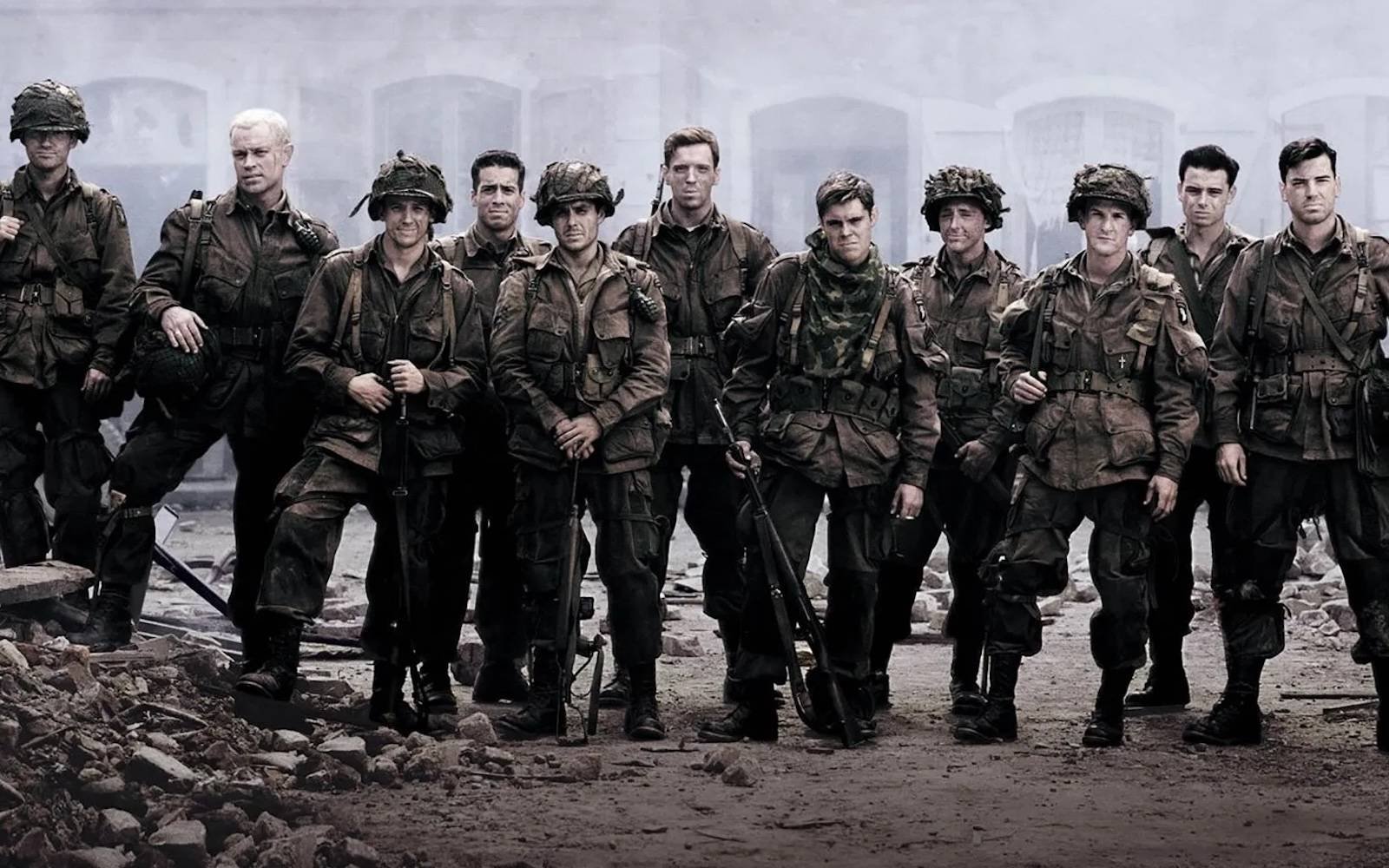
After intense fighting, Blithe experiences what the series describes as “hysterical blindness.”
His vision disappears even though the problem is psychological rather than the result of a conventional eye injury.
When Winters asks what happened, Blithe cannot provide a clear explanation.
“I don’t know, sir,” he says. “Things — they just kinda went black on me.”
Winters tells him to rest and suggests he could be sent back to England.
Blithe immediately begins to tear up.
The scene never needs to explain exactly what is happening inside him. His body and expression do it instead.
Eventually his vision returns.
But recovering his sight does not mean everything else has suddenly disappeared.
Going back into battle does not magically fix him
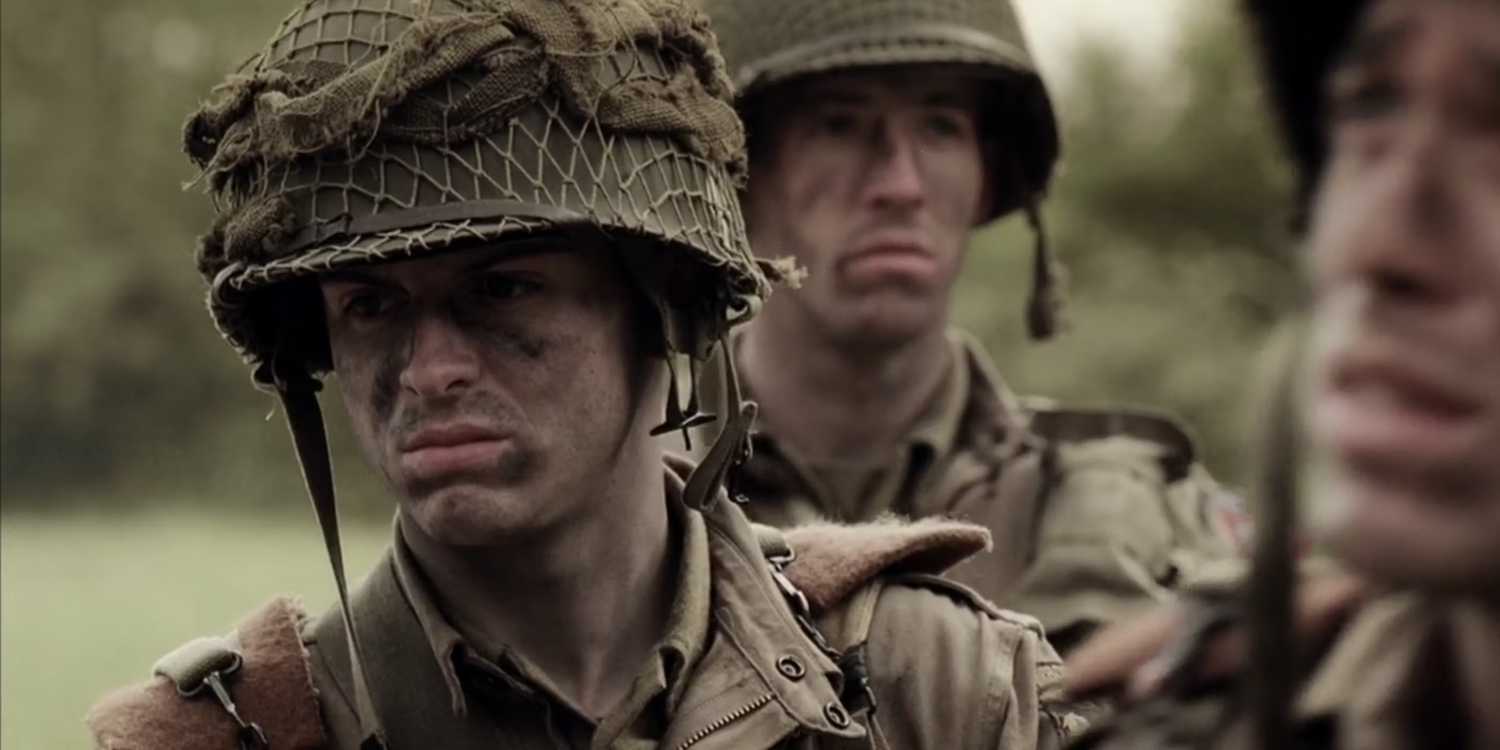
Blithe returns to combat rather than leaving for England.
Later, under incoming fire, he struggles again while sheltering in a foxhole.
For a time, his body seems almost unable to respond to what is happening around him.
Then something changes.
He manages to focus and re-enters the fight.
During the battle, Blithe shoots and kills an enemy soldier.
Afterward, rather than simply moving on, he searches for the man he killed.
The act clearly affects him.
Through Blithe, the episode presents combat not as a simple transformation from frightened soldier to fearless warrior, but as a series of psychological swings.
He can freeze.
He can fight.
He can kill.
And then he has to live with what he has just done.
The series trusted viewers to notice the smaller signs
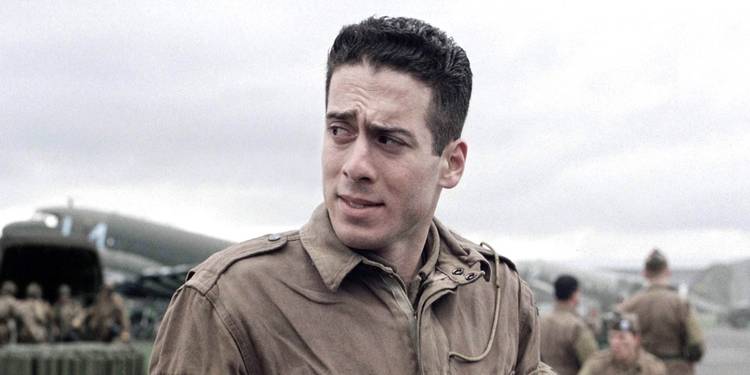
Blithe’s experience is one of the more explicit portrayals of psychological distress in Band of Brothers, but much of the series operates more quietly.
A soldier does not necessarily announce that he is struggling.
Sometimes the evidence is simply a pause that lasts slightly too long.
Sometimes it is the expression on someone’s face.
Sometimes it is exhaustion that appears to extend far beyond being physically tired.
That approach becomes particularly powerful because Band of Brothers follows the same men across multiple battles.
Viewers see them change.
The soldiers who parachute into Normandy are not emotionally identical to the men who later endure Bastogne and continue toward Germany.
War accumulates.
That approach was especially notable in 2001
Discussions of PTSD and soldiers’ psychological health are considerably more visible today than they were when Band of Brothers premiered.
The series arrived in 2001 and treated those experiences as an integral part of its depiction of warfare rather than an uncomfortable subject to avoid.
It also refused to portray psychological distress as weakness.
Blithe can struggle and still be a soldier.
Roe can become overwhelmed while continuing to care for wounded men.
The soldiers can notice changes in one another without treating those changes as moral failures.
That acceptance is an important part of Easy Company’s camaraderie.
The battles were only part of what these men survived
The spectacle of Band of Brothers understandably attracted enormous attention.
Its combat sequences remain some of television’s most memorable.
But the series becomes more powerful because the consequences do not stop when the shooting does.
Fear follows the soldiers.
So does grief.
So does exhaustion.
The psychological effects of one battle can still be present when the next begins.
By allowing those experiences to remain part of the story, Band of Brothers avoids suggesting that survival simply means walking away without a physical wound.
A 25th-anniversary documentary revisits the series
That legacy is now being examined again with Band of Brothers: Legacy, marking a quarter-century since the original miniseries debuted.
The documentary features new reflections from cast members including Damian Lewis, Ron Livingston, Michael Cudlitz and David Schwimmer.
It also incorporates previously unseen archival footage and photographs while looking back at the enormous production and the impact the series has had during the 25 years since its release.
The anniversary offers an obvious opportunity to revisit the extraordinary scale of the production.
But it also highlights how much of Band of Brothers depended on its smaller moments.
Its legacy extends far beyond spectacular combat
Later productions including The Pacific would continue exploring the psychological cost of warfare in similarly uncompromising ways.
Yet Band of Brothers remains distinctive because it rarely feels as though it is stopping the story to deliver a message about trauma.
The trauma is already inside the story.
It follows Easy Company from one battlefield to another because that is where the soldiers themselves carry it.
Twenty-five years after its premiere, the gunfire, explosions and battlefield chaos remain gripping.
But scenes like Blithe losing his sight or Winters quietly recognizing that Doc Roe needs a break can be just as difficult to forget.
That may be one of the biggest reasons Band of Brothers has aged so well.
It understood that surviving a battle and escaping it unharmed were never necessarily the same thing.
Band of Brothers is available to stream on HBO Max in the U.S. Band of Brothers: Legacy premieres September 9 on HBO and HBO Max.