The full story behind the top-scoring student found in cardiac arrest amid cheating allegations in South Korea: One of only two individuals to achieve a perfect score in the history of the law school entrance exam.
Lee Jin-woo—one of only two people in history to achieve a perfect score on South Korea’s Legal Education Eligibility Test (LEET)—was discovered in a state of cardiac arrest at a guesthouse in Seoul. This followed his disappearance and subsequent absence from a live-streamed session dedicated to reviewing exam questions, an event that had drawn over 400,000 viewers.
Top-scoring law school applicant found in cardiac arrest after failing to appear before 400,000 viewers during a live-streamed exam review session.
Top-scoring candidate on South Korea’s tax accountant examination admits to using AI to cheat during the test.
Discovery of a former top-ranked provincial student—a Peking University graduate—working as a food delivery driver prompts an urgent response from the delivery company.
From astonishing academic achievements to allegations of cheating.
Lee Jin-woo, a student in the School of Dentistry at Seoul National University (SNU), had previously garnered attention for his dramatic academic turnaround.
According to Yonhap, Lee’s results on the 2013 university entrance exam were relatively low, with scores ranging from 6 to 8 on a 9-point scale. In the 2018 exam, he again scored only a 7 in the Korean language section.
However, Lee’s academic performance shifted significantly in the years that followed. He gained admission to the Department of Political Science and Diplomacy at Korea University through the 2024 university entrance exam. By the 2026 exam, Lee achieved the highest possible score in every subject, leading to his acceptance into the School of Dentistry at Seoul National University. 
Lee Jin-woo, who achieved a perfect score on the 2027 Legal Education Eligibility Test (LEET) (Photo: Yonhap News)
Notably, Lee achieved a perfect score on the 2027 Legal Education Eligibility Test (LEET), held in July 2026. This marks one of only two instances of such a feat since the exam was first introduced in 2008.
The LEET is an aptitude test for individuals aspiring to attend law school in South Korea; its results are used by law schools during their admissions process.
Despite this rare achievement, Lee unexpectedly became the subject of controversy after he shared details about his exam paper on social media, which led the public to raise questions about certain irregularities.
Specifically, some of the answers Lee had initially marked—and subsequently changed—coincided suspiciously with the correct answers to the preceding questions. This fueled speculation that he might have received the answers from an external source but mistakenly recorded them against the wrong question numbers.
Lee has denied any cheating, attributing the irregularities to errors made while taking the test. He has also explained that his dramatic improvement in performance stemmed from a lifestyle change—most notably a three-week trek across South Korea, during which he lost his smartphone, allowing him to live in an environment with minimal reliance on digital devices. Suspicion spreads following case of top-scoring tax accountant candidate using hidden camera and AI
Debate surrounding Lee’s academic achievements has intensified after a candidate who earned the top score on this year’s tax accountant certification exam in South Korea admitted to cheating using technology.
According to South Korean media, the individual confessed to using a micro-camera to record the exam questions, then transmitting the images to an artificial intelligence (AI) system that processed them and provided the answers. Through this method, the candidate secured the top rank in the examination.
The incident has sparked concerns regarding the potential for AI and electronic devices to be used for cheating on high-stakes exams. In this climate, Lee’s performance on the Legal Education Eligibility Test (LEET) has also come under public scrutiny and suspicion.
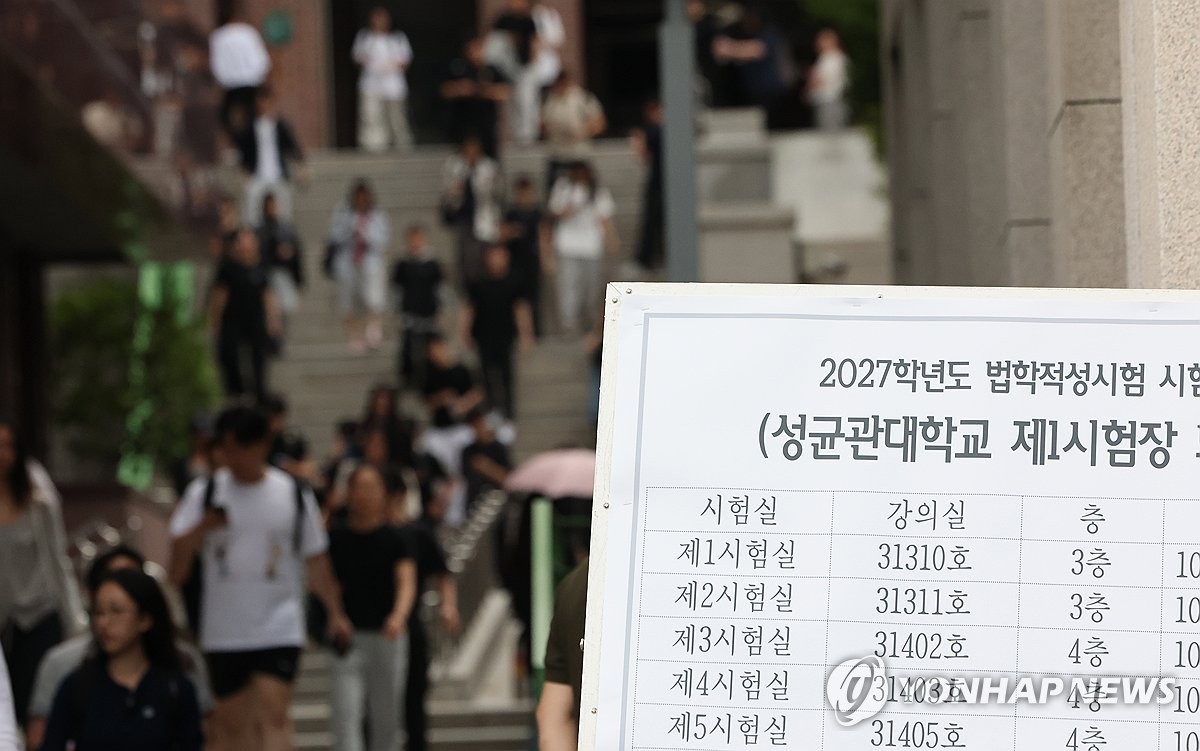
Candidates leave a testing site at Sungkyunkwan University in Jongno District, Seoul, where the 2027 Legal Education Eligibility Test (LEET) was held (Photo: Yonhap News).
Some have questioned how he achieved such exceptional results on these exams, given his previously modest academic record. Specific details regarding his LEET test paper, as well as information concerning his preparation for the 2026 university entrance exams, have become subjects of ongoing discussion.
According to Yonhap, in the lead-up to the 2026 university entrance exams, Lee reportedly sought a tutor for “Biology II” through an online community for Korea University students. The tutor noted that during a session lasting approximately one hour, Lee struggled with some fundamental concepts. Subsequently, Lee got only one question wrong on the Biology II section of the university entrance exam.
Based on this, suspicions have arisen that he may have figured out how to convert images and charts from the exam papers into text, which could then be fed into AI tools. However, this remains a speculation by the accusers rather than an official investigative conclusion.
Lee has denied the allegations of cheating. He also explained that the alterations made to the names on the transcripts that were made public were he declined to disclose his name prior to a legal name change, while maintaining that he had not altered any grades or exam subjects.
Lawyers file complaints; police launch an investigation
On November 18, a group of lawyers filed a formal complaint against Lee, requesting that authorities investigate allegations of cheating during the 2027 Legal Education Eligibility Test (LEET) and previous university examinations.
According to Yonhap, a group of attorneys from an organization of young lawyers in South Korea submitted a complaint to the Gwanak Police Station, calling for an investigation into potential acts of obstruction of official business, interference with commercial operations, and other violations.
The complaint alleges that Lee may have used AI tools or external assistance to obtain answers during the exams, and it requests verification of the authenticity of the transcripts he had publicly shared online.
Another lawyer filed a separate complaint with the Seoul Metropolitan Police Agency, requesting an investigation into potential obstruction of official business and fraud.
The Seoul police have since accepted the case and assigned it to an investigative unit within the Seoul Metropolitan Police Agency. The lawyers have also requested the preservation of exam papers, surveillance footage from the testing rooms, and other relevant documentation to facilitate the verification process.
Lee has previously stated that he is prepared to cooperate with investigative authorities and has asserted that he will demonstrate his true capabilities to the public.
Absent from a livestream with over 400,000 viewers; later found in cardiac arrest
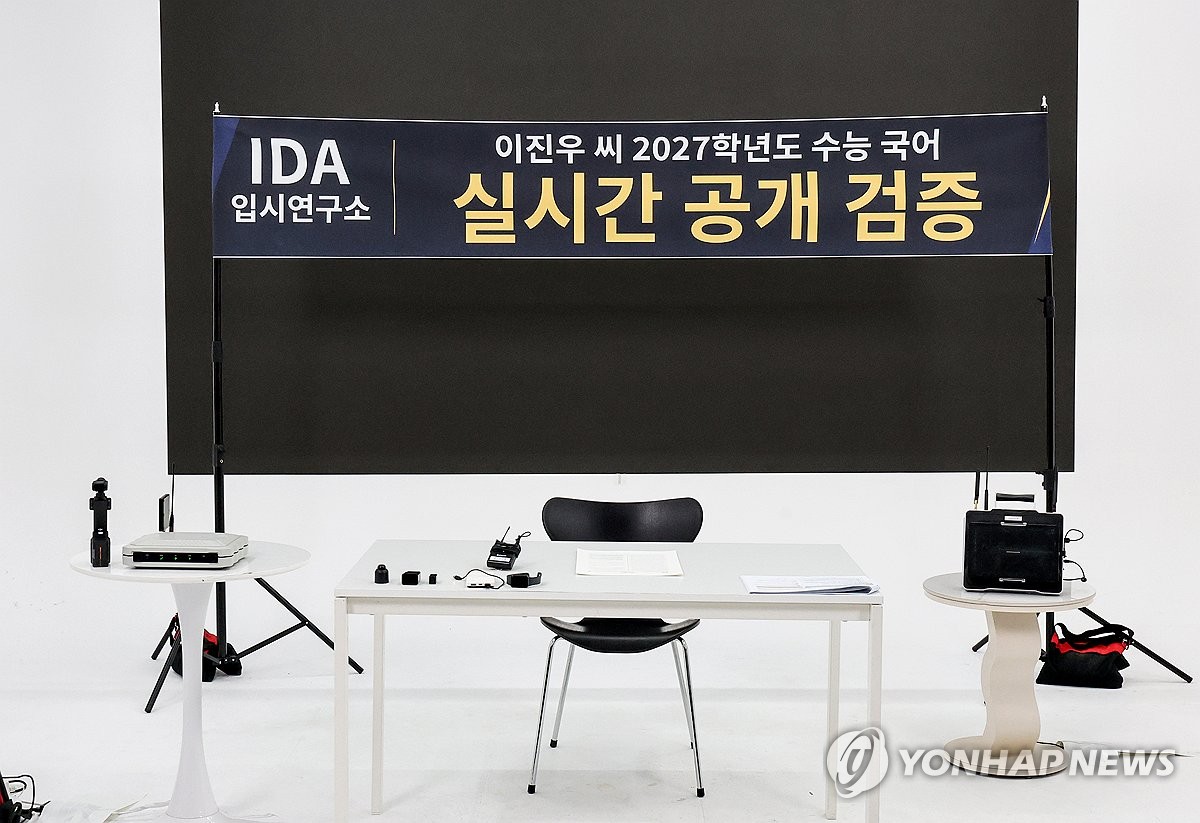
To address the allegations of cheating, Lee had planned to participate in a public verification session on the morning of November 19. According to the plan, he was to complete the entire Korean language section of the 2027 university entrance exam, with the process—from taking the test to grading—conducted openly in the presence of teachers and the media.
The verification session, organized by a test-preparation center, was scheduled to be livestreamed on YouTube. The event drew significant public interest, especially given the ongoing controversy surrounding Lee’s academic achievements.
According to Yonhap, the livestream attracted over 400,000 viewers as they awaited Lee’s appearance.
However, by approximately 8:40 a.m. on November 19, he had failed to arrive at the studio in Seoul’s Gangnam District as planned. A representative from the test-preparation center stated that Lee’s phone had been switched off since the previous day, and all attempts to reach him had proven unsuccessful.

The verification session was subsequently canceled. Around the same time, police received a report expressing concern for Lee’s safety and began efforts to locate him.
According to Yonhap, police and rescue personnel searched his residence in Sillim-dong, Gwanak District, but did not find him. The search was later expanded to the Gwangjin and Songpa districts.
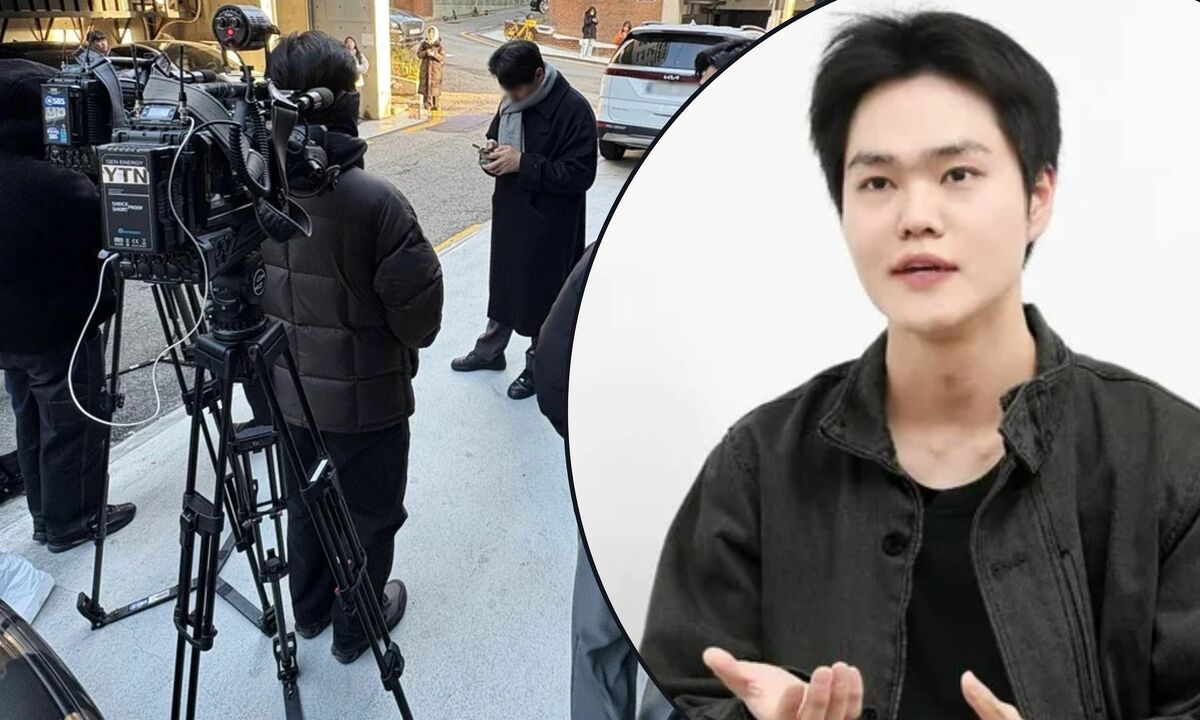
At approximately 1:12 p.m. that same day, Lee was discovered in a state of cardiac arrest at a guesthouse near Cheonho Station in Seoul’s Gangdong District. The police stated that they would conduct forensic examinations to determine the cause and circumstances of the incident, should it be confirmed that Lee has died.
There is currently no official conclusion regarding the cause of Lee’s cardiac arrest. Furthermore, allegations of cheating in examinations he previously took will also need to be investigated and clarified by the authorities.
Source: Yonhap