‘The Chosen’ Season 5, Episode 7 Recap & Analysis: The Road to the Upper Room, Foot Washing, and the Crucible of Memory

Episode 7 of The Chosen Season 5 (Last Supper, Part 3) captures the tense, clandestine hours preceding Christ’s final meal with his apostles. Grounded in Mark 14:12–16 and John 13:1–21, the narrative balances the solemn theology of servant leadership with the tactical anxiety of moving twelve wanted men through a fortified, volatile Jerusalem.
Key Narrative Threads & Plot Breakdown
1. The Cold Open: Servanthood at the Basin (John 13)

The episode opens directly inside the Upper Room as Jesus arrives alongside a young Mark:
-
The Act of Humiliation: Wrapping a towel around his waist and pouring water into a wash basin, Jesus overrides the disciples’ horrified objections. Big James steps forward first, followed in turn by Thomas, Little James, and Judas. Over their visible shame, Jesus quotes Isaiah 52:7: “How beautiful upon the mountain are the feet of him who brings good news.”
-
The Confrontation with Simon Peter: Peter recoils, grabbing a separate basin to wash the others rather than submit to his rabbi’s service. Jesus issues a blunt rebuke: unless Peter is washed, he has no share with him. When an humbled Peter begs to have his hands and head cleansed as well, Jesus explains that the act is ceremonial and spiritual, not physical hygiene.
-
The Shadow of Betrayal: Jesus instructs them to replicate this leadership through radical service to friend and enemy alike, noting that one seated among them is already an adversary.
2. Young Mark and the Clandestine Upper Room

Earlier that morning, the household of Mark prepares for the feast:
-
The Providential Visions: Mark recounts a prophetic dream from three years prior that led his family to purchase the property, alongside a fresh vision detailing two messengers, a water jar, and an prepared room.
-
The Mark of the Messiah: When provocative graffiti (“Jesus is the Messiah”) appears on the exterior walls, Mark’s apprehensive father orders him to fetch water to scrub it off.
-
The Water Jar Sign: Fetching water—an unusual domestic chore for a young Jewish male in the first century—alerts Peter, John, and Thaddeus, who were sent by Jesus to follow the man bearing a water jar. Recognizing the figures from his dream, Mark and his father welcome the apostles into the secluded second-story chamber.
3. The Pilgrimage of Memory: Apostles on the Streets of Jerusalem
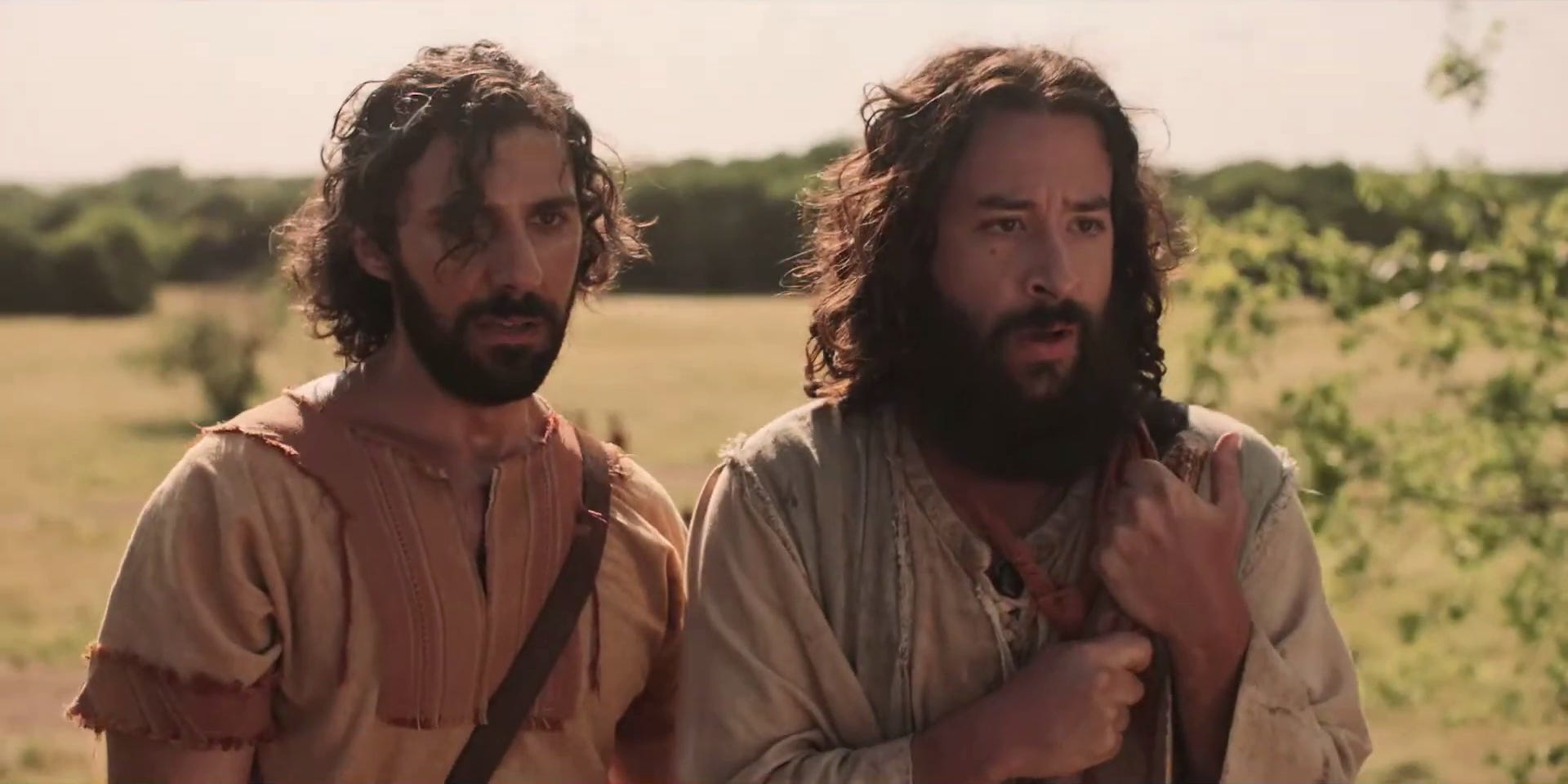
With Kafni’s informants monitoring their movements and working with Roman garrisons, the disciples split into pairs and single travelers, taking circuitous routes through Jerusalem. Sensory triggers across the city spark black-and-white flashbacks into their formative backstories:
| Disciple | Sensory Trigger | Backstory Reveal / Memory | Thematic Significance |
| Simon Z | Lamb blood pooling on cobblestones | Recalls an abortive Zealot defense where he attempted to sacrifice himself, only for Romans to flank and slaughter his barricaded comrades. | Highlights the futility of violent insurrection compared to the Lamb of God. |
| Nathanael | A vendor playing a Greek lyre | Flashes back to studying architecture, breaking under academic pressure before hearing Psalm 130 sung next door, followed by an encouraging letter from Philip. | Reinforces divine architecture and building “the road for the King.” |
| Andrew & Philip | Roman soldiers clearing a street | Recalls journeying with John the Baptist, who boldly confronted legionnaires clearing trees and warned that the axe is laid to the root (Luke 3:9). | Establishes the contrast between earthly empires and the kingdom of heaven. |
| Thomas | A shattered earthen water jar | Remembers Roman legionnaires dragging his father away after an extortion confrontation ended in a killing. | Explains Thomas’s perpetual dread of structural authority and sudden loss. |
| Matthew | A spectator spitting on a tax collector | Recalls his first brutal day at the Capernaum toll booth under Gaius’s detached guard. | Illustrates the social isolation Matthew endured before being chosen. |
| Little James | Temple cantors rehearsing choir music | Remembers being barred from the elite 288 Jerusalem cantors due to Levitical physical blemish laws (Lev. 21:18), before encountering Jesus and Thaddeus on the road. | Shows Christ lifting up the outcasts rejected by temple legalism. |
4. The Tragic Irony of the Iscariots
Returning from his secretive pact with Caiaphas and the temple hierarchy, Judas encounters his sister, Devorah, who has made pilgrimage for Passover:
-
She warmly praises him, recounting how she stood among the throngs waving palms at the city gates, and rejoices that her brother was finally right about the Galilean movement.
-
In heavy dramatic irony, Devorah urges him to fulfill his duty, proclaiming that because of his actions that night, the name Iscariot will be remembered throughout history.
Critical Analysis: Structure, Strengths, and Pacing Hurdles
-
The Staging of John 13: The cold open stands as one of the series’ most emotionally acute Biblical adaptations. By lingering on Judas’s silent discomfort and Peter’s stubborn embarrassment, the scene avoids theatrical piety in favor of uncomfortable, intimate friction.
-
The Pacing Drag of the Vignettes: While the individual flashbacks provide rich biographical color—most notably Little James facing institutional rejection and Simon Z’s survivor guilt—placing six prolonged origin stories back-to-back in the penultimate chapter of the season significantly stalls narrative momentum right as Holy Week reaches its climax.
-
The Foreshadowing of the Gospels: The dialogue between Peter and John preparing the bitter herbs subtly foreshadows the differing literary and theological textures of the Johannine corpus versus the Petrine perspective embedded in the Gospel of Mark.