Netflix’s New World War II Epic Tells the Heartbreaking True Story of College Football Stars Who Went From the Gridiron to One of the Pacific War’s Deadliest Battles

They were young college football stars with promising futures, professional ambitions and lives that seemed full of possibility. Then Pearl Harbor changed everything.
Netflix’s upcoming World War II drama The Mosquito Bowl brings their extraordinary story to the screen, following American athletes who exchanged football uniforms for Marine Corps combat gear before some of the Pacific War’s most devastating battles.
Directed by Peter Berg, the filmmaker behind Lone Survivor, Deepwater Horizon and Friday Night Lights, the movie combines intense battlefield sequences with the emotional story of young men whose sporting dreams were overtaken by war.
But while its action has drawn praise, the film’s dialogue and patriotic storytelling have also attracted criticism.
A Real Football Game Played in the Shadow of War
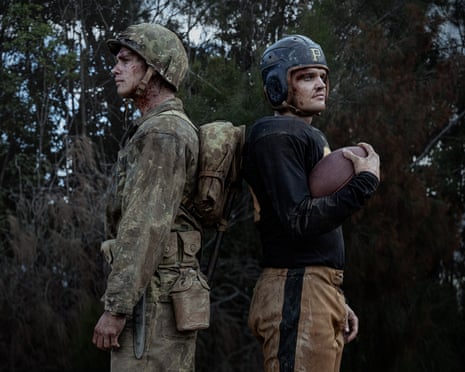
Adapted from Buzz Bissinger’s nonfiction book, The Mosquito Bowl centers on a remarkable football game played by American Marines on Guadalcanal on Christmas Eve 1944.
Many of the participants had previously been celebrated college athletes, with promising futures in football before joining the military following the Japanese attack on Pearl Harbor.
Among the film’s central figures are Wisconsin football players Bob Baumann, portrayed by Bill Skarsgård, and Dave Schreiner, played by Tom Francis.
Nicholas Galitzine stars as John McLaughry, while Ray Nicholson portrays Anthony Butkovich.
Their journey takes them from college campuses and training grounds to the brutal realities of the Pacific campaign.
The Christmas Eve game provides a brief return to the camaraderie and competition they once knew, even as the prospect of further combat hangs over them.
Peter Berg Delivers Intense Battle Scenes
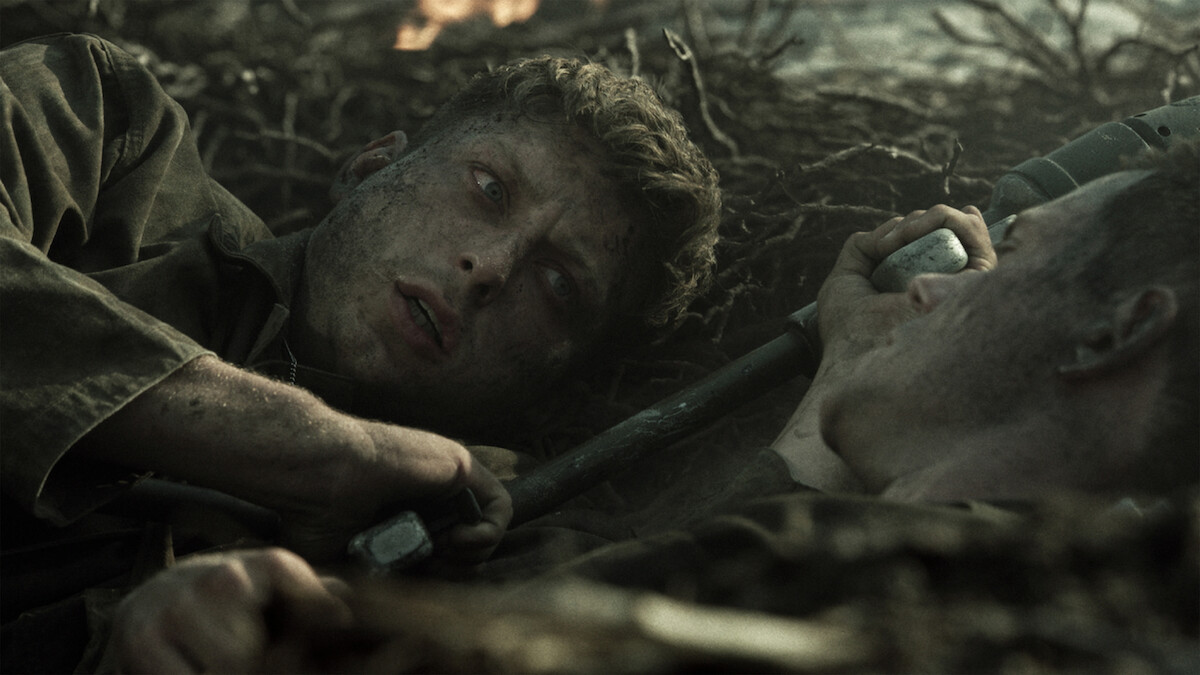
Berg brings his experience directing military action and sports drama to a film that moves between football fields and the battlefields of Tarawa and Okinawa.
According to The Guardian’s review, the director is particularly effective at capturing the chaos, physical danger and emotional intensity of combat.
The battle sequences emphasize the unpredictable nature of warfare, while the football scenes highlight the teamwork and athletic instincts that once defined these young men’s lives.
The film also reunites Berg with the music of Explosions in the Sky, whose atmospheric compositions became closely associated with Friday Night Lights.
However, the review criticizes the screenplay for relying too heavily on sentimental speeches about courage, duty and patriotism.
Several scenes involving the players’ personal lives are described as overly familiar, weakening the impact of an otherwise compelling historical premise.
A Moving War Drama That Raises Difficult Questions

Beyond its central characters, The Mosquito Bowl also depicts the racial hostility and dehumanizing attitudes present among some American servicemen during the Pacific War.
The Guardian questions whether the film sufficiently challenges those attitudes or allows its American-centered perspective to overshadow the suffering of Japanese soldiers and civilians.
Although the closing text acknowledges the wider human cost of World War II, the film’s strongest emotional emphasis remains on the young Marines and the futures they lost.
That approach creates a mixture of powerful battlefield storytelling and conventional wartime heroism.
For viewers drawn to the immersive combat of 1917, the military intensity of Lone Survivor or the emotional sports drama of Friday Night Lights, Berg’s film brings together elements of all three.
At its heart is the tragedy of young athletes who once dreamed of sporting glory but found themselves fighting for survival thousands of miles from home.
The Mosquito Bowl opens in North American cinemas on October 30, 2026, followed by UK cinemas on November 13.
The film is scheduled to arrive on Netflix on November 25, 2026.