The ‘Simple’ Maths Puzzle From The 1% Club That Left Adults Baffled
A maths question on ITV’s The 1% Club has sparked a surprising debate among viewers, with some struggling to identify the largest number from a list of seemingly straightforward options.
The puzzle asked contestants to choose the largest of five answers:
A) One-third
B) 0.0330
C) 30 per cent of 10
D) Three-tenths
E) 3.01
At first glance, the question appears to require little more than basic maths. But viewers quickly found themselves divided over the answer, with some insisting the solution was obvious while others argued that the wording itself left room for interpretation.
The correct answer given by the show was E, 3.01.
That is because one-third is approximately 0.333, 0.0330 is smaller still, 30 per cent of 10 equals 3, and three-tenths is 0.3. Of the five choices, 3.01 is therefore the largest.
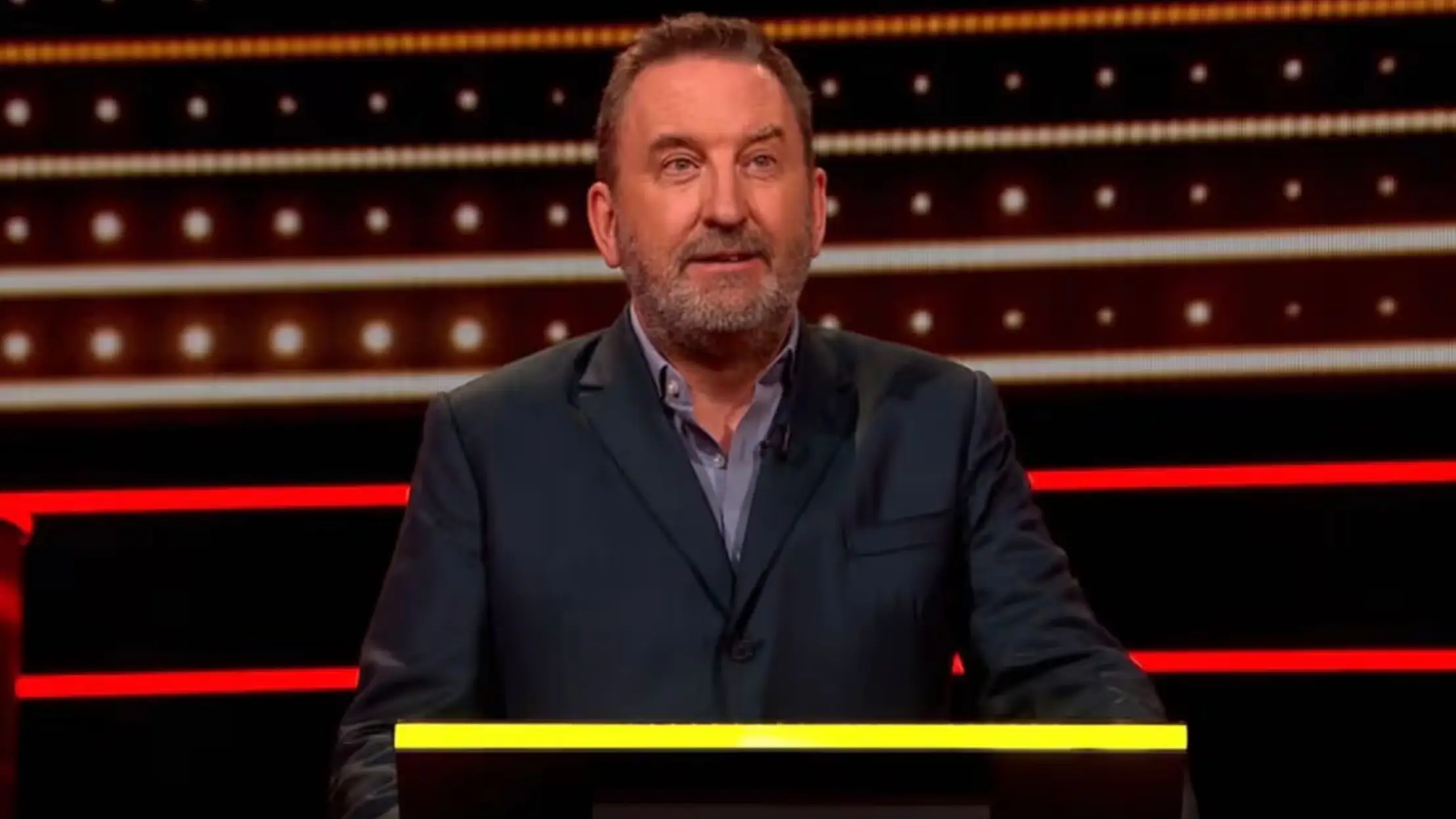
Viewers Debate the Question
The puzzle quickly generated reactions online.
Some viewers were stunned that anyone could mistake one-third for a number larger than 3.01.
“People saying .33333 is larger than 3.01?! Hmmm…” one person wrote.
Another took aim at the contestants’ apparent difficulty with the question, joking that the programme should be called “Who can’t be trusted to do their own tax return/benefit application.”
A third viewer was equally surprised, writing that many people appeared not to realize that one-third is less than 1. They pointed out that 3.01 was the only answer greater than the whole number 3.
But not everyone believed the question was as clear-cut as others suggested.
One viewer questioned the assumptions required to interpret two of the options, pointing out that “one third of what?” and “three tenths of what?” were not explicitly stated.
Another took a more sympathetic view of those who struggled, suggesting that some people may simply have been out of practice with maths or made an ordinary mistake under pressure.
The contrasting reactions highlighted just how differently viewers approached what appeared to be a basic numerical comparison.
How The 1% Club Works
Hosted by Lee Mack, the ITV quiz show features 100 contestants competing through a series of questions.
Rather than testing specialist knowledge, the programme focuses on questions that are designed to challenge logic, observation and everyday reasoning.
The difficulty of each question is determined by the percentage of the public who answered it correctly. The ultimate goal is to reach the final stage and tackle the question that only 1 per cent of the country is expected to answer correctly.
That format has repeatedly produced moments that leave both contestants and viewers questioning their own answers.

The £93,000 Code-Breaking Question
The maths puzzle was not the first 1% Club question to cause confusion.
In another episode, viewers were challenged by a hidden sequence puzzle with a potential prize of £93,000.
Four contestants reached the final question and decided to play for the chance to take a share of the jackpot. Only two — Maisy and Jasmine — managed to solve it correctly, earning £46,500 each.
The question presented a diary entry written in secret code:
“Peter has recently found his old diary that he’d written in secret code, but he can’t remember how to decipher what he wrote.
Can you crack the code to find out what the underlined word is? WH89 I GR1W UP I WA92 21 B8 A 5L1RI72.”
Lee Mack revealed that the hidden sentence was:
“When I grow up, I want to be a florist.”
The trick was that Peter had replaced letters with numbers beginning with the same letter whenever possible.
The solution divided viewers. Some praised the two contestants who spotted the pattern, while others admitted they had been close to solving it but could not work it out within the time limit.
One viewer even said their 11-year-old had managed to solve the 1% question when they could not.
Others, however, thought the challenge was surprisingly easy, with one viewer joking that perhaps the quizzes were becoming softer — or viewers were simply getting better at them.

An Earlier Question Also Divided Fans
The same episode featured another question that caused frustration among viewers.
The 90% question asked:
“Which of these is the largest? A) Circle, B) Triangle, C) Rectangle, or D) Square.”
The answer was C, Rectangle — not because of the shape itself, but because “rectangle” is the longest word among the four options.
Despite being the opening question and supposedly the easiest challenge of the game, 12 contestants answered incorrectly.
The wording left some viewers particularly unimpressed, with several taking to social media to describe the question as confusing and “nonsensical and stupidly worded.”

Why Simple Questions Can Be So Difficult
The reaction to the maths puzzle reflects one of the central ideas behind The 1% Club.
The questions may look simple on paper, but contestants have to process them quickly, resist assumptions and avoid overthinking what is in front of them.
In the case of the number puzzle, the calculations themselves are straightforward. The challenge came from comparing different ways of expressing numbers — fractions, decimals, percentages and whole-number calculations — while doing so under the pressure of a quiz show.
That combination can turn an apparently easy question into a surprisingly difficult one.
And judging by the reaction online, the puzzle managed to do exactly what The 1% Club is designed to do: make viewers at home stop, think twice and wonder whether they would have reached the answer themselves.