Netflix’s East Of Eden Hides A Disturbing Biblical Secret In Charles And Cathy’s Matching Scars — And It Changes The Meaning Of Their Dark Connection
Netflix’s East of Eden is filled with family betrayals, dangerous desires and unsettling secrets, but one seemingly insignificant detail may reveal more about its characters than viewers initially realize.
Florence Pugh’s Cathy Ames and Mike Faist’s Charles Trask share a strange connection that becomes increasingly apparent throughout the seven-part drama.
Both characters are capable of cruelty, both struggle with destructive impulses, and both seem to recognize something in each other that the people around them cannot understand.
But there is another, more subtle connection between them.
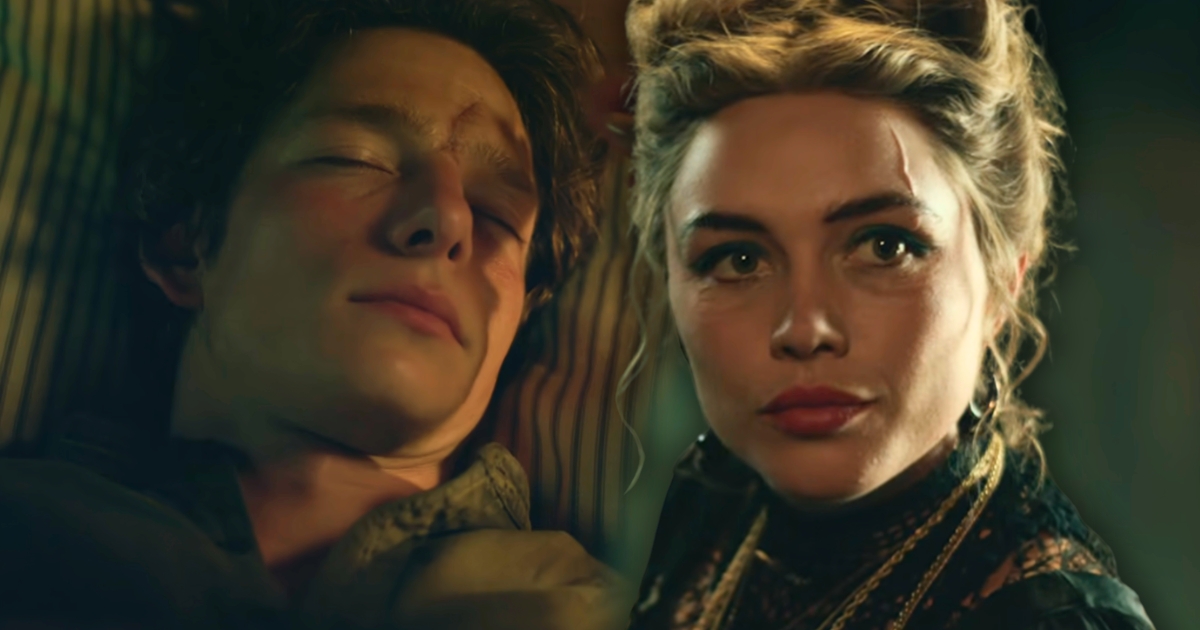
They both carry a scar on their foreheads.
At first, the matching injuries might appear to be a coincidence or simply another visual detail in Netflix’s adaptation of John Steinbeck’s celebrated novel.
However, their significance goes much deeper.
The scars connect Cathy and Charles to one of the Bible’s most famous stories, reveal the meaning behind the series’ title and help explain the central question running through the entire Trask family saga.
And once viewers understand that connection, several of the drama’s most disturbing relationships take on a different meaning.
The Strange Connection Between Charles And Cathy That Viewers May Have Missed
From their earliest encounters, Charles and Cathy appear to understand each other in a way that others do not.
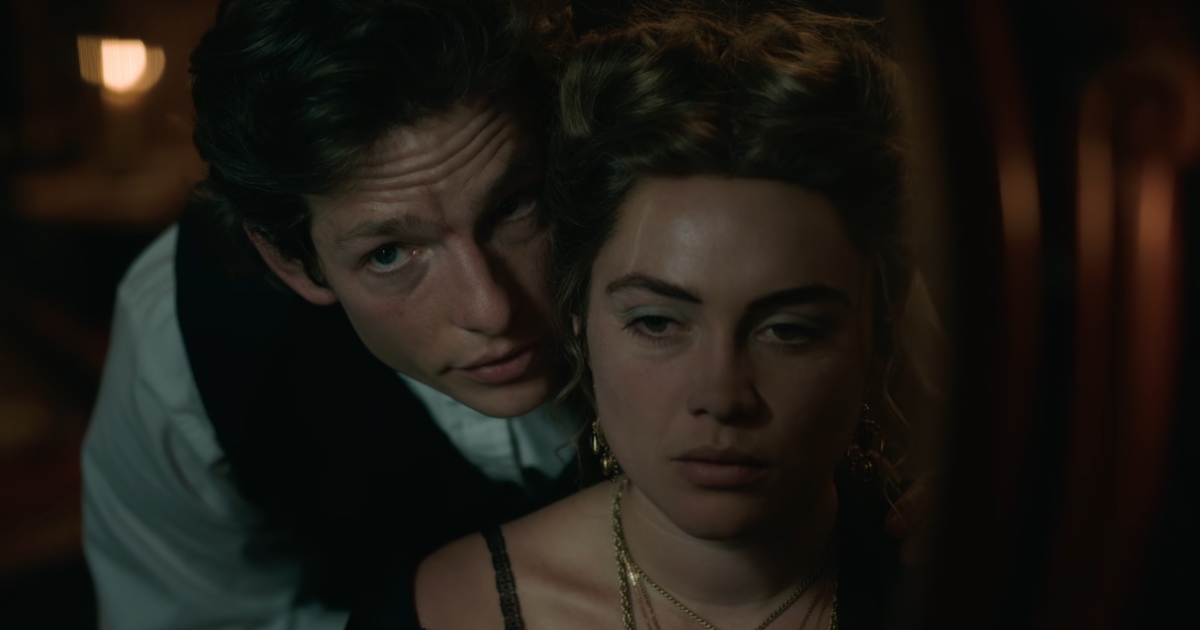
Charles, played by Mike Faist, is deeply suspicious of Cathy when she first arrives at the Trask family farm.
His brother Adam, portrayed by Christopher Abbott, sees a vulnerable woman who needs protection.
Charles senses something different.
He recognizes a darker side to her personality, even while Adam becomes increasingly attached to her.
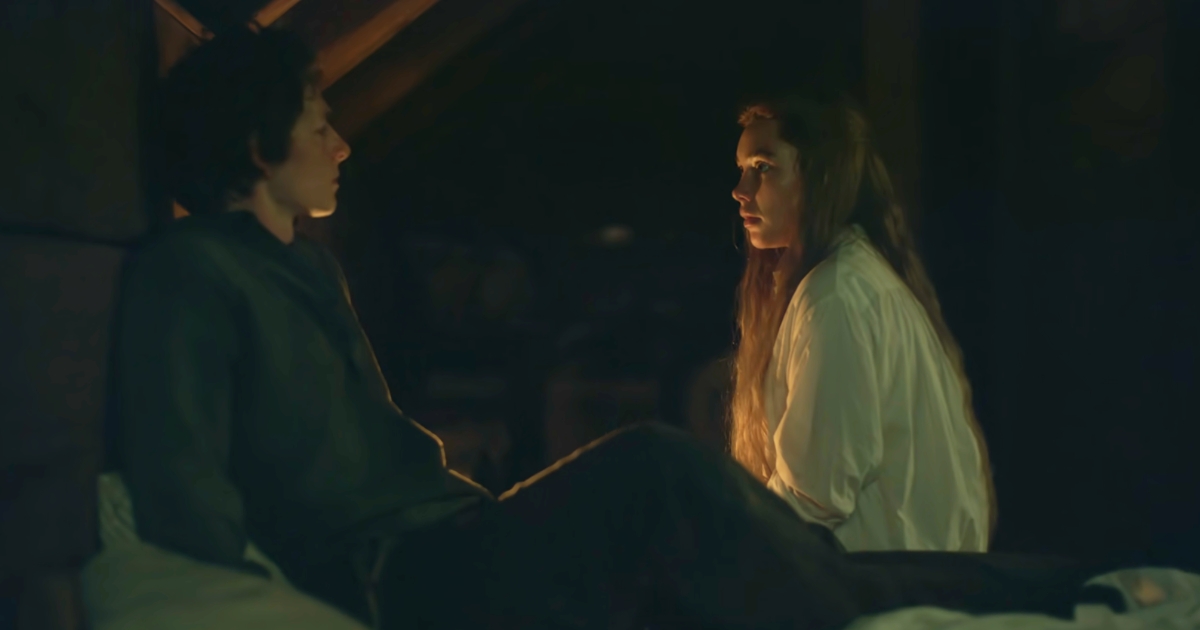
Their unusual relationship reaches a particularly revealing moment on the night of Cathy’s wedding to Adam.
After drugging her new husband, Cathy enters Charles’ room.
Before the pair sleep together, she touches the scar on his forehead.
The gesture is brief, but it carries considerable symbolic weight.
It is not simply an intimate moment between two characters drawn toward each other.
It suggests that Cathy recognizes something familiar in Charles.
As Charles observes, “Kind recognises kind.”
That connection becomes much more significant when the origins of their scars are examined.
How Charles Got His Scar In John Steinbeck’s Original Novel
In Steinbeck’s East of Eden, Charles receives his scar while working on the Trask family farm.
His brother Adam has joined the army, leaving Charles increasingly isolated and frustrated.
One day, Charles becomes furious while attempting to move a stubborn boulder.
Instead of approaching the task calmly, he begins attacking the stone with growing aggression.
He treats the obstacle almost as though it were a person he wanted to hurt.
During the struggle, the metal bar he is using slips and strikes him in the face.
The accident leaves him with a permanent scar running down his forehead toward the space between his eyebrows.
The injury is significant because of the circumstances in which it occurs.
Charles is not wounded while protecting someone or helping another person.
His scar is the consequence of an uncontrolled burst of anger.
It becomes a physical reminder of the rage and resentment that repeatedly shape his behavior.
And when Cathy enters his life, that visible mark takes on an additional meaning.
Cathy’s Scar Comes From A Much More Violent Experience
Cathy’s injury has a different origin.
In Netflix’s adaptation, the character, played by Florence Pugh, suffers a brutal beating following a violent confrontation with a brothel owner.
She is left severely injured and abandoned.
Desperate for help, Cathy eventually makes her way to the Trask farm.
Adam discovers her condition and takes her in.
He cares for her as she recovers, becoming increasingly emotionally involved with the mysterious woman.
His compassion ultimately helps bring Cathy into the family.
Charles, however, remains wary of her.
Despite their different experiences, Cathy and Charles now share a striking physical similarity.
Both have been marked by violence.
Both carry visible evidence of darkness within their lives.
And the placement of their scars creates a connection that reaches beyond their personal histories.
The significance becomes clearer when the biblical foundations of Steinbeck’s novel are considered.
The Matching Scars Are Connected To The Biblical Mark Of Cain

The scars worn by Cathy and Charles are generally interpreted as references to the Mark of Cain.
Netflix has also acknowledged this connection in its explanation of the series’ ending.
The streaming platform describes the two characters as kindred spirits whose forehead scars symbolically connect them as descendants of Cain.
To understand why that matters, it is necessary to revisit the biblical story of Cain and Abel.
In the Book of Genesis, Cain and Abel are the sons of Adam and Eve.
Cain works the land, while Abel is a shepherd.
Both brothers bring offerings to God, but Abel’s offering receives greater favor.
Cain becomes consumed by jealousy and eventually murders his brother.
As punishment, Cain is condemned to a life of exile.
However, God also places a protective mark upon him so that others will not kill him.
The Bible does not specify that this mark was a forehead scar.
That particular visual interpretation belongs to the symbolic language associated with Steinbeck’s story and its adaptation.
The important connection is the association between Cain, jealousy, violence and the possibility of redemption.
Those themes appear repeatedly throughout East of Eden.
Charles And Adam Repeat The Story Of Cain And Abel
The biblical parallels become particularly clear in the relationship between Charles and Adam Trask.
Charles occupies the role associated with Cain, while Adam resembles Abel.
Their rivalry centers on the affection and approval of their father, Cyrus, played in the Netflix series by Tracy Letts.
One of the most revealing moments involves the brothers’ birthday gifts to their father.
Charles works to purchase an expensive knife.
Adam gives Cyrus a stray puppy.
Despite the effort Charles has invested in his present, their father appears to prefer Adam’s gift.
Charles experiences this preference as a devastating rejection.
His resentment grows into intense jealousy.
Eventually, his anger turns violent, and he attacks Adam, nearly killing him.
The parallel with Cain and Abel is unmistakable.
Just as Cain cannot bear God’s apparent preference for his brother, Charles struggles to accept the greater affection he believes his father shows Adam.
The resulting violence threatens to destroy their relationship.
But Steinbeck does not limit this pattern to a single generation.
The Biblical Pattern Repeats With Cal And Aron
The story of Cain and Abel returns through Adam’s sons, Cal and Aron.
Cal, played by Joseph Zada, occupies the symbolic position of Cain.
Aron, portrayed by Joe Anders, represents Abel.
Like the previous generation, the brothers have different personalities and different relationships with their father.
The question of parental approval becomes central to their conflict.
Cal struggles with feelings of inadequacy and fears that his darker impulses make him fundamentally different from his brother.
Aron appears to embody qualities that are more readily associated with innocence and goodness.
As tensions develop, the brothers find themselves repeating aspects of the rivalry that once divided Charles and Adam.
Even their names reinforce the pattern.
Charles and Cal both begin with C, corresponding to Cain.
Adam and Aron both begin with A, corresponding to Abel.
This repeated naming structure is one of Steinbeck’s clearest signals that the biblical story is being retold across generations.
The Trask family is not simply experiencing a series of unrelated tragedies.
Its members are confronting recurring questions about jealousy, love, rejection and moral responsibility.
The Meaning Of East Of Eden Is Hidden In The Bible
The biblical symbolism extends to the title itself.
In Genesis, after Cain murders Abel, he leaves the presence of God and settles in the land of Nod, east of Eden.
Steinbeck’s title deliberately evokes that passage.
It places the characters in a symbolic world shaped by exile, wrongdoing and separation from innocence.
The connection suggests that the Trask family is living with the consequences of humanity’s oldest moral struggles.
But the title is not simply a declaration that the characters are condemned to repeat Cain’s actions.
It also introduces a larger question.
Can people escape the destructive patterns they inherit?
Or are they destined to become like the generations before them?
This tension runs throughout the novel and Netflix’s adaptation.
The scars on Charles and Cathy provide a visual reminder of that struggle.
But the series’ deeper message becomes apparent through another biblical idea.
The Hebrew Word Timshel Holds The Key To The Entire Story
One of the most important concepts in East of Eden is timshel, a Hebrew word that becomes central to the novel’s interpretation of Genesis.
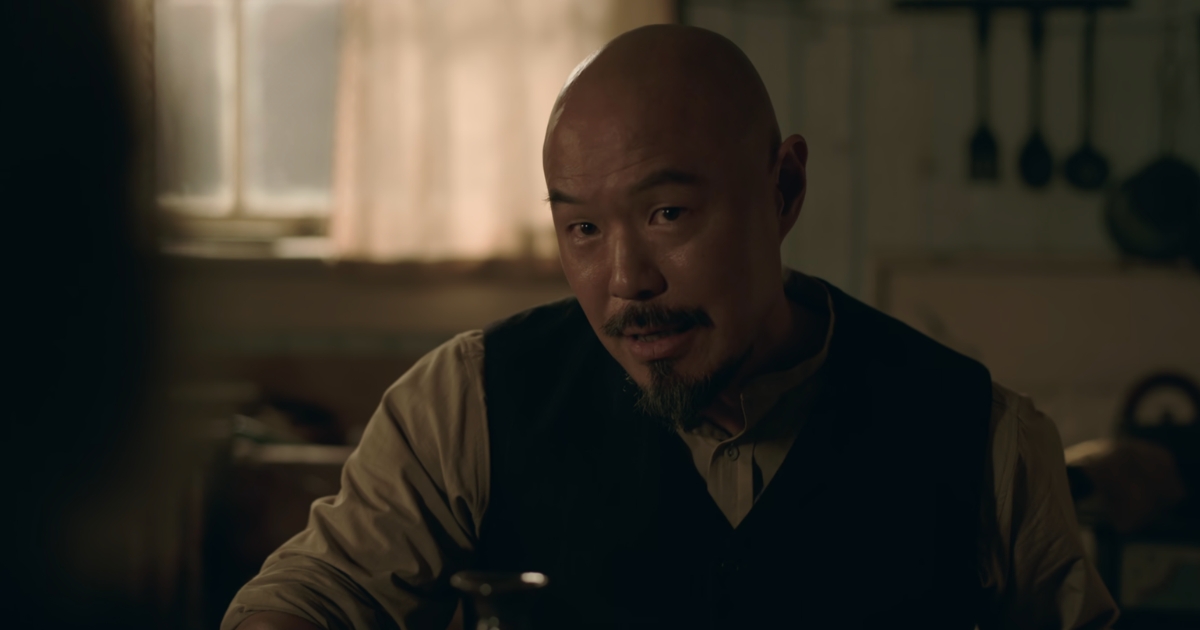
In Netflix’s adaptation, Lee, played by Hoon Lee, and Samuel Hamilton, portrayed by Ciarán Hinds, discuss the story of Cain and Abel.
Their conversations explore the meaning of human choice and the possibility of overcoming destructive impulses.
Lee explains timshel as “thou mayest.”
The distinction is crucial.
The idea is not that human beings are automatically destined to overcome evil.
Nor is it that they are permanently condemned by the mistakes of their ancestors.
Instead, the concept emphasizes the possibility of choosing a different path.
Even someone who has committed terrible acts is not necessarily deprived of the ability to make future moral choices.
Within Steinbeck’s interpretation, this becomes the philosophical heart of the story.
The Trask family may repeatedly experience jealousy, resentment and betrayal.
But the characters are not simply prisoners of their family history.
They still possess the capacity to choose how they respond.
It is this idea that gives the biblical symbolism its emotional importance.
Why Netflix’s Adaptation Preserved The Cain And Abel Story
Showrunner Zoe Kazan has explained that the biblical material was especially important to her adaptation.
Steinbeck’s novel contains lengthy discussions about Genesis, Cain and Abel, and the interpretation of timshel.
Translating those conversations into television presented a challenge.
The material needed to remain meaningful without overwhelming the drama or interrupting the characters’ emotional journeys.
Speaking to the Los Angeles Times, Kazan explained that she wanted the biblical discussions to feel personal and connected to the people involved.
She specifically highlighted the naming scene in episode three, where Cain and Abel are discussed, and the later conversation about timshel in episode five.
According to Kazan, those sequences went through numerous revisions.
Her aim was to preserve the philosophical significance while making the scenes emotionally engaging and concise.
That approach helps explain why some of the novel’s symbolism is communicated visually rather than through lengthy explanations.
The matching scars are a perfect example.
The adaptation does not need to stop the story to explain their meaning.
Instead, the detail quietly reinforces the larger biblical framework.
Why Charles Recognizes Something In Cathy That Adam Cannot
The connection between Cathy and Charles becomes especially revealing when their personalities are compared with Adam’s.
Adam is drawn toward Cathy through compassion and a desire to protect her.
He sees someone who has suffered and needs care.
Charles approaches her with suspicion.
He recognizes qualities that remind him of his own darker impulses.
This does not mean the two characters are identical.
Their experiences, motivations and actions are different.
But the story presents them as people who understand aspects of cruelty and manipulation that Adam struggles to recognize.
The matching scars reinforce this idea.
Both characters carry visible marks associated with violence, and both are symbolically connected to Cain.
When Cathy touches Charles’ scar, the gesture becomes more than an expression of attraction.
It suggests recognition.
She sees something familiar in him, just as he senses something troubling in her.
Their connection is therefore rooted in one of the novel’s central themes: the uncomfortable possibility that people can recognize their own capacity for darkness in someone else.
The Scars Do Not Mean Cathy And Charles Are Destined To Be Evil
The most important aspect of the symbolism is also the easiest to misunderstand.
The scars are not simply labels identifying Cathy and Charles as evil characters.
Although they evoke the Mark of Cain, Steinbeck’s story is not built around the idea that a person is permanently defined by an inherited moral identity.
The opposite possibility is essential to the novel.
The concept of timshel suggests that people have the freedom to make choices, even when they have inherited painful circumstances or destructive patterns.
This becomes especially significant for Cal, who fears that his connection to Cathy means he is destined to share her darkness.
His struggle reflects the larger question confronting the Trask family.
Does being associated with Cain mean someone must repeat Cain’s violence?
Or can that person choose another way of living?
Steinbeck’s treatment of the biblical story gives that question enormous importance.
The scars symbolize the presence of darkness, but they do not remove the possibility of moral choice.
The Hidden Detail That Changes How Viewers See East Of Eden
Once the meaning of Charles and Cathy’s scars becomes clear, their strange relationship takes on a deeper significance.
Their matching injuries connect them to the Mark of Cain, the rivalry between Charles and Adam, and the later conflict involving Cal and Aron.
The symbolism also leads directly to the meaning of the title East of Eden.
What initially appears to be a family saga about love, betrayal and resentment is also a meditation on one of the Bible’s oldest stories.
The characters repeatedly confront the consequences of jealousy and the desperate desire to be loved.
Yet the drama ultimately asks whether those destructive patterns can be broken.
That is why timshel matters so much.
It offers the possibility that the future does not have to be determined by the past.
Charles and Cathy may share the symbolic Mark of Cain, but their scars reveal something more complicated than a simple division between good and evil. They expose the darkness running through the Trask family while pointing toward the central message of Steinbeck’s story: people may inherit pain, jealousy and destructive impulses, but they still have the power to choose what they become.
And that makes the seemingly small detail of two matching scars one of the most meaningful visual clues in Netflix’s East of Eden.