Alexander Skarsgård’s Outrageous Fantasy Romance Is Far More Than Its Scandalous Premise Suggests
A lonely woman falls in love with a husband made entirely of wicker, and their unconventional romance sends a conservative village into a spiral of jealousy, desire and chaos. It is an undeniably provocative premise, but this adult fairy tale has far more on its mind than its risqué humour.
Directed and written by Alex Huston Fischer and Eleanor Wilson, the duo behind Save Yourselves!, Wicker adapts Ursula Wills-Jones’ short story The Wicker Husband into a darkly comic fantasy about love, prejudice and the social rules that dictate how people should live.
Olivia Colman stars as the Fisherwoman, an unmarried outcast mocked by her neighbours for her smell and refusal to conform. After commissioning a basket maker to create a husband for her, she finds something far more meaningful than a way to silence the villagers: a genuine romantic connection that challenges everything their community takes for granted.
Alexander Skarsgård plays the Wicker Husband, while Peter Dinklage portrays the Basket Weaver responsible for bringing him to life. Together, the cast anchors a story that uses an outrageous fantasy to explore recognisable human insecurities.
A Modern Fable About Love, Marriage and the Cost of Conformity
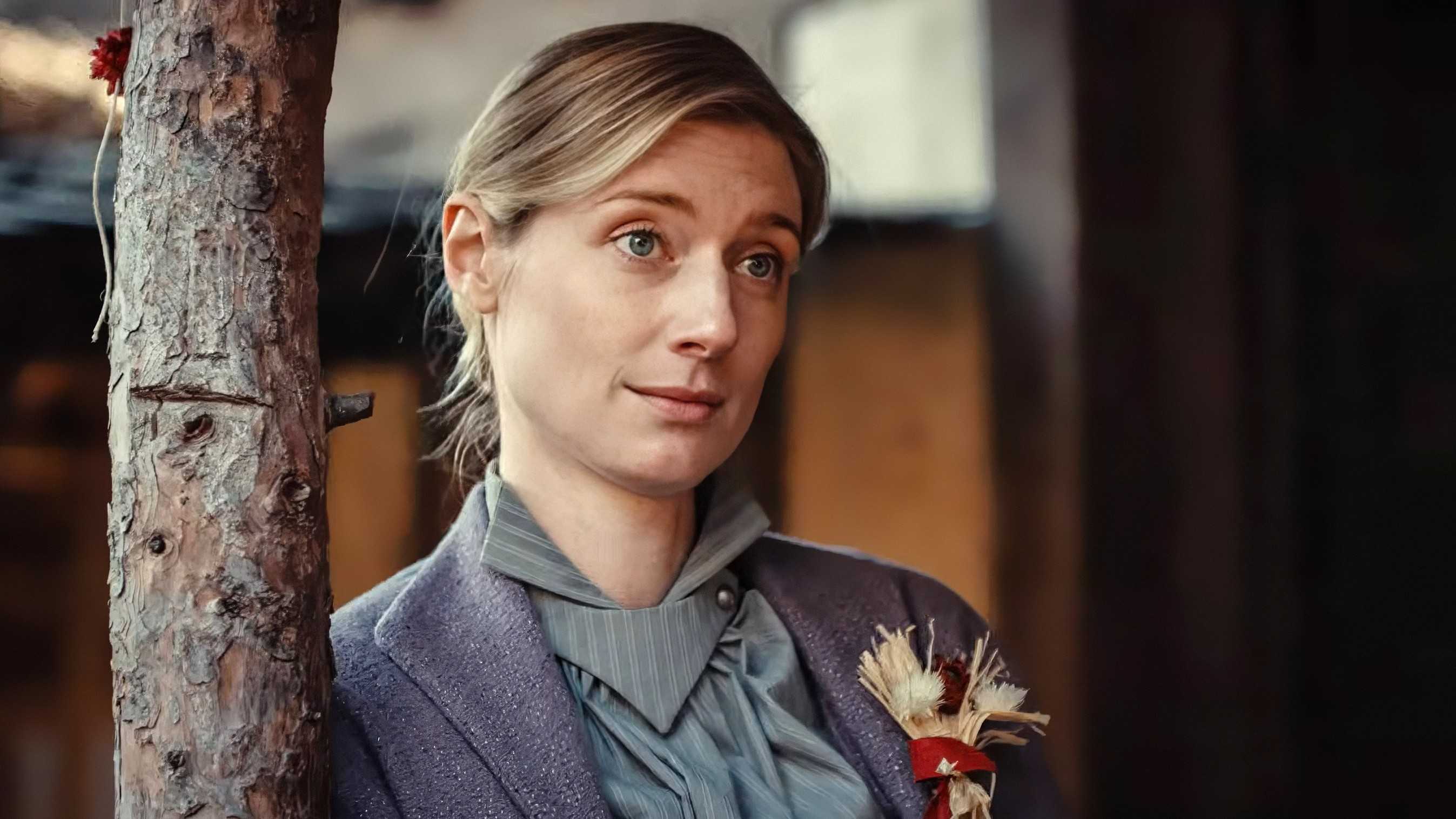
The film’s medieval village operates according to rigid patriarchal traditions. Men are identified by their occupations, while women are often defined by their husbands’ professions and expected to devote themselves to raising children and maintaining their homes.
The Fisherwoman is an outsider because she refuses to fit that model. Her decision to commission a husband initially stems from a desire to answer the villagers’ cruel mockery, but the relationship that follows exposes the flaws in the community’s accepted way of life.

As the couple build a happy marriage, their neighbours begin to question their own relationships. The Wicker Husband’s devotion and attentiveness highlight what many of the village’s conventional husbands fail to offer, stirring resentment among both men and women.
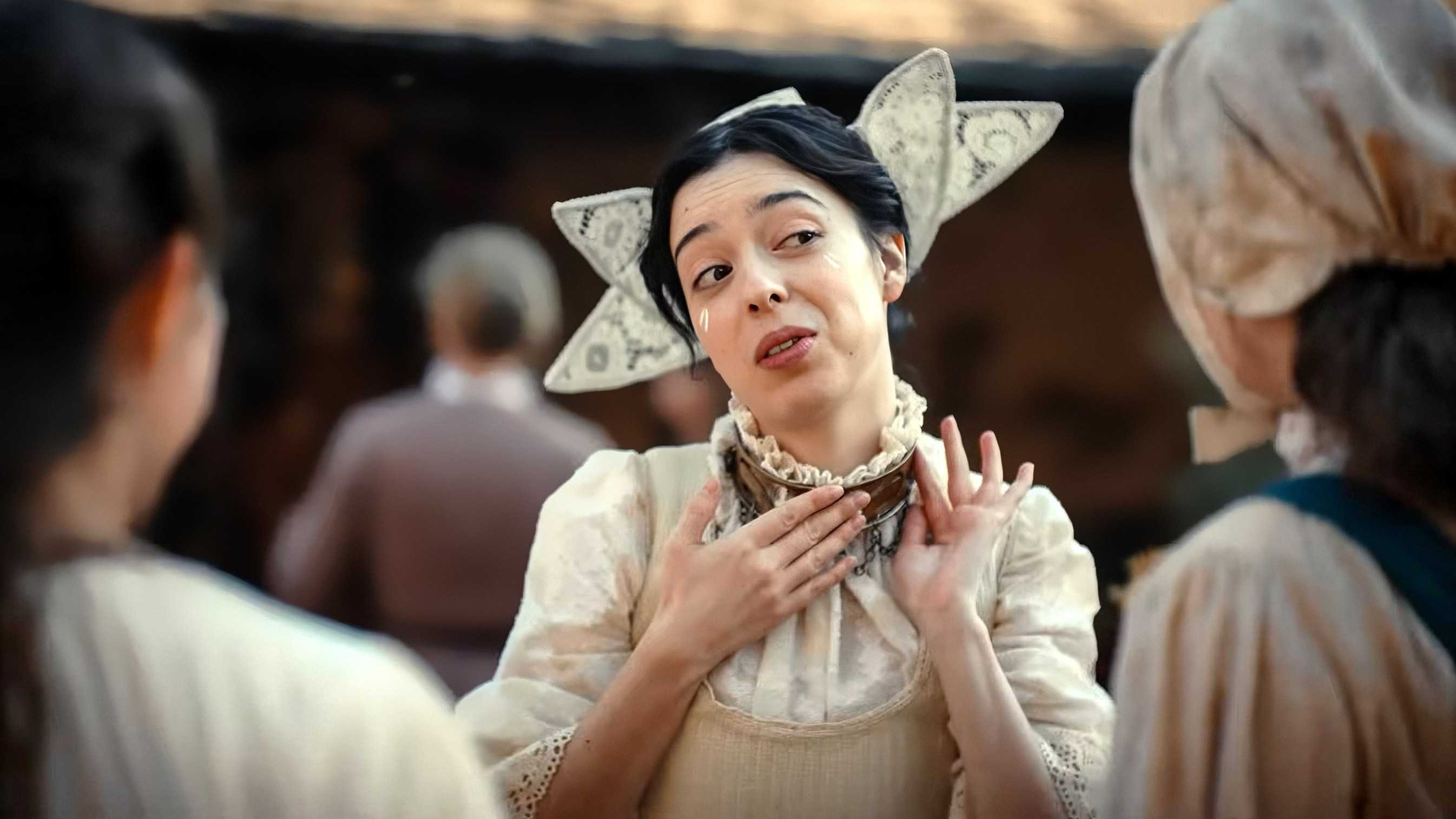
The film’s message is reinforced through its unusual marriage ceremony, in which husbands fasten metal collars around their wives’ necks. The imagery is deliberately stark, presenting marriage as a system that can restrict women’s independence and treat them as possessions rather than equals.
Although the symbolism is sometimes blunt, it suits the film’s fairy-tale structure. Like the traditional fables that inspired it, Wicker makes its moral arguments openly, using an exaggerated world to expose familiar problems in human behaviour.
The story ultimately asks audiences to consider what happens when social expectations become more important than personal happiness—and why people sometimes resent others simply for finding the love they themselves lack.
Olivia Colman and Alexander Skarsgård Make an Unconventional Romance Work
At the heart of the film is Colman’s portrayal of a woman who has endured years of ridicule and exclusion. Her performance captures the vulnerability beneath the Fisherwoman’s independence, allowing the character’s growing happiness to feel earned rather than simply dictated by the fantasy premise.
Skarsgård takes an equally unusual approach to the Wicker Husband. His deliberately restrained movements reflect the character’s wooden construction, but he also brings warmth and sincerity to a figure who could easily have become little more than a visual joke.
Their contrasting performances create a convincing romantic partnership. The Wicker Husband is not simply the answer to the Fisherwoman’s loneliness; his kindness and commitment offer a pointed contrast with the behaviour of the people around them.
The film’s most effective moments come from watching the pair enjoy a relationship that challenges the village’s assumptions about what a husband and wife should be. Their connection gives the story its emotional foundation, even as the surrounding community grows increasingly hostile.
If there is one limitation, the central pairing is so compelling that the film occasionally leaves the audience wanting more time with them together.
Elizabeth Debicki, Peter Dinklage and a Standout Supporting Cast
The supporting performances help turn the village into more than a backdrop for the central romance.

Elizabeth Debicki is particularly memorable as the Tailor’s Wife, a sharp and frustrated woman who wants more from life than domestic responsibilities. Her character becomes a source of tension as the Fisherwoman’s unconventional marriage threatens the social position she has come to occupy.
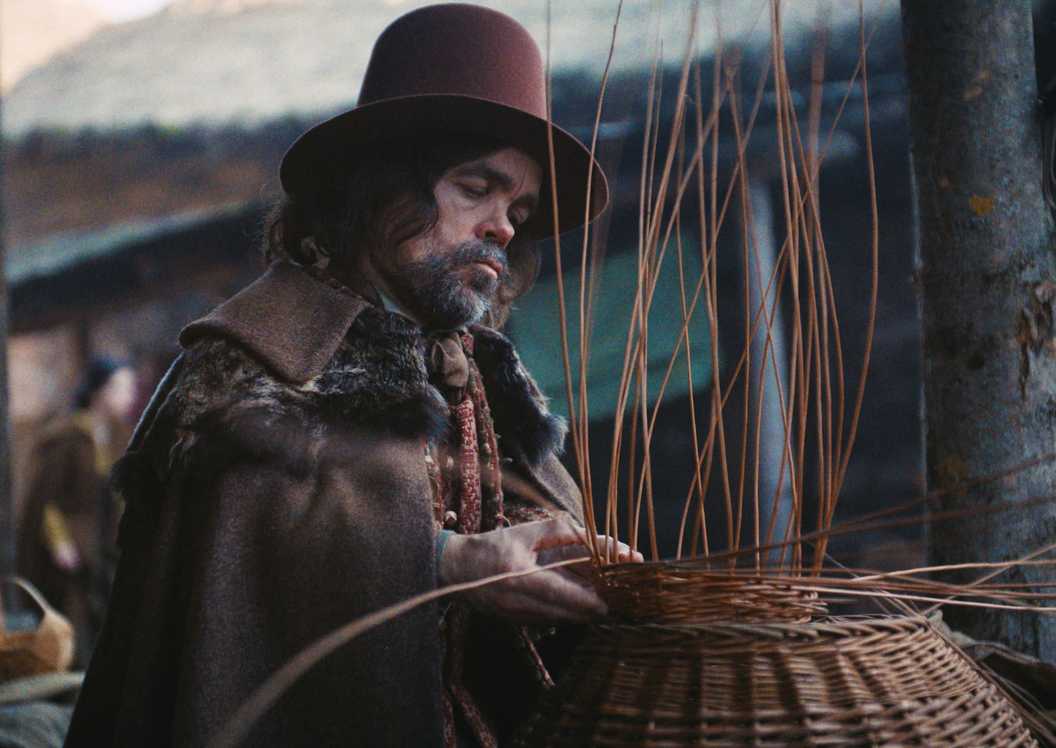
Peter Dinklage brings authority and weight to the Basket Weaver, the craftsman whose work sets the story in motion. His performance helps ground the film’s more overtly symbolic moments.
Richard E. Grant also makes an entertaining appearance as the village doctor, while Marli Siu, Ella Bruccoleri, Ben Ashenden and Kiell Smith-Bynoe contribute to the community’s complicated social dynamics.
Each character adds another perspective on the village’s traditions, ambitions and insecurities, reinforcing the idea that the Fisherwoman’s marriage has consequences far beyond her own household.
More Than a Raunchy Fantasy
Much of the attention surrounding Wicker has focused on its unconventional sexual premise and Skarsgård’s unusual transformation into a living wicker figure. The film certainly embraces adult humour and provocative imagery, but those elements are only part of its appeal.
Fischer and Wilson use the absurdity of the romance to examine how jealousy, greed and restrictive social expectations can damage relationships. The Fisherwoman’s happiness becomes a threat to those who have built their identities around conventional marriage, revealing how quickly a close-knit community can turn against someone who challenges its rules.
The film’s approach has also divided critics. While some have praised its originality, performances and social commentary, others have argued that its mixture of bawdy comedy, fantasy and darker themes does not always come together smoothly.
That contrast is part of what makes the film an interesting proposition. It is a romance, a satire of patriarchy and an adult fairy tale, sometimes balancing those elements more successfully than others.
Is Wicker Worth Watching?
With a reported rating of 4.5 out of 5 in MovieWeb’s review, Wicker is an enthusiastic recommendation for viewers willing to embrace its eccentric premise.
The film brings together Colman and Skarsgård in an unusually tender romance, supported by a strong ensemble and a world designed to make its social commentary impossible to miss. Its humour can be deliberately crude, and its symbolism is rarely subtle, but beneath the outrageous concept lies a story about belonging, mutual respect and the freedom to choose a different kind of life.
For anyone drawn to fantasy romances that take unexpected creative risks, Wicker offers something considerably more substantial than its provocative marketing might suggest.
The film is scheduled for a wide theatrical release in the United States on October 23, 2026, with its UK cinema release set for October 30, 2026.
Ultimately, its most compelling idea is also its simplest: a relationship built on genuine care can expose the shortcomings of an entire society—and the people most threatened by another person’s happiness may be those who have forgotten what happiness looks like in their own lives.