Congratulations!
You've earned 1 point
Tim Curry Never Married or Had Children — And His Fiercely Private Explanation Revealed Exactly How He Felt About Fame
Tim Curry spent nearly six decades becoming one of entertainment’s most recognizable character actors, yet the man behind Dr. Frank-N-Furter, Pennywise and Wadsworth remained remarkably difficult for the public to know.
That was entirely intentional.
Curry, who died peacefully at his Los Angeles home on Tuesday, August 25, 2026, at age 80, never married and had no children. Despite decades of fascination surrounding his private life, he consistently refused to turn his relationships into public entertainment — and in his 2025 memoir Vagabond, he made his position unmistakably clear.
The actor acknowledged that he had experienced love and heartbreak, but when it came to revealing the identities of romantic partners or intimate details, Curry drew a firm boundary.
It was a philosophy he maintained until the end of his life.

Tim Curry deliberately kept his romantic life out of the spotlight
For an actor whose performances could be extravagant, provocative and larger than life, Curry himself took an almost opposite approach to celebrity.
He never married, never became a father and rarely discussed romantic relationships publicly. Rather than viewing that secrecy as something requiring an explanation, Curry believed those parts of his life simply did not belong to his audience.
In Vagabond, published in October 2025, Curry anticipated that some readers might expect the memoir to finally provide revelations about his love life.
It did not.
He assured readers that he had experienced “true love” and “true heartbreak,” along with everything that could happen between those extremes. But the specific details, he insisted, were private.
His response to anyone expecting a Hollywood tell-all was characteristically sharp: matters involving his heart and bedroom were, as he bluntly put it, “none of your f–king business.”
It was classic Curry — direct, witty and completely uninterested in satisfying other people’s curiosity simply because he was famous.
Why Curry refused to make his private life “public property”
His reluctance to discuss romance was part of a much broader philosophy about celebrity.
Curry explained in his memoir that one element of show business had always bothered him: the assumption that becoming a successful performer somehow transformed a person’s private life into something the public was entitled to examine.
He had resisted self-promotion since the earliest stages of his career.
Curry understood that interviews, publicity appearances and promotion were necessary parts of working in entertainment. What he rejected was the expectation that promoting a performance also required an actor to expose his personal life.
To Curry, those were two completely different things.
The problem became particularly uncomfortable when intense fandom blurred that boundary.
He wrote about fans learning personal details about performers and consequently feeling as though they had developed a genuine relationship with them — or, in extreme cases, believing they possessed some claim over the celebrity.
Curry sometimes felt compelled to remind people of a simple distinction: he was a person, but he was not their person.
He admitted that such a response could sound rude. Nevertheless, there were occasions when he believed it was necessary.
Even his memoir wasn’t going to change the rules
Curry maintained the same position while promoting Vagabond.
In an October 2025 interview with The New Yorker, he was asked why he was prepared to reveal certain personal experiences while continuing to keep his romantic history hidden.
His explanation was straightforward: he simply did not consider his romantic life anybody else’s business.
That distinction is important because Vagabond was not an entirely guarded memoir.
Curry revisited his childhood, career, extraordinary encounters, creative experiences and the devastating 2012 stroke that left him partially paralyzed. He was willing to discuss difficult and deeply personal chapters when he felt they were part of the story he wanted to tell.
Romance was different.
That boundary remained firmly in place.
Being mysterious was part of the point
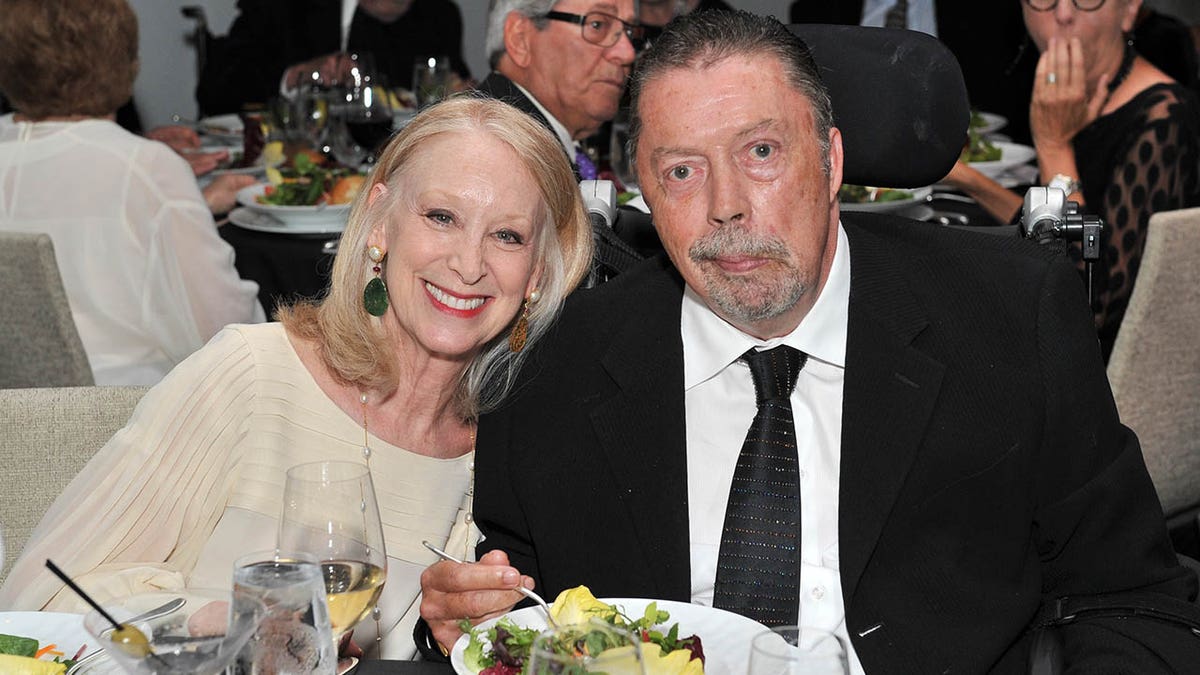
Curry’s privacy was not simply about protecting romantic partners. He actively cultivated a degree of mystery around himself.
During an October 2025 interview with CBS Sunday Morning, host Ben Mankiewicz described Curry as perhaps the most mysterious character in a career filled with unforgettable characters.
Curry effectively agreed.
Asked about remaining an enigma, he said he believed it was important and actively encouraged it. He had spent years protecting that distance between the performer audiences knew and the person he actually was.
For Curry, that separation was closely connected to how he viewed acting itself.
He hadn’t entered the profession because he wanted audiences to become fascinated with Tim Curry.
He wanted to disappear.
He wanted audiences to see the character — not Tim Curry
Curry once found fame attractive, as many aspiring performers do. But his relationship with celebrity changed dramatically after he actually experienced it.
He eventually came to dislike much of what fame demanded.
The appeal of acting, Curry explained, was the freedom to become somebody else.
That philosophy helps explain the extraordinary range of characters he left behind.
There was the flamboyant Dr. Frank-N-Furter in 1975’s The Rocky Horror Picture Show. The chilling Pennywise in Stephen King’s It. The frantic Wadsworth in Clue. Rooster Hannigan in Annie. Darkness in Legend. Long John Silver in Muppet Treasure Island.
Curry could move between horror, comedy, musical theater, animation and fantasy without appearing particularly interested in maintaining a conventional movie-star image.
He distinguished himself from performers whose celebrity personas remained visible regardless of the character they were playing.
Curry wanted the opposite.
He wanted to vanish inside the role.
That approach helped create a career spanning approximately six decades, encompassing stage, film, television, voice acting and music.
Fame eventually became something he “rather despised”

The contradiction was obvious.
Curry’s ability to disappear into characters ultimately made him extremely famous.
Dr. Frank-N-Furter became a cultural icon as The Rocky Horror Picture Show developed from an initially unsuccessful release into a decades-long cult phenomenon. Pennywise terrified an entirely different generation. Clue became increasingly beloved long after its original theatrical run.
Curry became recognizable precisely because he was so effective at transforming himself.
But celebrity itself never seemed to become comfortable.
In his CBS Sunday Morning interview, he acknowledged that fame had once attracted him, but said he eventually came to “rather despise” it.
Part of the discomfort came from uncertainty.
When strangers approached Tim Curry, he couldn’t necessarily know which version of him they expected to encounter.
Was it Frank-N-Furter?
Pennywise?
The witty villain?
The mischievous personality they had constructed from decades of performances and interviews?
Curry understood that audiences naturally form attachments to performers. What he resisted was allowing those attachments to dictate who he needed to be when the cameras stopped.
His greatest paradox became part of his legacy
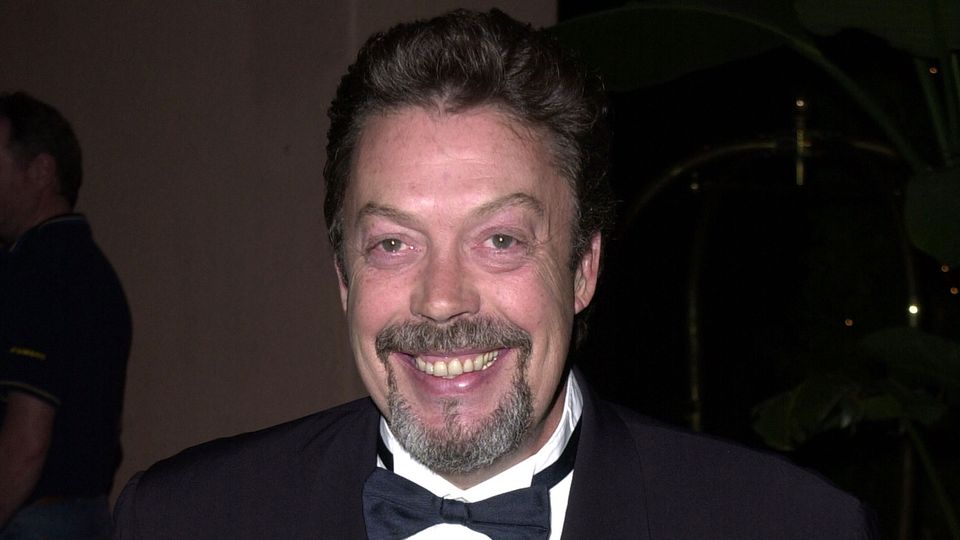
Curry’s determination to remain mysterious may help explain why curiosity about his private life persisted throughout his career.
The less he revealed, the more intriguing the man behind the performances became.
Yet he never appeared interested in solving that mystery for anyone.
His memoir was perhaps the clearest demonstration.
After decades of speculation, Curry finally had the opportunity to tell his story entirely on his own terms. He could have transformed Vagabond into the kind of confessional celebrity autobiography that reveals secret relationships and previously unknown romances.
Instead, he deliberately refused.
The book told readers what Curry wanted them to know — and reminded them that being famous did not eliminate his right to keep the rest.
That philosophy extended far beyond romance.
Even after suffering a major stroke in 2012, Curry continued selectively participating in projects and making occasional public appearances while maintaining the separation between his work and his private world.
His stroke left him partially paralyzed and required him to relearn how to speak, but it did not erase his characteristic humor or the mystery surrounding him.
Tim Curry remained an enigma until the end
Curry died peacefully at his Los Angeles home on August 25, 2026, his representatives confirmed. He was 80.
He left behind no spouse or children, but an enormous body of work and generations of viewers who felt connected to the characters he created.
And perhaps that is exactly how Curry wanted the relationship between himself and his audience to remain.
Fans could know Frank-N-Furter. They could fear Pennywise, laugh at Wadsworth and revisit the dozens of characters Curry inhabited throughout his career.
But Tim Curry himself?
He reserved part of that story for himself.
After nearly 60 years in an industry built around celebrity, he never accepted the idea that fame meant surrendering ownership of his private life — and even when writing his own memoir, he refused to change his mind.